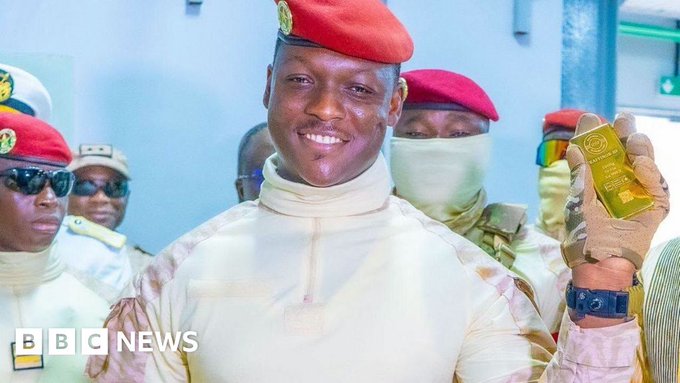
The inauguration of Burkina Faso’s first national gold refinery, RAFFINOR-BF, on 28 September 2026 by transitional leader Ibrahim Traoré marked a milestone in the country’s economic strategy. Touted as a breakthrough for national sovereignty, the facility boasts an initial refining capacity of 164 tonnes per year, scalable to 515 tonnes, with an investment exceeding 11 billion CFA francs. The refinery’s stated mission is to process and add value to locally extracted gold entirely within Burkina Faso’s borders.
Behind the official narrative: the unresolved question of gold custody
While Ouagadougou celebrates the refinery as a symbol of economic independence, critical questions linger about the real locus of control over the gold once refined. Public discussions have increasingly focused on the ownership and custody of the nation’s gold reserves, not just during production but across the full value chain certification, commercialization, and financial management.
Despite the refinery’s on-site storage facilities, emerging details suggest that refined gold may ultimately be transferred out of Burkina Faso. June 2026 reports indicated an agreement between Burkina Faso and a Moscow-based financial institution widely identified as the Bank of Russia for the storage of gold reserves. This revelation challenges the narrative of full domestic control and raises concerns about long-term strategic dependencies.
The Moscow connection: evaluating the depth of Burkina Faso-Russia cooperation
Burkina Faso’s deepening ties with Russia extend beyond political and military collaboration. Economic and mining cooperation has been a central pillar of bilateral engagement, with mineral resources particularly gold emerging as a key area of mutual interest. The strategic partnership includes infrastructure development, technical expertise, and logistical support, all of which may influence the operational and custodial aspects of RAFFINOR-BF.
While official statements emphasize progress in national infrastructure, the convergence of these developments with the gold storage arrangement raises important questions. Is the refinery a step toward true economic sovereignty, or does it inadvertently cement external influence over one of Burkina Faso’s most valuable resources?
The sovereignty paradox: autonomy claimed, control in question
The narrative of self-reliance promoted by Ibrahim Traoré contrasts with the opacity surrounding storage and control mechanisms. The refinery’s architectural and operational design suggests a commitment to local processing, but the absence of clear public disclosures on storage location, custodial authority, and financial oversight fuels skepticism.
International best practices in resource governance demand transparency in gold custodianship, especially when output is linked to foreign financial institutions. The lack of public documentation on the storage agreement, its terms, or the legal framework governing custody undermines trust and calls into question the refinery’s long-term contribution to national sovereignty.
Economic benefits vs. strategic risks: weighing the refinery’s impact
The economic rationale for RAFFINOR-BF is compelling. By refining gold domestically, Burkina Faso aims to capture a greater share of the value chain, reduce export of raw materials, and generate employment. However, these benefits could be overshadowed if the gold’s final storage and financial control lie outside national borders.
A scenario where refined gold is stored in Russia even temporarily poses risks related to geopolitical leverage, currency valuation, and sovereign access. The absence of a clear public commitment to onshore storage for all gold reserves weakens the argument that the refinery represents a true inflection point in economic independence.
Conclusion: sovereignty in name, uncertainty in practice
RAFFINOR-BF stands as a tangible achievement in Burkina Faso’s industrial landscape. Yet its true significance remains ambiguous. While it signifies progress in local processing capacity, the unresolved questions about gold custody especially the reported storage arrangement with a Russian financial institution redefine the narrative. Rather than heralding a new era of self-determination, the refinery may symbolize the paradox of visible progress masking deeper structural dependencies.
Until full transparency is provided on storage locations, custodial agreements, and financial oversight mechanisms, the sovereignty touted by Ouagadougou’s leadership will remain more rhetorical than realized.
By Marie Mbarga — Political analyst