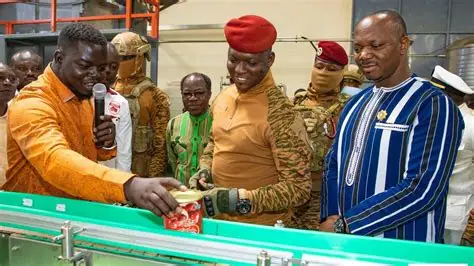
In recent months, Captain Ibrahim Traoré has intensified his public appearances, inaugurating industrial sites and touring construction projects across Burkina Faso. From tomato processing plants to gold processing units, the transitional government has deployed a carefully orchestrated communications strategy to project an image of progress and economic resurgence. Yet beneath the polished media narratives aired by state television, the stark realities of a nation grappling with deepening security and economic crises remain impossible to conceal.
Grandiose projects as a tool for political reassurance
The administration’s reliance on high-profile infrastructure initiatives mirrors a familiar pattern among governments seeking to bolster legitimacy. In cities like Ouagadougou and Bobo-Dioulasso, Captain Traoré presents himself as a champion of national economic sovereignty. The message is clear: despite regional blockades and the withdrawal of Western partners, Burkina Faso is forging its own path to self-reliance.
The emphasis on local job creation and economic independence resonates strongly with regime supporters, who view each newly inaugurated facility as a triumph over foreign influence. However, independent economic analysts caution that these carefully staged events may represent a desperate attempt to mask deeper structural weaknesses rather than a coherent development strategy.
Industrial ventures shrouded in secrecy
A closer examination of these so-called economic pillars reveals troubling inconsistencies. While inauguration ceremonies unfold with great fanfare, critical details—such as actual funding sources, long-term production viability, and operational sustainability—remain conspicuously absent from public records.
Allegations of financial mismanagement further compound concerns. Questions persist regarding the allocation of funds designated for both national security and industrial development. In an environment where traditional private enterprises struggle under the weight of excessive taxation and escalating insecurity, the rapid emergence of new ventures with ties to influential figures raises serious questions about procurement transparency and equitable resource distribution.
The widening gulf between rhetoric and reality
As government communications celebrate industrial progress, the daily lives of ordinary Burkinabè grow increasingly precarious. The disconnect between official narratives and lived experiences could scarcely be more pronounced.
The crushing burden of inflation
Basic food staples—rice, cooking oil, and millet—have seen their prices surge to unprecedented levels, pushing essential goods beyond the reach of vulnerable households. The erosion of purchasing power has transformed daily survival into an acute struggle for millions.
A humanitarian catastrophe unfolding
With over two million internally displaced persons, Burkina Faso confronts one of its most severe crises in decades. Entire communities remain trapped under terrorist blockades, surviving on sporadic humanitarian aid convoys that offer little more than temporary relief.
The paralysis of the informal economy
The lifeblood of Burkina Faso’s economy—the informal sector—has ground to a near halt. Persistent power outages and the growing insecurity of major transport routes have crippled commerce, stifling the very exchanges that once sustained local livelihoods.
The limits of propaganda
The juxtaposition is striking: on one side, meticulously produced videos showcasing gleaming machinery and a resolute leader; on the other, families struggling to afford school fees and soldiers operating under extreme conditions.
The carefully constructed image of a thriving Burkina Faso serves primarily as a psychological buffer, intended to sustain public morale and suppress dissent. Yet propaganda, no matter how polished, cannot substitute for tangible progress. A nation cannot be sustained on the promise of economic sovereignty alone when fields lie fallow due to insecurity and newly inaugurated factories exist only as media imagery.
Captain Ibrahim Traoré’s gamble on perception carries significant risks. By prioritizing the projection of progress at all costs, he risks severing the vital connection between leadership and the hardships endured by the populace. Industrialization remains a commendable aspiration, but it cannot take root in unstable ground. Without transparent financial governance and genuine territorial security, the president’s public appearances will continue to resemble fleeting illusions in the vast expanse of the Sahel.