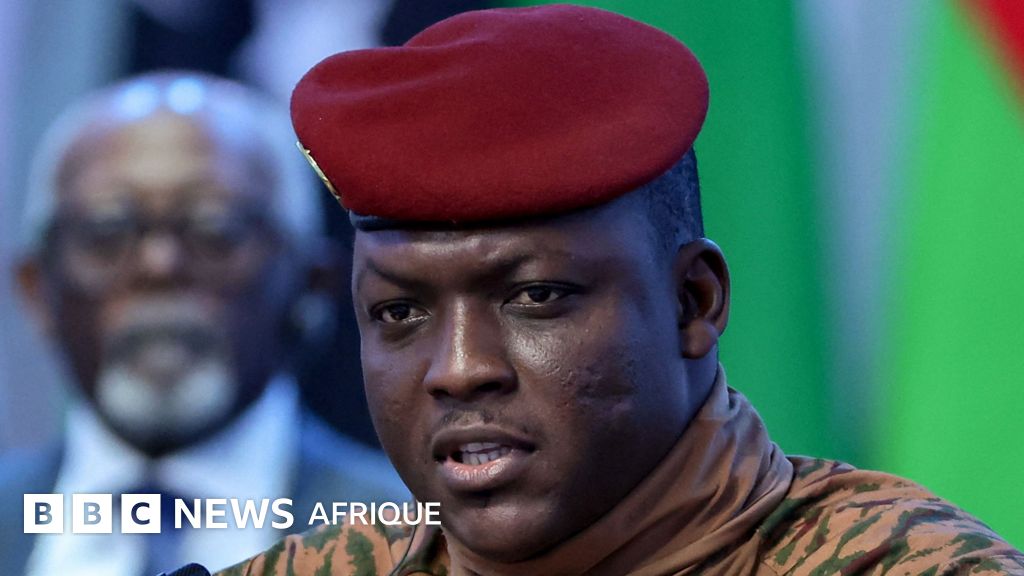
Burkina Faso’s military leader calls for abandoning democracy in favor of revolutionary governance
During a nationally televised interview, Captain Ibrahim Traoré, Burkina Faso’s military leader, declared that democracy has “killed” the nation and must be forgotten. The 38-year-old self-proclaimed revolutionary leader argued that the system is incompatible with the country’s needs and that Burkinabé should embrace an alternative governance model rooted in patriotism and revolutionary mobilization.
The statement marks a stark departure from earlier promises. In 2023, Traoré had pledged to restore constitutional order by July 2024. However, with just two months remaining before that deadline, the military junta extended its rule by five years, citing the need for stability amid ongoing security challenges.
This shift aligns with recent measures taken by the government to consolidate power. In January, authorities banned all political parties, describing them as divisive forces incompatible with the revolutionary agenda. Traoré has repeatedly criticized traditional politicians, describing them as corrupt and self-serving.
“People should forget about democracy. Democracy is not for us,” he stated firmly. “Wherever Western powers impose democracy, it always leads to bloodshed,” Traoré asserted, drawing a parallel with Libya’s collapse following the 2011 NATO intervention. The country, once a stable autocracy under Muammar Gaddafi, has since been mired in civil conflict without holding elections.
Traoré’s vision for Burkina Faso emphasizes sovereignty, self-reliance, and a rejection of foreign influence. He advocates for a system where traditional leaders and grassroots structures play a central role, while promising to rebuild the state from the ground up. Economic and military autonomy are key pillars of this strategy, with Traoré arguing that shorter workdays will not suffice to propel the nation forward.
Critics, however, point to the junta’s increasingly authoritarian tactics. Since seizing power, Traoré has suppressed opposition voices, restricted media freedom, and allegedly punished dissenters by sending them to frontline combat zones. Human Rights Watch reports indicate that over 1,800 civilians have been killed in Burkina Faso since 2023, with two-thirds of the deaths attributed to security forces and allied militias.
The military government’s pivot away from Western allies has further isolated Burkina Faso. Like neighboring Mali and Niger, it has severed cooperation with France and other Western nations in the fight against Islamist militants. Instead, the junta has turned to Russia for military support, though violence in the region shows no signs of abating.
Despite the turmoil, Traoré has cultivated a significant following across Africa for his anti-Western rhetoric and panafricanist stance. His leadership style resonates with many who view traditional democratic systems as neocolonial impositions.
As Burkina Faso navigates this uncharted path, the international community watches closely to see whether Traoré’s revolutionary model will bring stability or deepen the country’s crises.