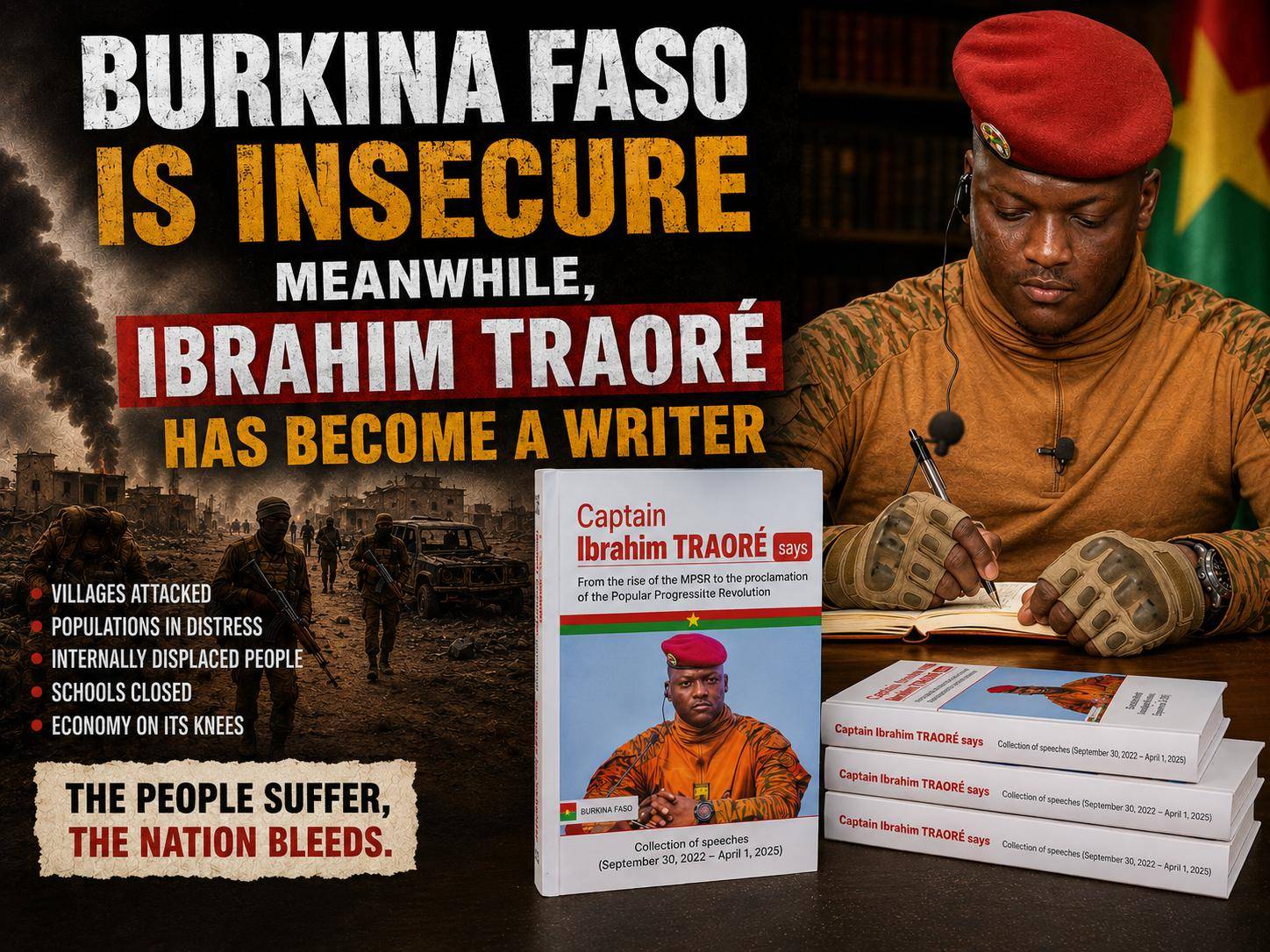
As Burkina Faso continues its descent into an unprecedented humanitarian and security crisis, the recent strategic priorities of the transitional government are drawing intense scrutiny. A widening chasm has become apparent between the administration’s communication efforts and the harsh realities confronting the nation on the ground.
A striking, almost incongruous, contrast defines the current situation. On one side, daily reports detail relentless terrorist attacks, communities under siege, and thousands of internally displaced citizens desperately appealing for the return of peace and territorial integrity. On the other, the presidential office appears dedicated to promoting a publication widely perceived as either propaganda or a self-congratulatory account. For a significant segment of the Burkinabè population, the assessment is now unequivocal: the transitional presidency, many believe, has increasingly functioned as a political communication enterprise.
The disconnect: rhetoric versus the battlefield
The recent publication, whether formally authored by or merely honoring Captain Ibrahim Traoré, has generated widespread dismay and confusion. From the bustling avenues of Ouagadougou to the most secluded rural areas, the population’s message resonates with absolute clarity: their urgent need is for security, not literature. The decision to fund, publish, and actively promote state-backed literary works at a time when the national defense and security forces (FDS) and the Volunteers for the Homeland (VDP) frequently face critical shortages of essential logistical support on the ground represents a profoundly troubling disconnect. One cannot extinguish a conflagration with printed pages, nor can lives be safeguarded by mere cover slogans. An anonymous civil society advocate succinctly stated, “The populace does not seek narratives; it seeks the restoration of its sovereignty.” This reflects a crucial aspect of current Sahel politics.
A perceived breach of the social compact
Upon assuming leadership, Captain Ibrahim Traoré implicitly forged a moral compact with the Burkinabè nation: to restore territorial integrity and re-establish peace where previous administrations had faltered. The substantial public trust he garnered was predicated solely on this pledge of military efficacy. However, a discernible shift indicates that rhetorical pronouncements now supersede tactical imperatives. By directing state resources towards cultivating a personality cult and engaging in political marketing, the current administration risks alienating an already beleaguered populace. For many, the threshold of patience has been exceeded. Public discontent is escalating, culminating in a radical popular injunction: if the primary objective of securing the nation remains unfulfilled, a change in leadership is deemed necessary. This situation warrants careful Sahel analysis, especially for West Africa insider news observers.
Navigating the future of the transition
The incumbent authority stands at a critical juncture. Persisting in governing the presidency as a mere public relations facade, rather than prioritizing the security front, will only deepen the chasm between the government and its citizens. Burkina Faso requires strategic commanders capable of restoring stability, not public relations specialists at its helm. Should Captain Traoré fail to immediately reorient efforts towards the singular, paramount objective of national security, his tenure may ultimately be chronicled as one penned in the ink of illusion, while the nation endured profound turmoil.