
As Cameroon braces for the 2027 elections, economist Serge Alain Godong offers a blunt assessment of the political landscape
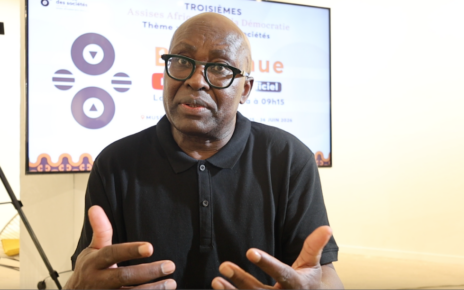
Using the lens of game theory and the prisoner’s dilemma, Serge Alain Godong, an economist trained at Sciences-Po Paris and the EHESS, argues that Maurice Kamto’s path to victory in 2018—and likely in the next election—was always narrow. His analysis paints a regime at a crossroads, where voters opt for the familiar over the uncertain.
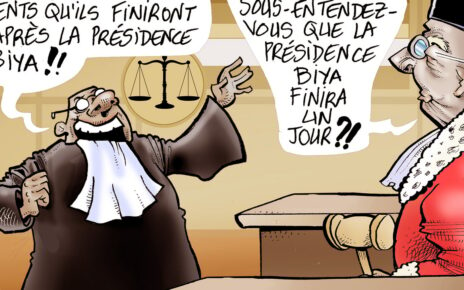
Godong describes Cameroon’s four-decade-old system as openly twilight, a phase where the public is torn between the impulse for change and the comfort of stability. « The openly twilight nature of the four-decade regime now forces us to reassess the forces of consolidation and transformation shaping Cameroon’s public sphere, » he writes. The turning point, he notes, was 2018. The shock of Kamto’s narrow defeat—after he publicly claimed to have scored the « winning penalty »—faded into acceptance as Paul Biya secured a seventh term. The opposition’s momentum stalled, and most Cameroonians « took note of the quiet continuation of power at Etoudi, » the presidential palace.
Election as a contract: the calculus of trust
In his framework, an election is a moment when a leader proposes a future contract to the nation. For voters to abandon the status quo, the alternative must promise greater security and prosperity. Yet Kamto, Godong argues, cannot credibly offer a better deal than Biya’s administration. With roughly 8.5 million voters expected in 2027, the economist questions: « How could Cameroonians entrust their votes to Maurice Kamto if they cannot be certain he would better protect their interests than Paul Biya? »
Godong estimates that 16 million Cameroonians—public servants, formal private-sector workers, professionals, and their families—benefit from the current system. These « winners » share an annual income of about 1.5 trillion Central African CFA francs through salaries, public contracts, and major infrastructure projects. « These are the Cameroonians—and their networks—who will almost certainly vote for the RDPC and its candidate, fully aware of their choice, » he writes.
The prisoner’s dilemma: why the status quo wins
The economist frames the dilemma simply: without coordinated information or proof of a superior alternative, voters default to the known. « Cameroonians recognize the current system is flawed, yet many prefer it to an uncertain equilibrium they cannot verify, » he explains. The result? A cycle of risk aversion that entrenches incumbents.
Godong then explores the « Bamiléké problem, » drawing on Meredith Terretta’s distinction between gung (land) and lepue (freedom). He portrays a Darwinian social and economic landscape in the Grassfields region, where Kamto isn’t seen as a political rival but as a « sinister figure destined to execute a malevolent plan. »
A system of « eating together »: survival of the connected
He paints Cameroon’s political economy as a web of mutual back-scratching—what he calls the « eat together » syndrome. « Everyone is linked to everyone by small schemes, » he writes. « Winners are those who ‘eat,’ and losers are those who go hungry. » The system thrives on patronage, where loyalty is rewarded and dissent punished.
Godong concludes that whoever wins in 2027 will face immense pressure to act swiftly. « Redistribution must be immediate, and the economy must become the sole priority, » he urges. Growth targets of 6%, deficit reduction, and anti-corruption drives are not just goals—they are necessities. « The political game will grow less lazy, less rent-seeking, » he predicts. « The country needs a strong, committed Paul Biya to navigate the aftermath. »