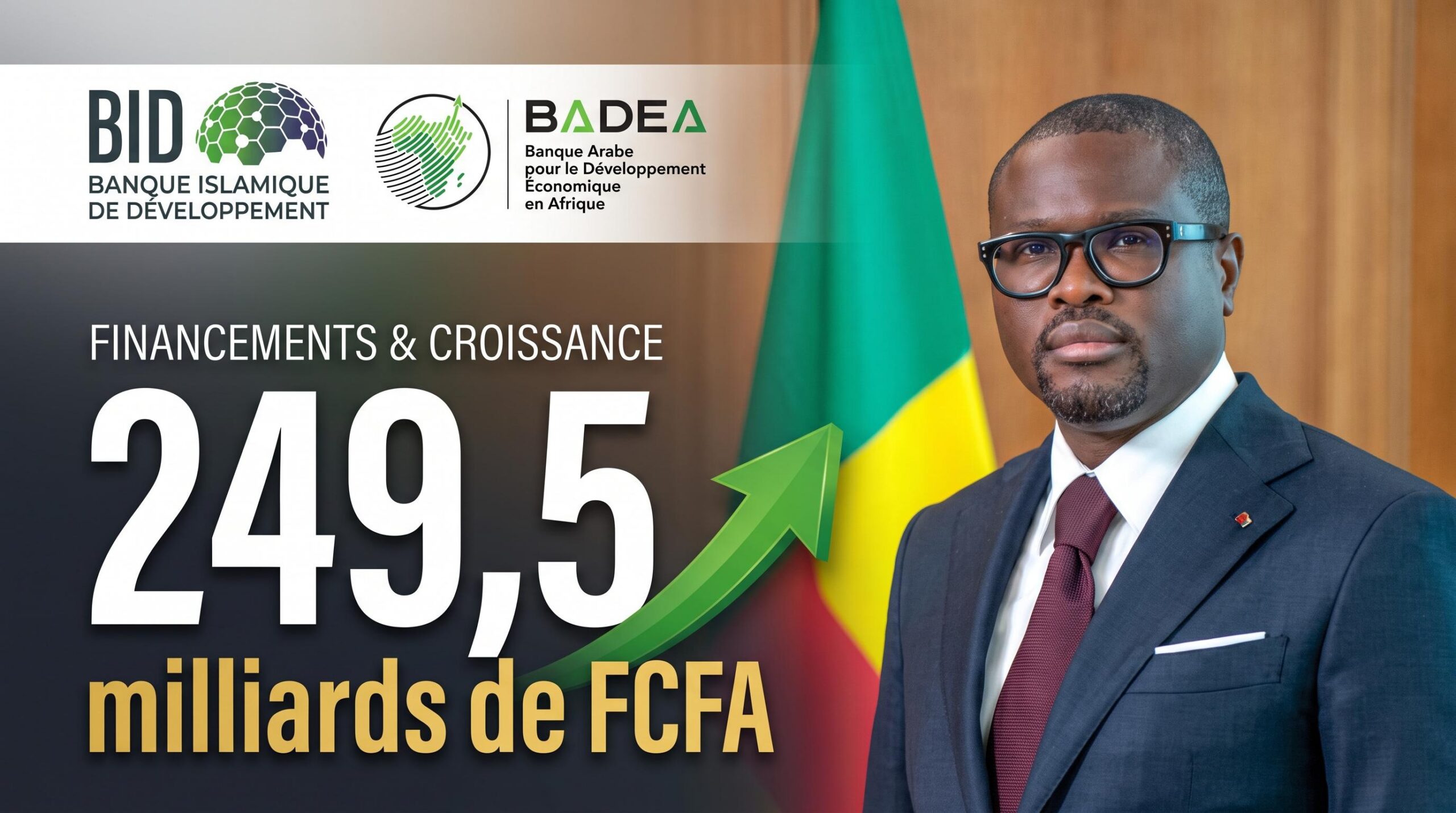
In the ever-shifting landscape of global finance, one question looms large over developing nations: how can a country leverage debt strategically to fuel growth without compromising fiscal health? The Republic of Benin has just taken a decisive step toward answering that question. Over two days in October 2026, during the annual meetings of the International Monetary Fund (IMF) and the World Bank in Bangkok, Benin secured three financing agreements totaling 249.5 billion West African CFA francs. These deals were not merely routine transactions—they represent a calculated effort to finance infrastructure while maintaining strict fiscal discipline and debt sustainability in a challenging financial environment.
Why Benin’s financial signature matters now
Benin’s ability to mobilize such significant funds during a period of rising global interest rates and cautious lending underscores a growing confidence among international financial partners. The agreements were signed with the Islamic Development Bank (IsDB) and the Arab Bank for Economic Development in Africa (BADEA), both key players in financing sustainable development across the African continent. This development signals Benin’s expanding network of financing sources and its strategic pivot toward diversifying funding channels to reduce dependency on a single creditor.
But beyond the dollar value, what truly sets this achievement apart is the context. As governments worldwide grapple with the dual pressures of rising debt costs and the need for massive infrastructure investment, Benin’s approach offers a model worth examining. The country is not borrowing in a vacuum—it’s doing so with a clear reform agenda, transparent public finance management, and a commitment to measurable outcomes. This alignment between ambition and accountability is what attracts institutional investors and multilateral lenders alike.
From loans to leverage: turning debt into developmental power
There’s a common misconception that accumulating debt is inherently risky. In reality, the impact of debt hinges entirely on three factors: the terms of the loan, the use of the funds, and the economic returns generated. Benin’s latest financing package is aimed at infrastructure—roads, energy, public utilities—projects that directly enhance productivity, reduce trade costs, and improve access to essential services for millions of citizens.
Infrastructure financed through prudent borrowing can act as a catalyst for job creation, regional integration, and revenue expansion. Better roads connect farmers to markets. Reliable electricity supports small businesses. Improved water systems reduce healthcare burdens. Each of these outcomes strengthens the tax base over time, creating a virtuous cycle of investment and growth. The key lies in ensuring that every franc borrowed is translated into visible, sustainable benefits—not just in accounting ledgers, but in the lives of Beninese citizens.
The government’s emphasis on results-based spending and rigorous project monitoring reflects a shift from short-term funding to long-term impact. Transparency in procurement, regular progress reports, and independent audits are no longer optional—they’re prerequisites for maintaining investor confidence and public trust. This operational discipline is what differentiates a sustainable financing strategy from reckless accumulation of liabilities.
Budget discipline as a foundation for credibility
Benin’s progress in fiscal consolidation is worth highlighting. According to the IMF’s April 2026 assessment, the overall budget deficit fell from 7.2% of GDP in 2021 to 3.1% in 2024—a significant turnaround driven by higher revenue mobilization and tighter control over public spending. Debt levels have also been stabilized, even after statistical adjustments to include off-budget obligations, demonstrating a commitment to accurate and transparent fiscal reporting.
These improvements have not gone unnoticed. The IMF noted marked gains in revenue collection efficiency, reduced waste in recurrent expenditures, and improved predictability in public finance management. Such credibility is invaluable when negotiating with international financial institutions, especially those that prioritize countries with strong governance records. A lower deficit and a well-managed debt profile make it easier—and cheaper—to access new financing when needed.
Yet, success here is not static. Maintaining fiscal room requires ongoing vigilance. As new projects come online, the government must balance rapid infrastructure development with sustainable debt service capacity. This means carefully selecting financing instruments—concessional loans where possible, commercial debt only when justified by high economic returns—and avoiding over-reliance on short-term instruments that could strain future budgets.
The real test: delivering tangible benefits to the people
Financial statistics, while important, tell only part of the story. For Beninese citizens, the ultimate measure of success will be in the quality of their daily lives. Will the new roads reduce travel time from villages to cities? Will upgraded health centers improve maternal and child health outcomes? Will the energy projects bring reliable power to rural areas for the first time?
These are not rhetorical questions. They are the benchmarks by which Benin’s financial strategy will be judged. Citizens deserve to see the return on every franc borrowed. They deserve transparency in how funds are spent, accountability when delays occur, and clear communication about project timelines and results. Without these elements, even the most impressive financing package risks being perceived as a distant financial transaction rather than a pathway to progress.
Public trust is built on evidence. Disclosing detailed project plans, publishing regular financial reports, and inviting civil society oversight are not just good governance—they’re strategic assets. They attract higher-quality investment, reduce borrowing costs over time, and foster national cohesion around development goals. In Benin’s case, these practices are essential to converting borrowed capital into lasting prosperity.
Maintaining strength: the path forward for Benin’s financial leadership
The 249.5 billion CFA francs secured at the IMF-World Bank meetings represent more than just a financial injection—they are a vote of confidence in Benin’s economic trajectory. But confidence must be nurtured. It requires consistency in policy, predictability in public finance management, and unwavering commitment to anti-corruption and transparency.
Benin’s leadership now faces a dual challenge: accelerating infrastructure delivery while safeguarding the country’s long-term fiscal health. This is not a contradiction—it’s the essence of smart development financing. By marrying high-impact projects with rigorous fiscal stewardship, Benin can position itself as a model of responsible growth in West Africa. The road ahead is clear: transform borrowed capital into enduring infrastructure, into jobs, into services, and into hope for millions of Beninese families.
The question is no longer whether Benin can borrow—it’s whether it can borrow wisely. And with each franc invested with purpose, the answer grows stronger.