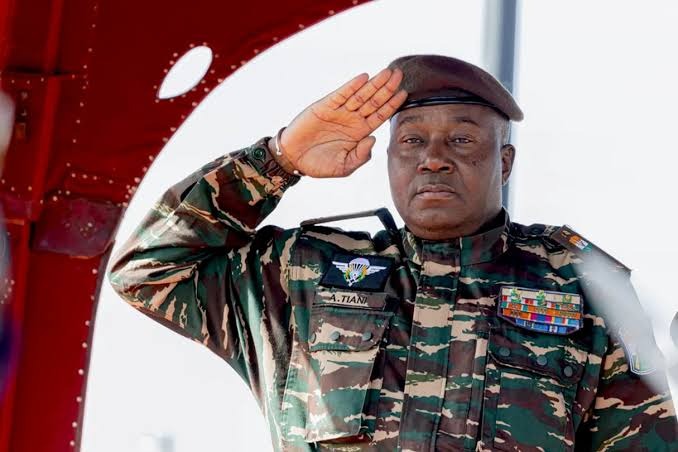
Niger’s military-led administration, led by General Abdourahamane Tiani, stands at a crossroads: prioritize economic survival by securing urgent funds or face the wrath of its most critical financial partner. In an audacious move, the government has slapped China National Petroleum Corporation (CNPC) with a staggering demand for over 3,000 billion West African CFA francs—approximately $5 billion—alleging delays in oil revenue repatriation. Critics argue this tactic masks thinly veiled extortion rather than genuine fiscal responsibility.
As Niger grapples with plummeting foreign reserves and a currency in freefall, the transitional authorities appear willing to gamble with their largest foreign investor’s goodwill—a high-risk strategy that could backfire dramatically.
Why Niamey’s empty coffers are fueling aggressive financial demands
Niger’s economic turmoil has left public finances in tatters. Budget allocations have plummeted from 3,033 billion to 2,749 billion CFA francs, while military spending continues to spiral out of control. In this precarious climate, the junta has turned to an unconventional lifeline: extracting billions from an oil operator already a key contributor to state revenue. However, this approach raises significant concerns about the regime’s true intentions and long-term viability.
The authorities assert that only 105 billion CFA francs from Agadem oil bloc exports reached the treasury over two years. Yet this claim conveniently overlooks the intricacies of global financial transactions, including the $400 million loan Beijing extended in 2024, repayable solely from oil proceeds. By shifting blame to CNPC, Niamey risks not only rupturing economic ties but also destabilizing its own future.
Seven demands to strangle CNPC: how Niger’s military is squeezing Beijing
What began as a financial disagreement has morphed into a calculated campaign of economic coercion. The junta has issued a seven-part ultimatum designed to exert maximum pressure on CNPC and its subsidiaries (WAPCO and the SORAZ refinery):
- Mandatory cash infusions: Enforcing irregular and abrupt transfers of CFA francs from CNPC’s coffers.
- Unrealistic local hiring quotas: Demanding up to 90% of staff be Nigerien, far beyond the local labor market’s capacity.
- Pipeline renegotiation gambit: Reopening audits of the Niger-Benin pipeline (valued at $2.3 billion) to impose one-sided tariff increases.
- Refinery takeover scheme: Seizing control of SORAZ’s governance, including phased removal of Chinese executives.
- Oil field revaluation bluff: Unilaterally reassessing Agadem block reserves to inflate tax obligations.
- Exploration blackmail: Forcing CNPC to commit an extra $1 billion into high-risk exploration ventures like Dinga Deep and Abolo-Yogou.
- Administrative infiltration plot: Placing junta loyalists in key decision-making roles within CNPC’s operations.
Playing with fire: why Niger risks losing its top economic partner
This isn’t the first time Niger has tested Beijing’s resolve. Earlier in 2025, Chinese executives were expelled within 48 hours—a move that sent shockwaves through global investor communities. With the clock ticking on its latest ultimatum, the junta now faces an even graver risk: the potential permanent withdrawal of Chinese investment capital.
For a nation already grappling with diplomatic isolation and financial fragility, severing ties with its largest economic backer could prove devastating. While the regime’s aggressive demands might offer short-term cash relief, they threaten to trigger capital flight, cripple oil sector investment, and push Niger deeper into economic isolation. Ultimately, the most vulnerable—those the junta claims to protect—may bear the brunt of this reckless gamble.