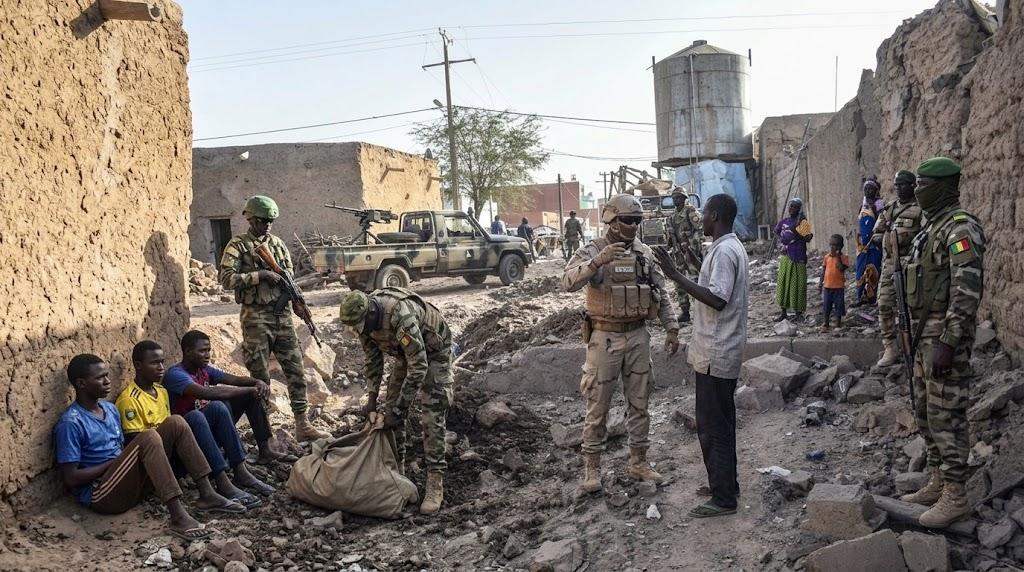
In a brief statement released on October 14, 2026, Mali’s army acknowledged a “tragic incident” resulting in civilian casualties during a military operation. Yet, the announcement left critical questions unanswered: Where did it occur? When? How many were killed or injured? And what were the circumstances?
The vague communiqué, devoid of specifics, arrives amid mounting reports of lethal airstrikes in central Mali and persistent allegations of human rights abuses by national forces and their foreign allies. The most pressing of these concerns centers on civilian safety—who, exactly, is being protected in these military campaigns?
Zanakoro: A community shattered by air strikes
Local testimony from residents, community leaders, and people displaced by the violence paints a harrowing picture of airstrikes in Zanakoro, a village in the Ségou region. On October 12, 2026, at least eight people—primarily women and children, including a pregnant woman and three girls under ten—were killed in what witnesses described as repeated aerial bombardments. Several others suffered severe injuries, forcing families to flee into the surrounding bush.
The strikes reportedly occurred shortly after a baptism ceremony, destroying homes and displacing entire families. Yet, despite the gravity of these accounts, military officials have not confirmed whether Zanakoro was the site of the “tragic incident” referenced in their October 14 statement. Without official verification or an independent investigation, any connection remains speculative at best.
Why the silence on the civilian toll?
The lack of details—no location, no timeline, no casualty count—has left grieving families in limbo. For those who lost loved ones or survived with injuries, this opacity deepens their trauma and obstructs efforts to seek justice. How can accountability be enforced when the most basic facts are withheld?
The shadow of documented abuses
The allegations surrounding Zanakoro are not isolated. Over the past three years, human rights organizations have documented a pattern of violence tied to Malian forces and their Russian partners during joint counterterrorism operations. A September 2026 report by Amnesty International highlighted seven separate incidents along the Mauritanian border, in which 34 civilians were allegedly executed, tortured, or burned alive. These abuses were disproportionately affecting Fulani, Tuareg, and Arab communities, with many victims targeted under suspicion—without evidence—of aiding armed groups.
Africa Corps, the Russian-backed force replacing Wagner, has inherited these accusations. Despite its rebranding, reports continue to surface of indiscriminate attacks. In June 2026, eight civilians, including three children, were killed in Kyrnia, Mopti region, during airstrikes attributed to Africa Corps. Witnesses noted that the bombs struck near a village leader’s residence and a livestock market, raising concerns about the absence of military objectives in the area.
Can Africa Corps change the narrative?
Human rights groups argue that the transition from Wagner to Africa Corps has not addressed the core issue: a lack of accountability. If civilians continue to bear the brunt of operations, does the name of the force matter? The international humanitarian law is clear: attacks must distinguish between combatants and civilians, and all feasible precautions must be taken to avoid civilian harm.
The cost of unanswered questions
The military’s acknowledgment of an “incident” is a step—but one that demands follow-through. Authorities must clarify the location, timing, and casualties of the event. Was it Zanakoro? Were the victims civilians? Have investigations been launched, and have families been informed? Transparency is not a favor to the public; it is a requirement for trust in institutions tasked with protection.
The crisis in Mali is undeniable: jihadist violence has displaced thousands, crippled economies, and claimed countless lives. Yet, the fight against terrorism cannot be waged at the expense of fundamental rights. Justice for civilian victims must be pursued with the same urgency as the campaign against armed groups.
What’s next for Mali’s military and its allies?
The October 14 statement leaves too many gaps. Without answers, the cycle of distrust will persist, and the credibility of Mali’s armed forces—and their partners—will continue to erode. For the families of Zanakoro, the demand is simple: truth, accountability, and reparations. Anything less risks turning a tragedy into yet another unacknowledged stain on the nation’s conscience.