Is Ouagadougou trading human costs for Moscow’s military support?
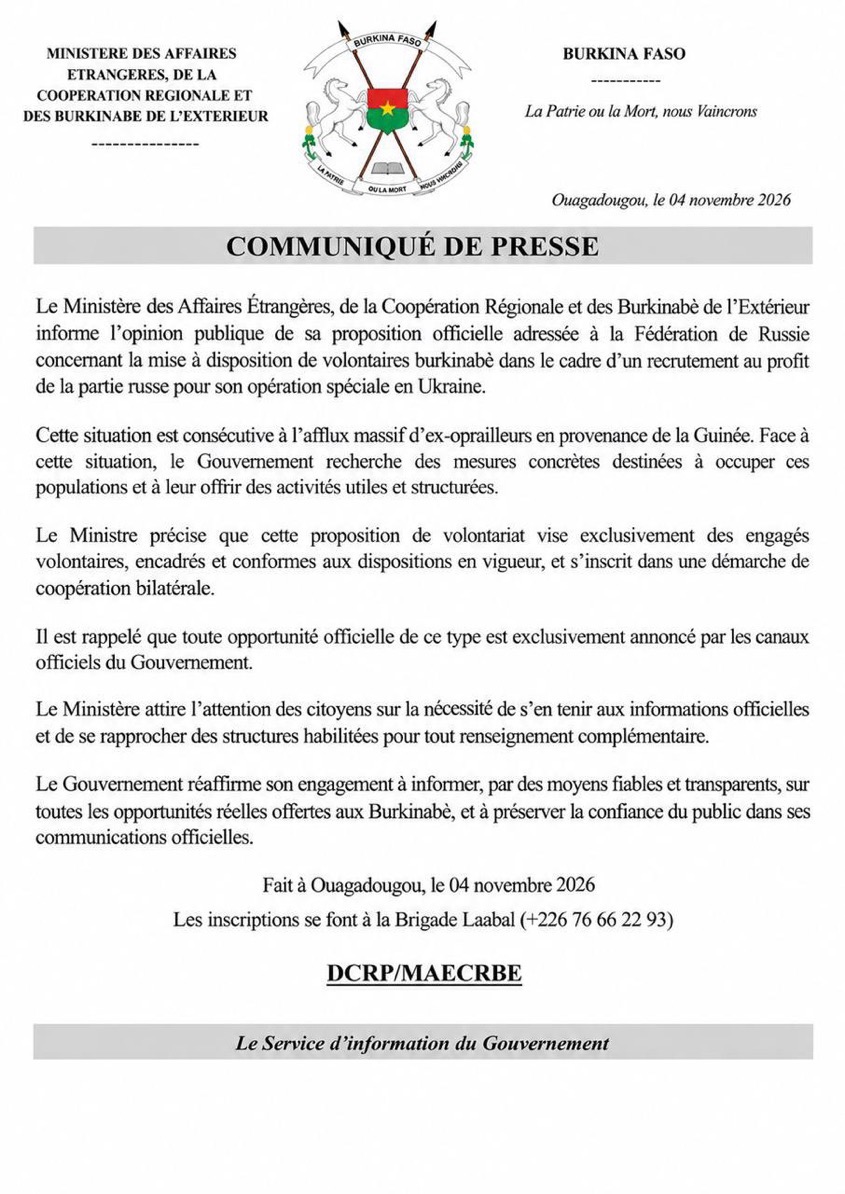
The growing ties between Burkina Faso and Russia may be taking a controversial turn as reports suggest a deal to send expelled Guinean gold miners to Ukraine as combat volunteers. This potential arrangement raises critical questions about the real motives behind these human movements and the risks faced by vulnerable individuals being drawn into a distant war.
From expulsion in Conakry to potential deployment in Kyiv
The individuals in question are Burkinabè miners who were forcibly expelled from Guinea after working in unauthorized gold extraction. Their return to Ouagadougou under official escort may not be just about repatriation it could be the first step toward recruitment for military service abroad. This possibility introduces a troubling scenario where economic desperation meets military need on another continent.
The situation highlights a stark contrast: these miners were expelled precisely when their livelihoods collapsed, and now they might be offered a grim alternative volunteering for combat in a war zone where they have no stake. The ethical weight of such an exchange demands scrutiny: Is their consent truly voluntary when survival options are scarce? What legal protections would they have as foreign fighters for a distant power?
Who benefits from this human movement?
The movement of these individuals from Guinea through Burkina Faso to an unknown destination suggests a coordinated effort. But who initiated this process, and for what ultimate purpose? While authorities may frame it as humanitarian repatriation, the scale and structure of the operation hint at something far more strategic and potentially sinister.
Burkina Faso has increasingly positioned Russia as an alternative to Western partnerships. But when cooperation extends to mobilizing vulnerable citizens for foreign military service, the line between strategic alliance and human exploitation begins to blur. The government owes clear answers: Is this truly about the welfare of expelled miners or are they being prepared as expendable recruits for Moscow’s war machine?
What sovereignty means when citizens become bargaining chips
Sovereignty is not just about choosing new allies; it is also about protecting citizens from being sacrificed in foreign conflicts. If the ultimate destination of these individuals is indeed the Ukrainian battlefield, Burkina Faso’s leadership must be held accountable for the transparency and voluntariness of their enlistment.
Key questions remain unanswered: Were these miners informed of the risks before being transported? Do they understand the nature of the contract they would be signing? Would they have viable alternatives, or is military service presented as the only option left? The absence of clear answers undermines the integrity of the state’s claim to sovereignty and self-determination.
A calculated gamble with human lives
The Russian presence in Burkina Faso is already a reality, with documented security cooperation visibly deepening. But when this cooperation involves recruiting civilians who have faced expulsion and poverty, it crosses a dangerous ethical threshold. The narrative of partnership cannot obscure the reality that these lives may be treated as expendable in a war not their own.
The situation forces a confrontation with harsh truths: Can a nation claim true independence if its citizens are used as pawns in someone else’s military strategy? The moral cost of such a decision may far outweigh any strategic benefit gained from alliance with Moscow.
Beyond official statements: the human cost of geopolitical games
Behind the diplomatic discourse lies a human tragedy unfolding in real time. These miners were expelled from Guinea, stripped of their livelihoods, and now face an uncertain future. If they are ultimately sent to Ukraine, their journey will have transformed from a story of displacement to one of exploitation and potential self-destruction.
The international community cannot ignore this development. When cooperation between states involves the mobilization of vulnerable populations into harm’s way, it demands immediate scrutiny. The choice to send citizens to war especially when their consent is questionable cannot be hidden behind the veil of strategic partnership. It is a violation of human dignity and a failure of state responsibility.
In the end, one question towers above all others: Is this a humanitarian act or a cynical exchange of human lives for military advantage?
By AMINA SALEY — Journalist