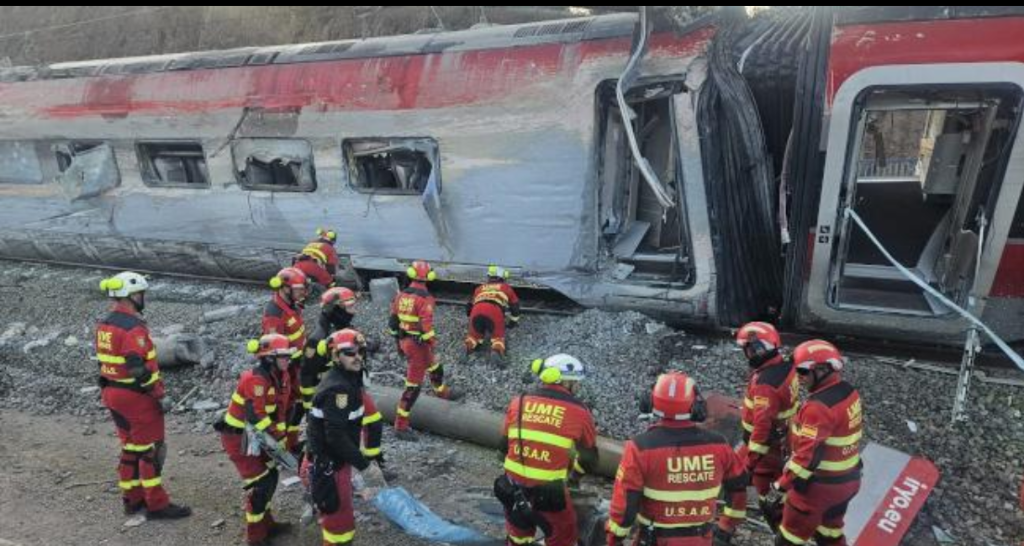
Spain is grappling with the devastating aftermath of a high-speed train collision in Tolède province that claimed at least 46 lives and left 179 injured. The tragedy, which occurred near Urda, has raised urgent questions about rail safety and the effectiveness of current traffic management systems.
Emergency response teams worked tirelessly to rescue passengers trapped in derailed carriages after two high-speed trains—one operated by state-run Renfe and the other by private company Iryo—slammed into each other. With the investigation still in its early stages, officials are racing to piece together what went wrong on this critical Madrid-to-Andalusia rail corridor.
What happened in the Urda collision?
The accident unfolded on a railway line connecting Spain’s capital to the southern region, where high-speed rail traffic is intense. Reports indicate that one train, reportedly at a standstill, was struck by a second train traveling at speed. The force of the impact caused multiple carriages to derail, with some wagons even plunging off the tracks onto an adjacent embankment.
Passengers faced harrowing evacuation conditions, with emergency services forced to navigate unstable terrain to reach those trapped. The scene was chaotic, with medical teams prioritizing stabilization of the severely injured while authorities began the grim task of identifying victims.
Key details emerging:
- A provisional death toll of 46 with at least 179 injuries
- Both trains were operating on a major high-speed route
- Initial reports suggest one train may have been stationary when struck
- The accident has severely disrupted rail services in the region
Why did this collision occur—and could it have been avoided?
While the investigation is still ongoing, early speculation centers on potential failures in signaling systems, communication breakdowns between drivers and control centers, or human error. The Spanish rail network relies heavily on automated safety systems, but this tragedy suggests critical vulnerabilities may exist.
Experts are particularly focused on the coordination between different operators. With both Renfe (public) and Iryo (private) running trains on the same corridor, questions are being raised about whether traffic management protocols failed to prevent this disaster.
Potential contributing factors under scrutiny:
- Possible malfunction in automated signaling systems
- Communication gaps between train drivers and control centers
- Overreliance on automated systems without sufficient human oversight
- Inadequate maintenance of rail infrastructure or safety equipment
The investigation will analyze train recordings, signal data, and driver communications to reconstruct the final moments before impact. Only then can authorities determine whether this collision was preventable—and what safeguards need to be implemented.
How Spain’s rail safety is being questioned again
This isn’t the first time Spain’s high-speed rail safety has come under scrutiny in recent years. Following multiple accidents, including another deadly crash in 2022, the network’s maintenance standards and security protocols have faced growing criticism.
While each accident must be analyzed on its own merits, the frequency of these incidents has intensified public concern. Passengers and families affected by previous disasters are now demanding clearer answers about why safety measures aren’t preventing these tragedies.
Where past accidents have raised red flags:
- Concerns about aging infrastructure on high-traffic routes
- Questions over the reliability of automated safety systems
- Criticism of inconsistent maintenance procedures across operators
- Calls for stricter oversight of private train companies
The Urda tragedy may force a comprehensive review of Spain’s entire rail safety framework—particularly for high-speed corridors where multiple operators share infrastructure.
What happens next? The path to accountability and prevention
The coming days will be critical as investigators work to establish a definitive cause for the collision. Meanwhile, authorities face the dual challenge of supporting grieving families and restoring public trust in rail travel.
For the victims’ loved ones, finding closure will depend on transparent communication about the accident’s causes. For the Spanish rail network, the lesson may be that even advanced automated systems require robust human oversight—and that cutting corners on maintenance is no longer acceptable.
The government must now decide whether to:
- Launch a nationwide safety audit of high-speed rail routes
- Implement stricter regulations for private train operators
- Increase investments in modernizing aging infrastructure
- Develop clearer emergency response protocols for similar scenarios
One thing is certain: until the investigation concludes, Spain’s rail passengers will travel with heightened anxiety—and the memory of this tragedy will loom large over future journeys.
Can other rail disasters be prevented?
The Urda collision forces us to confront a stark reality: modern rail systems, even with advanced technology, are still vulnerable to catastrophic failure. The question now is whether Spain—and other countries with extensive high-speed networks—will take decisive action to close the remaining gaps in rail safety before the next accident occurs.