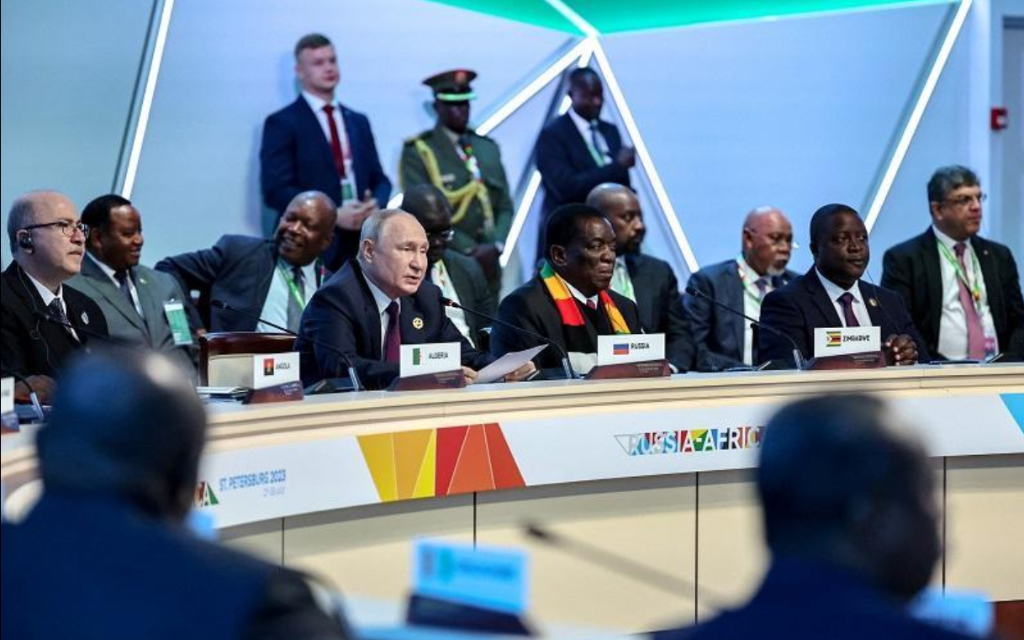
The third Russia-Africa summit, held in Moscow on October 28-29, 2026, has become a litmus test for the Alliance of Sahel States (AES). While Mali’s leader, General Assimi Goïta, arrived in person, Burkina Faso’s interim president, Captain Ibrahim Traoré, opted for a high-level delegation led by his prime minister. Meanwhile, Niger’s head of state, General Abdourahamane Tiani, remains absent from the official lists, raising questions about the alliance’s cohesion and diplomatic strategy.
Why the AES’s presence in Moscow matters
As global powers vie for influence in Africa, the Kremlin’s summit serves as a critical platform for Sahelian leaders to assert their strategic partnerships. Yet, the AES’s representation reveals a fractured approach. Goïta’s personal attendance contrasts sharply with Burkina Faso’s second-tier delegation and Niger’s unconfirmed participation, leaving analysts to question whether the alliance can maintain a united front in negotiations with Russia.
Mali steps forward, but Burkina Faso and Niger hesitate
General Assimi Goïta landed in Moscow on October 26, accompanied by a high-profile delegation. His presence has been widely documented, including his arrival at the airport and scheduled meetings with Vladimir Putin. Mali’s proactive stance underscores its eagerness to deepen ties with Moscow, particularly in security and economic cooperation.
In contrast, Burkina Faso’s Captain Ibrahim Traoré, whose attendance was initially announced by Russian officials, did not appear on the confirmed arrivals list. Instead, Prime Minister Rimtalba Jean Emmanuel Ouédraogo led the delegation, signaling a more cautious approach to the summit’s diplomatic weight.
The situation in Niger remains even more ambiguous. While Russian authorities had earlier confirmed General Abdourahamane Tiani’s participation, public records as of October 28 show no evidence of his arrival. Without an official statement, it’s premature to assume his absence—but the delay has fueled speculation about Niamey’s priorities in Moscow.
Beyond the Sahel: who else is shaping the summit’s agenda?
The Russia-Africa summit has drawn leaders from across the continent, reflecting Moscow’s broad diplomatic outreach. Among the confirmed attendees are:
- Évariste Ndayishimiye, President of Burundi and current African Union chair;
- Emmerson Mnangagwa, Zimbabwe’s president;
- John Dramani Mahama, Ghana’s former leader;
- Daniel Chapo, Mozambique’s head of state;
- Salva Kiir, South Sudan’s president;
- Isaias Afwerki, Eritrea’s leader;
- Teodoro Obiang Nguema Mbasogo, Equatorial Guinea’s president;
- Denis Sassou-Nguesso, Congo’s long-standing president.
Kremlin advisor Yuri Ushakov noted that 48 of Africa’s 54 nations confirmed participation, with 22 represented by their heads of state. This turnout highlights Russia’s enduring diplomatic ambitions, even as not all participants align on global issues.
Delegations vs. direct leadership: a matter of strategy
Not all African leaders chose to attend in person. Algeria sent its prime minister, Sifi Ghrieb, while Benin was represented by Vice President Mariam Chabi Talata. Uganda’s Vice President Jessica Alupo stood in for Yoweri Museveni, and Rwanda’s Prime Minister Justin Nsengiyumva led its delegation in place of Paul Kagame. South Africa, too, opted for a lower-level representation, with Zane Dangor, director-general of international relations, attending instead of Cyril Ramaphosa.
These decisions reflect a mix of logistical considerations and political calculations. While a prime minister or vice president can engage in substantive talks, the absence of a head of state often signals a lower priority—or a deliberate choice to avoid overcommitting to Moscow’s agenda.
Six nations missing in action: what’s behind their absence?
According to Kremlin figures, six African countries did not confirm participation in the summit. However, the reasons remain unclear. Some may have chosen not to attend at all, while others might be represented through diplomatic channels not yet publicly disclosed. Without definitive statements, it’s difficult to assess whether their absence stems from political disagreements, logistical challenges, or strategic shifts.
The real test: what will Moscow deliver for the Sahel?
For the AES, the summit’s outcome hinges on tangible results—security pacts, trade agreements, energy projects, and investment commitments. While Goïta’s presence ensures Mali’s visibility, the alliance’s long-term strength depends on whether Burkina Faso and Niger can secure their own benefits without fracturing their united front.
Moscow has already outlined a new cooperation framework for 2027-2029, but the question remains: will Sahelian leaders leave with more than just photo opportunities? The answers could redefine their partnerships with Russia—and their standing on the global stage.