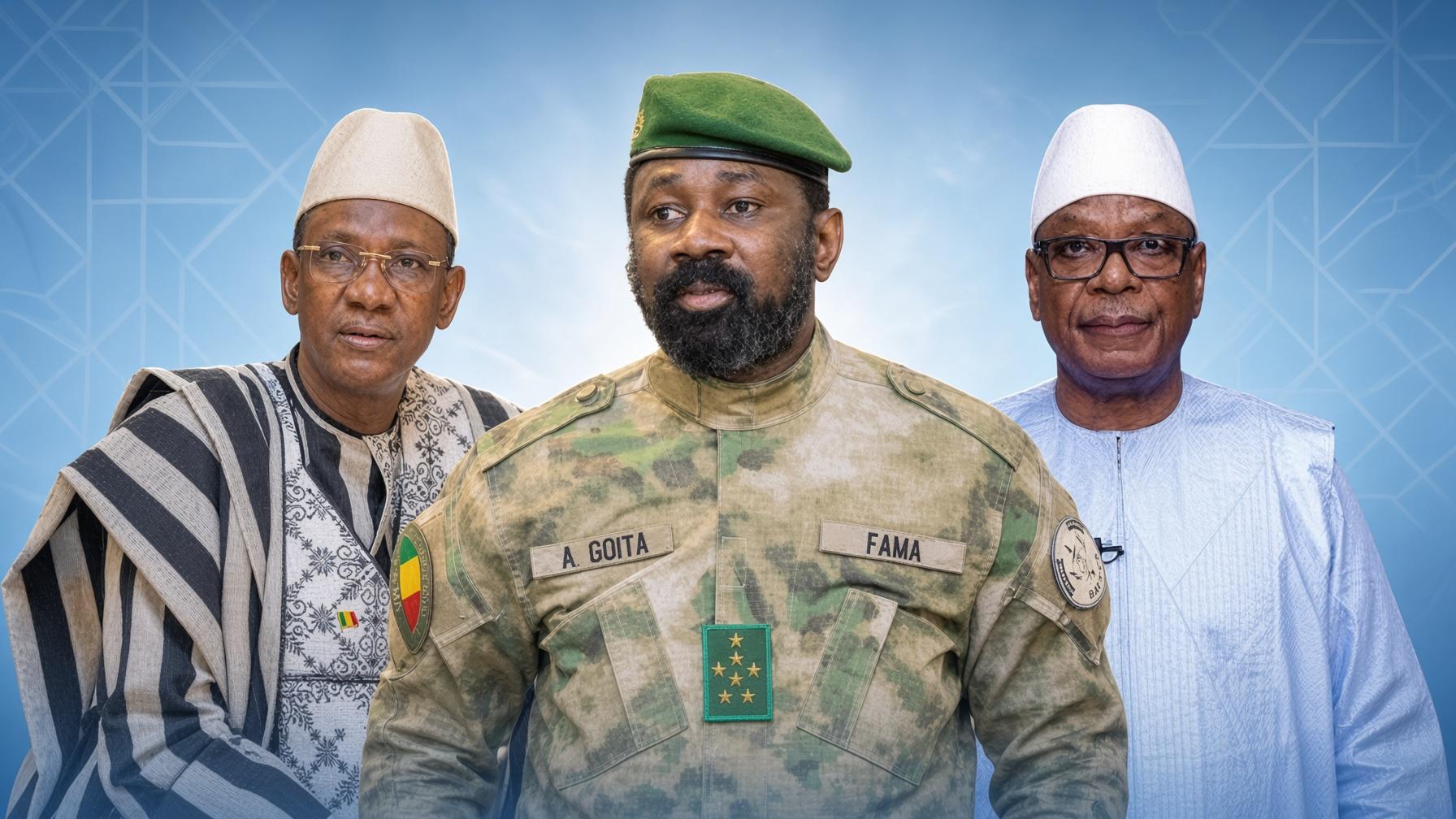
The political leaders who once held sway in Mali have been systematically removed from the national arena. For generations, these figures shaped policies, controlled media narratives, and maintained firm control over party strongholds. Yet under the firm leadership of General Assimi Goïta, the traditional political class hasn’t just been sidelined—it has been deliberately dismantled, with its members exiled, imprisoned, or silenced.
Now, three years into the junta’s rule, the pressing question emerges: Is Mali’s political history reaching its final chapter? The evidence suggests a coordinated effort—not merely suppression, but a deliberate attempt to erase the politicians who once defined the nation’s democratic journey. Their decline wasn’t an accident; it was orchestrated through a multi-layered attack on their influence and credibility.
Courts weaponized: turning justice into a tool of control
The regime’s first strike was to repurpose legal institutions as instruments of political suppression. Former heads of government, party founders, and influential lawmakers now face relentless prosecutions under vague and sweeping charges. Allegations of “undermining state security,” “subversive statements,” or “financial misconduct” serve as convenient justifications to neutralize opponents. Recent detentions, including that of a former prime minister once aligned with the junta, reveal an unsettling truth: in today’s Mali, even past alliances offer no protection.
The stark choices of dissent and survival
For those not behind bars, two paths remain: flee or remain—and remain silent. Facing arrest warrants or targeted persecution, numerous politicians, former ministers, and activist leaders have fled to neighboring cities like Abidjan, Dakar, or Paris. From abroad, they attempt to rally opposition, but their voices struggle to break through Mali’s heavily censored information landscape. Meanwhile, those who stay in Bamako operate under an unspoken rule of compliance. The regime’s aggressive crackdown on political gatherings, media outlets, and civic organizations has made resistance dangerous—often framed by authorities as outright treason.
From scandalized to forgotten: How the public turned against the elite
The junta didn’t just dismantle a political class—it exploited widespread public disillusionment. Years of corruption scandals, elite collusion, and failure to address insurgencies had eroded trust in traditional parties. By positioning itself as the sole savior capable of cleaning up the system, the military recast the old guard as the architects of Mali’s decline. What began as populist rhetoric has hardened into permanent institutional control. Indefinite postponements of elections, bypassing constitutional norms, and installing handpicked transition bodies have pushed political parties to the fringes—reducing them to bystanders in a national rebuilding process they once led.
The cost of silencing politics in a fragile state
The junta’s strategy has won one clear victory: fragmentation. Political coalitions, party structures, and alliances lie in tatters. Yet this silence carries a heavy price. With no organized opposition, Mali now faces a democracy without democratic voices—one where debate is stifled, mediation is absent, and power operates unchecked. By erasing the old elite, the regime may have quelled immediate resistance. But in doing so, it risks isolating itself in a cycle of perpetual instability, disconnected from the very political renewal needed to heal the nation’s deepening security and economic wounds.
In this altered political terrain, the junta rules over an emptiness—and voids rarely empower nations for long.