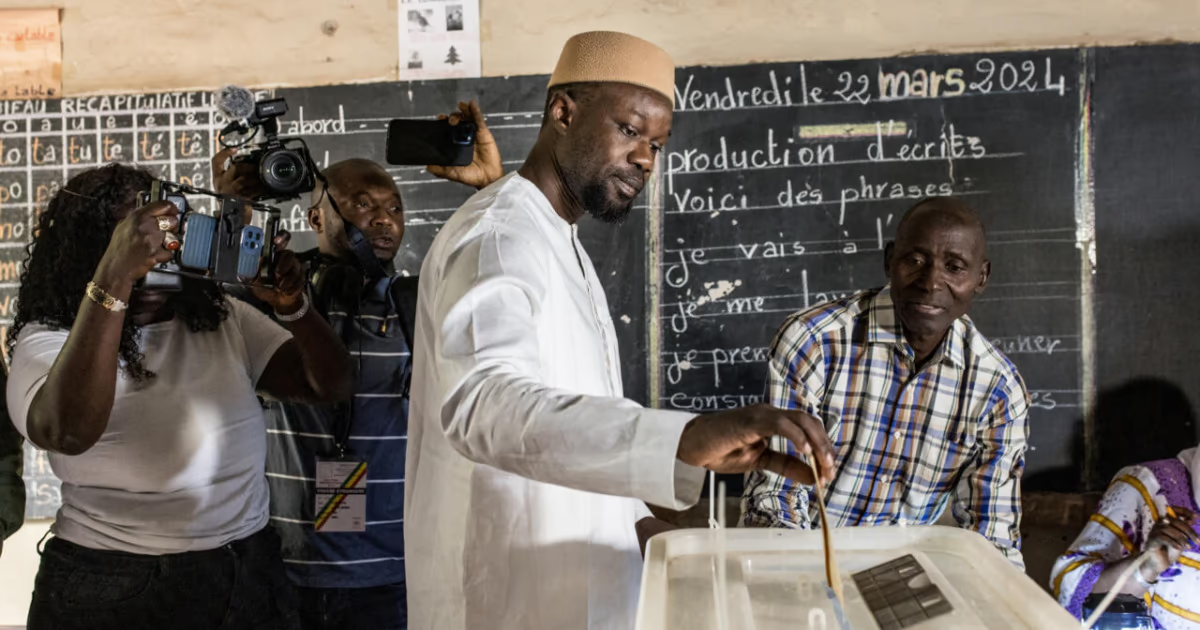
Why Senegal’s municipal elections matter more than ever
As Senegal prepares for its 2027 municipal elections, a growing number of political figures are stepping forward with bold ambitions. From Dakar’s bustling streets to the quiet neighborhoods of Matam, aspiring leaders are declaring their intentions to run for key municipal positions. But with the official timeline still shrouded in uncertainty, the stakes couldn’t be higher for communities across the country.
Dakar’s high-stakes race: Vision versus political maneuvering
The race for Dakar’s mayoralty is heating up, with Dr. Arona Coumba Ndoffène Diouf emerging as a prominent contender. A former advisor to President Macky Sall and member of the Kiiraay party, Diouf announced his candidacy in early October 2026. His vision for the capital is ambitious: transforming Dakar into a model of modern governance, drawing inspiration from cities like Singapore. Yet behind the vision lies a political landscape where alliances and rivalries will heavily influence the outcome.
The competition doesn’t stop at the city center. In Pikine, one of Dakar’s most densely populated suburbs, the battle lines are already drawn. Babacar Ndiaye, a deputy from the Pastef party, declared his intention to run as early as January 2026. His candidacy, however, still hinges on internal party approval. Meanwhile, the coalition Diomaye Président has named Dr. Cheikh Dieng, former director-general of Senegal’s National Sanitation Office (ONAS), as its official candidate. The stage is set for a showdown that will reflect broader political tensions across the country.
Beyond Dakar: Municipal ambitions across Senegal
Senegal’s municipal elections will determine the future of more than just the capital’s leadership. In Matam, Souleymane Barka Ba has taken a decisive step forward. On October 10, 2026, Ba launched the “Sénégal d’abord” National Civic Movement and accepted his nomination as the coalition’s candidate for the Matam mayoralty. His campaign signals a broader strategy to mobilize voters in a region where local governance plays a critical role in economic development.
In Hann Bel-Air, a suburb of Dakar, Matar Diaw has also thrown his hat into the ring. Currently serving as deputy mayor, Diaw officially declared his candidacy in August 2026 under the banner of “Maire Matar Horizon 2027.” His platform focuses on challenging the incumbent administration led by Babacar Mbengue, positioning Diaw as a reformer ready to bring change to the community.
Further north, in Ogo (Matam region), Professor Abdoulaye Baïla Ndiaye has entered the race with a platform centered on education, environmental sustainability, improved healthcare, water access, and municipal modernization. Such declarations, while not yet official, reflect the growing momentum as political actors position themselves ahead of what promises to be a highly competitive electoral season.
The timeline dilemma: When will Senegal’s elections truly happen?
While the stakes are clear, the official election calendar remains unsettled. Municipal elections were initially scheduled for January 2022 but were delayed. Prime Minister Ahmadou Al Aminou Lô announced in September 2026 that January 17, 2027, would mark the official polling date. However, the process hinges on several critical steps: the issuance of formal election calls, the publication of voter rolls, and the final approval of candidate lists—all of which must be completed at least 70 days before the vote. The coming months will reveal whether these deadlines are met, or if further delays will shape the electoral landscape.
What’s next for Senegal’s political hopefuls and voters
For political parties and coalitions, the next few months will be critical. They must finalize their candidate selections, forge local alliances, and craft compelling platforms that resonate with voters. For those already declared, the challenge is to move beyond personal ambition and present clear, actionable visions for their communities.
Meanwhile, voters will face a diverse slate of candidates, each offering different approaches to urban development, public services, and local governance. The 2027 municipal elections are more than a routine political exercise—they represent an opportunity to reshape Senegal’s municipalities, influence national policy from the ground up, and determine which leaders will carry the responsibility of steering cities and towns into the next decade.
One thing is certain: the choices made in the coming months during the nomination process will set the tone for Senegal’s local political future. The question now is whether the candidates, parties, and communities are ready to meet the moment.