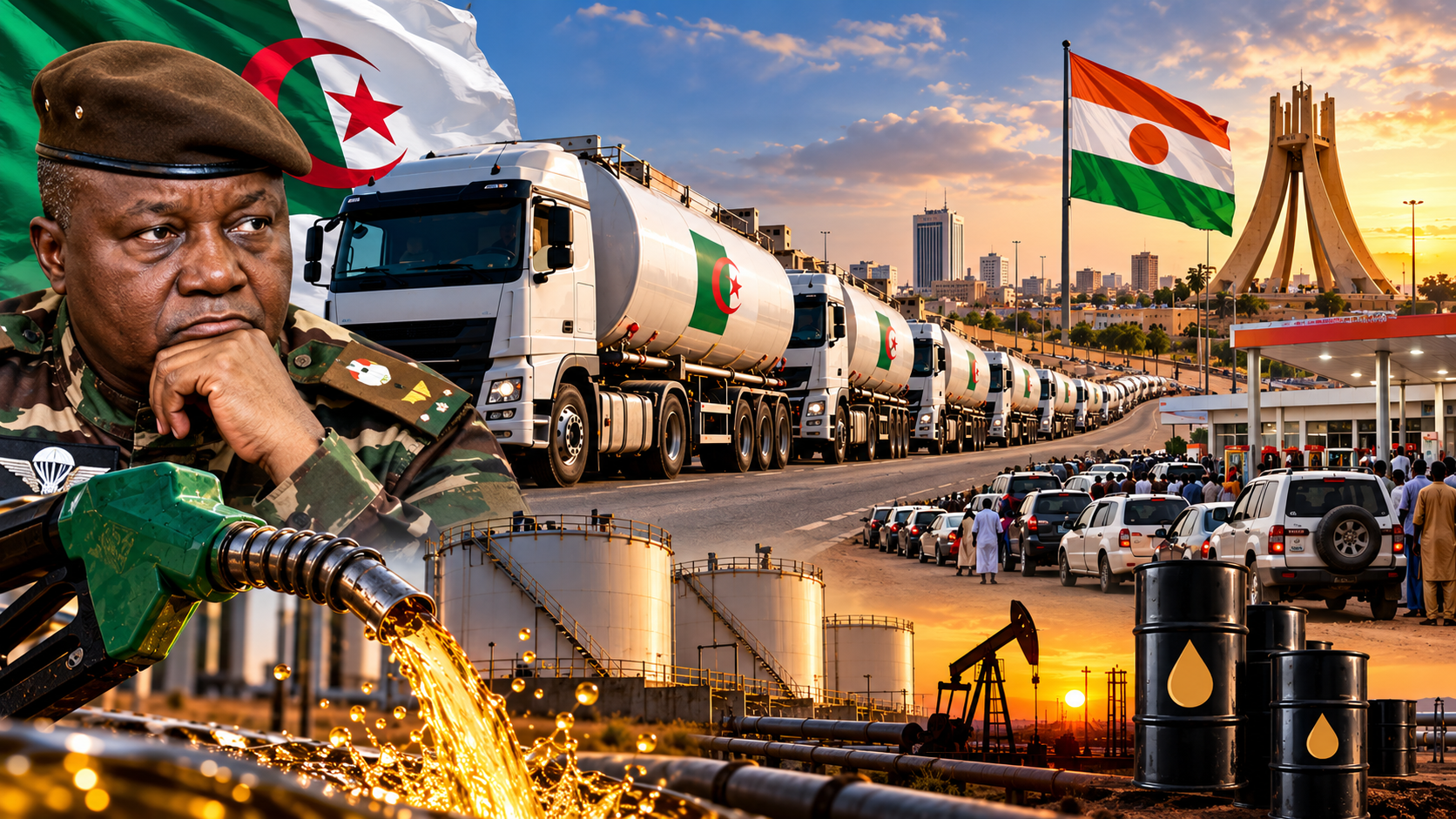
As Niamey faces mounting pressure on its fuel supply chains, a recent 3.75-million-litre shipment from Algeria originally earmarked for Agadez has sparked intense debate. With the capital now receiving 150 tankers at 800 FCFA per litre, authorities must clarify whether this is a strategic stockpile or a costly stopgap measure.
Why 150 tankers shifted from Agadez to Niamey
What began as an emergency lifeline for Agadez has taken a new route to the capital. The 150 tankers, each carrying 25,000 litres, were initially planned to ease shortages in northern Niger. Yet instead of reaching their intended destination, the fuel is now en route to Niamey raising questions about the government’s shifting priorities.
While official explanations remain absent, one possibility is that Niamey’s fuel reserves have fallen dangerously low. Another interpretation is that the supply was redirected to prevent acute shortages in a city that powers the country’s economy. Whatever the rationale, the operation underscores a deeper dilemma: does Niger need quick fixes or long-term fuel security?
Algerian fuel at 800 FCFA: a justified cost or a hidden burden?
The price tag of 800 FCFA per litre delivered to Niamey has intensified scrutiny. Algeria’s offer includes repayment in crude oil, but even without immediate cash outlay, the economic value of this transaction must be assessed. Comparatively, Nigerian fuel previously arrived at 702 FCFA per litre, including transport costs a difference of 98 FCFA per litre.
If all 3.75 million litres were sourced at these two rates, the total extra cost would approach 367.5 million FCFA. Yet price alone does not dictate sound policy. Reliability, delivery timelines, and alternative corridors must also weigh into the decision. In times of instability, a higher price for guaranteed supply can outweigh cost considerations.
Is Niamey building fuel reserves or just buying time?
A single shipment does little to prevent future shortages unless part of the volume is preserved as a strategic reserve. Niamey’s daily fuel consumption driven by public transport, generators, and commercial activity requires careful planning. How much of the 3.75 million litres will be stored, and for how many days will it cover demand? Without clear data, the sustainability of this supply remains uncertain.
True fuel security demands more than emergency deliveries. It requires robust storage infrastructure, inventory rotation, and rigorous oversight to prevent theft or mismanagement. The current operation must be part of a broader strategy not a reactive patch.
What next for Niger’s fuel strategy?
Three critical questions remain unanswered: What volumes will be stored versus consumed immediately? How will Algeria’s crude oil be valued and accounted for? And what guarantees exist that this supply line will remain reliable?
Transparent communication could dispel doubts. If the shift to Niamey was driven by urgent need, authorities should explain why Agadez’s needs were deprioritized and how they will be met. If the aim is stockpiling, clarity on storage capacity and distribution plans is essential.
Niger cannot afford to chase fuel only when shortages loom. The 150 tankers from Algeria offer temporary relief, but lasting energy security will require foresight before the next crisis forces costly improvisations.
By AMINA SALEY — Journalist