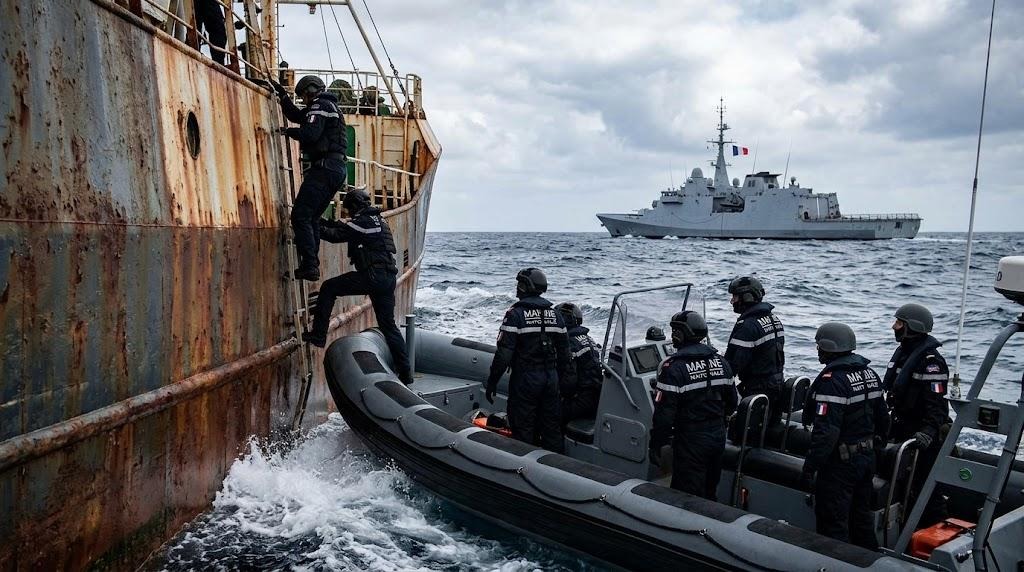
The interception of a 244-meter oil tanker in the Indian Ocean has raised a critical question: Is the Benin maritime flag being exploited as a loophole in international sanctions against Russia?
Why a French navy operation exposed a high-stakes flag mystery
On October 12, 2026, a French naval task force operating over 450 nautical miles south of Réunion intercepted the DF Peak, a massive oil tanker sailing under what French authorities suspect was a beninese flag of convenience—or worse, a stolen one. The move, described by defense analysts as a preemptive strike against sanctions evasion, unfolded far beyond French territorial waters, underlining the global reach of maritime enforcement.
Upon boarding, French marines discovered glaring inconsistencies in the vessel’s documentation. In response, the ship was escorted to a monitored anchorage near Réunion for forensic inspection. Investigators are now scrutinizing the tanker’s registry, cargo logs, and ultimate beneficial ownership to determine whether it was part of the so-called ghost fleet—a shadowy network of vessels that help Moscow bypass restrictions.
From Russian registry to Benin flag: the tanker’s shadow trail
The DF Peak is a 110,000-tonne crude carrier that has been a target of EU, US, and UK sanctions since 2024. Its documented journey tells a story of deliberate concealment. Originally operating as the NS Captain, it briefly sailed under Russian registry as the Kaliningrad in April 2024. By 2025, it reappeared as the DF Peak, flying the flag of Benin. Satellite tracking data shows the vessel returning from Venezuela before its interception near Madagascar.
This rapid succession of identities and registries is emblematic of tactics used by operators in the ghost fleet. By exploiting weaker maritime registries and front companies, these vessels obscure their true ownership and route, making them difficult to track and sanction.
Benin’s maritime sovereignty on trial
The case has thrust Cotonou into the spotlight as officials grapple with a harsh truth: Is Benin’s maritime flag being used to facilitate sanctions-busting? Under Benin’s Maritime Code, a vessel can only be registered if there is a real and substantial link between the ship and the country—such as residency of the owner, a registered company in Benin, or strict operational controls.
If investigations confirm the DF Peak was flying a counterfeit flag, it would constitute:
- Usurpation of national identity, a direct violation of Benin’s sovereignty and maritime law.
- Fraudulent registration, potentially involving shell companies that misled authorities.
- A breach of Benin’s obligations under the UN Convention on the Law of the Sea (UNCLOS), which demands effective control over vessels flying its flag.
Benin’s government is now under pressure to audit its national registry and remove any vessels that fail to meet legal standards. Failure to act could erode trust in the Benin flag and expose the country to further sanctions-busting operations.
France’s legal right to act—and Benin’s recourse
Under international maritime law, France’s interception was fully justified. Article 110 of the Montego Bay Convention authorizes warships to board foreign vessels on the high seas if there are reasonable grounds to suspect they are stateless or flying a false flag. The DF Peak’s documented history of identity changes and suspicious route patterns provided such grounds.
Meanwhile, Benin has every right to seek judicial assistance from France to determine whether local intermediaries or maritime actors facilitated the fraudulent registration. This case could become a turning point in Benin’s maritime governance, prompting stricter enforcement of its flag state obligations.
Ghost fleet tactics: an escalating global threat
The DF Peak incident is not an isolated case—it’s a symptom of a systemic challenge. The ghost fleet relies on a web of shell companies, opaque financial structures, and mid-ocean transfers to hide cargo origins and destinations. Operators exploit:
- Flags of convenience from jurisdictions with lax oversight.
- Missing or falsified insurance certificates.
- Ship-to-ship transfers in international waters to obscure oil provenance.
As sanctions tighten on Russia, these networks grow more sophisticated. The interception of the DF Peak underscores the urgent need for coordinated international action—starting with stricter control over national maritime registries to prevent their weaponization in sanctions evasion.