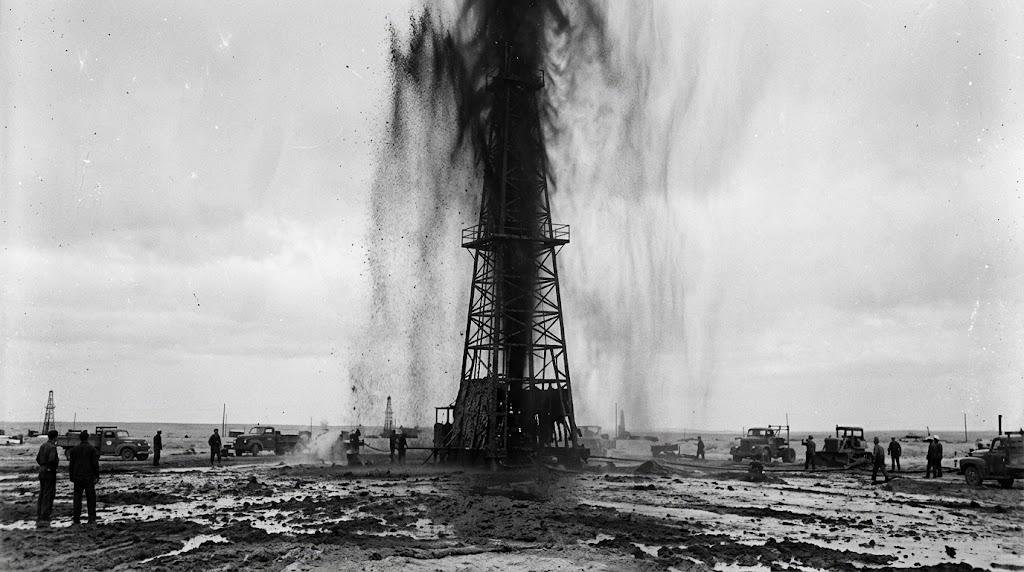
The Nigerien government has officially recognized the grave situation unfolding at the Goumeri W-8 well in the Agadem oil field—a crisis that escalated dramatically on September 25. After weeks of public silence, authorities publicly disclosed the incident on October 12, 2026, labeling it as the most severe emergency in Niger’s oil sector since production commenced in 2011. The uncontrolled gusher, now violently erupting crude oil up to ten meters into the air, has already threatened adjacent drilling sites and injured two workers.
Government delays fuel backlash over oil field disaster
Criticism has mounted against the government’s sluggish response to the Goumeri W-8 blowout, particularly from environmental organizations such as the Niger Environmental Rights Group (GREN), which had warned from the outset about potential contamination of land and underground water sources. While emergency responses—including makeshift barriers and containment ponds—have been hurriedly implemented, no accurate data has been released regarding the spill’s scale or the full scope of ecological harm. This opacity has only fueled public skepticism and distrust.
Niger’s push for energy independence collides with technical limitations
Niger’s ambition to assert greater control over its oil resources—evidenced by its insistence on 80% local staffing at the China National Petroleum Corporation (CNPC) Niger Petroleum—has run into a critical roadblock: the absence of specialized personnel capable of controlling a catastrophic well rupture. This deficiency has left authorities with no choice but to reassess their opposition to foreign intervention, paving the way for Algeria’s Sonatrach—renowned across Africa for its expertise in well control and crisis mitigation—to play a pivotal role.
Sonatrach’s intervention: a calculated lifeline for Niger
Algeria’s involvement follows a period of intensified diplomatic and energy cooperation between Niamey and Algiers, including joint ventures on the Kafra exploration permit and joint oil marketing initiatives from the Agadem field. Sonatrach’s specialists are currently conducting independent assessments to pinpoint the blowout’s root cause and assign responsibility. However, despite their expertise, no definitive timeline has been established for permanently sealing the well. The pressing question now looms: Can Niger resolve this unfolding crisis without sustained external assistance?