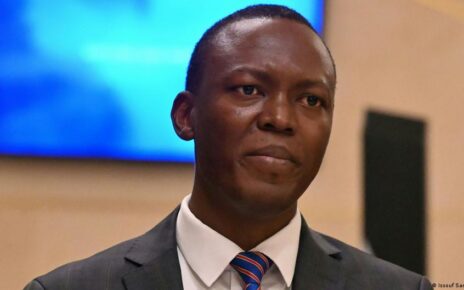
In Chad, a recent court decision sentencing eight prominent figures from the Groupe de concertations des acteurs politiques (GCAP) to eight years in prison has ignited a fierce political storm. Five days following the verdict, Hissein Abdoulaye, the spokesperson for the opposition coalition, broke his silence to vehemently denounce what he perceives as a deliberate strategy by the authorities to neutralize any dissenting voices. This severe judgment emerges as the Chadian government endeavors to solidify its institutional framework established during the ongoing transition period.
A verdict seen as a deliberate political message
For the coalition, the harshness of these penalties is no mere judicial coincidence; instead, it represents a calculated political maneuver. “The current system intends to silence us,” Hissein Abdoulaye declared, encapsulating the sentiment of an embattled opposition. The eight incarcerated leaders were among the most vocal participants in public discourse, having consistently voiced critical opinions on the governance practices stemming from the transitional process in recent months.
Beyond the individuals directly impacted, it is the symbolic weight of the verdict that deeply troubles Chadian political organizations. An eight-year sentence, if fully served, would effectively bar these leaders from participating in upcoming electoral and legislative contests for a considerable period. The judicial timeline thus intertwines with the political calendar in a nation where the opposition already struggles to gain visibility within the national media landscape.
The national dialogue under scrutiny
Chadian authorities frequently emphasize the critical need for an inclusive dialogue to ensure national stability. However, the GCAP dismisses this perspective, contending that official consultations cannot yield meaningful outcomes if key dissenting voices are deliberately excluded. “If we genuinely want to give this democracy a chance to be revitalized, we must accept the existence of an opposition,” the coalition’s spokesperson asserted.
This statement encapsulates the profound unease felt by a segment of the political class, which views the discussion forums initiated by the government as mere platforms designed to rubber-stamp pre-determined decisions. Several political groups claim they possess no genuine latitude to propose alternative solutions, whether concerning electoral code reform, territorial organization, or the management of public resources. For the GCAP, a dialogue that excludes its primary critics is nothing more than a carefully orchestrated performance.
This interpretation aligns with a broader trajectory. Since the passing of Idriss Déby Itno in 2021, Chad’s transition has extended far beyond its initial timelines, ultimately culminating in the institutional consolidation of Mahamat Idriss Déby’s power. Opponents who challenge the legitimacy of this sequence of events decry a gradual erosion of public freedoms, marked by a series of trials and arrests.
Opposition seeks external support
Deprived of its key figures, the coalition now faces the challenge of reorganizing its communication strategy and securing international backing. The GCAP intends to present its case to Chad’s international partners, particularly European diplomatic missions and regional organizations active across Central Africa. French diplomacy, historically linked to N’Djamena through defense agreements, is cautiously monitoring the situation, especially as Paris has witnessed a decline in its influence across several Sahelian capitals.
The possibility of judicial appeals remains open. The legal representatives for the eight convicted individuals are expected to lodge appeals; however, recent experiences foster skepticism within the opposition regarding the true independence of the judiciary when confronted with politically sensitive cases. Nevertheless, the widespread media coverage of the verdict, in a country where information now circulates extensively via social media, complicates the efforts of a government keen on preserving its image among its international partners.
In the short term, the standoff between the GCAP and the executive branch is likely to further rigidify the Chadian political arena. Practically speaking, none of the significant milestones announced by the government, whether local elections or administrative reforms, can foster an atmosphere of appeasement if key dissenting figures remain incarcerated.