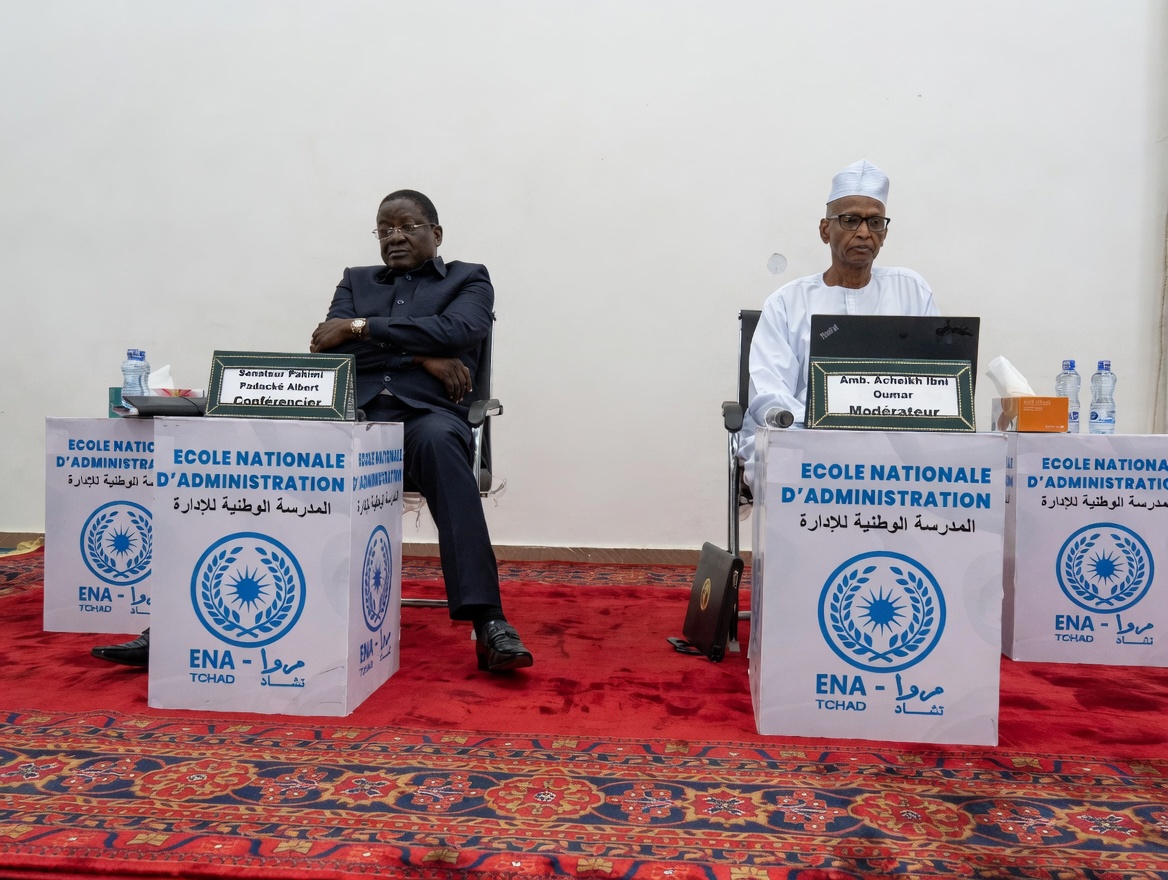
The École Nationale d’Administration (ENA) in Chad played host this past Friday afternoon to a high-level conference-debate led by former Prime Minister and Senator Albert Pahimi Padacké. The event, part of the ENA’s prestigious « Grands rendez-vous de l’ENA » series, drew a packed audience of students, civil servants in training, administrators, and political stakeholders.
With decades of political experience—including two terms as Prime Minister and a background in civil administration—Padacké delivered a compelling, well-structured address that blended historical context with forward-looking solutions. He opened by emphasizing the urgency of the topic: decentralization as a driver of local development, with a focus on provincial councils.
Tracing the roots of Chad’s decentralization journey, the speaker linked it to broader African transitions in the 1990s, when democratic reforms, international donor pressure, and a new governance paradigm shifted power toward local communities. « The question isn’t whether decentralization can spur development—it’s whether we’ve built the right framework for it to happen, » he remarked.
The conference unfolded around three core themes:
1. Political and legal foundations
Padacké underscored that Chad’s constitutional evolution—from the 1993 Sovereign National Conference to the 1996 and 2023 Constitutions—explicitly enshrined a unitary yet decentralized state. Key milestones include:
- The 2024 organic law n°14, defining the status of autonomous local authorities.
- The 2024 organic law n°28, redistributing powers between the central government and provinces.
- Article 271 of the Constitution, which enforces the principle of subsidiarity—decision-making at the most local level feasible.
2. Current bottlenecks
Despite legal progress, real-world obstacles persist:
- Delays in transferring financial and human resources to provinces.
- Limited technical and administrative capacity among provincial officials.
- Governance gaps and coordination failures between elected councils and state representatives.
3. Pathways to progress
The former Prime Minister proposed actionable solutions:
- Accelerating the transfer of revenue shares—including oil and tax proceeds—to provinces.
- Investing in training for elected officials and civil servants.
- Establishing robust monitoring and evaluation mechanisms.
- Amplifying civil society and development partner involvement.
- Upholding subsidiarity to ensure genuine—not symbolic—decentralization.
In closing, Padacké urged the next generation of administrators to embrace these challenges. « A functional decentralization system doesn’t just bring government closer to citizens—it’s the bedrock of balanced national development, » he concluded. The forum left attendees with a clear roadmap: from policy to practice.