Côte d’Ivoire is demonstrating an exceptional ability to attract global funding, significantly surpassing its initial targets with commitments exceeding 80 billion dollars for its comprehensive National Development Plan. This achievement underscores the nation’s robust economic foundation and renewed stability, making it a highly attractive destination for international investors.
The Minister of Planning announced on Thursday that Côte d’Ivoire has successfully secured international public investments four times greater than initially anticipated to fund its National Development Plan (NDP) through 2030.
This accomplishment further solidifies the country’s economic appeal, characterized by one of West Africa’s most vigorous growth rates, averaging 6.5% in recent years. This resurgence follows a decade of political and military instability in the early 2000s, with stability now firmly re-established.
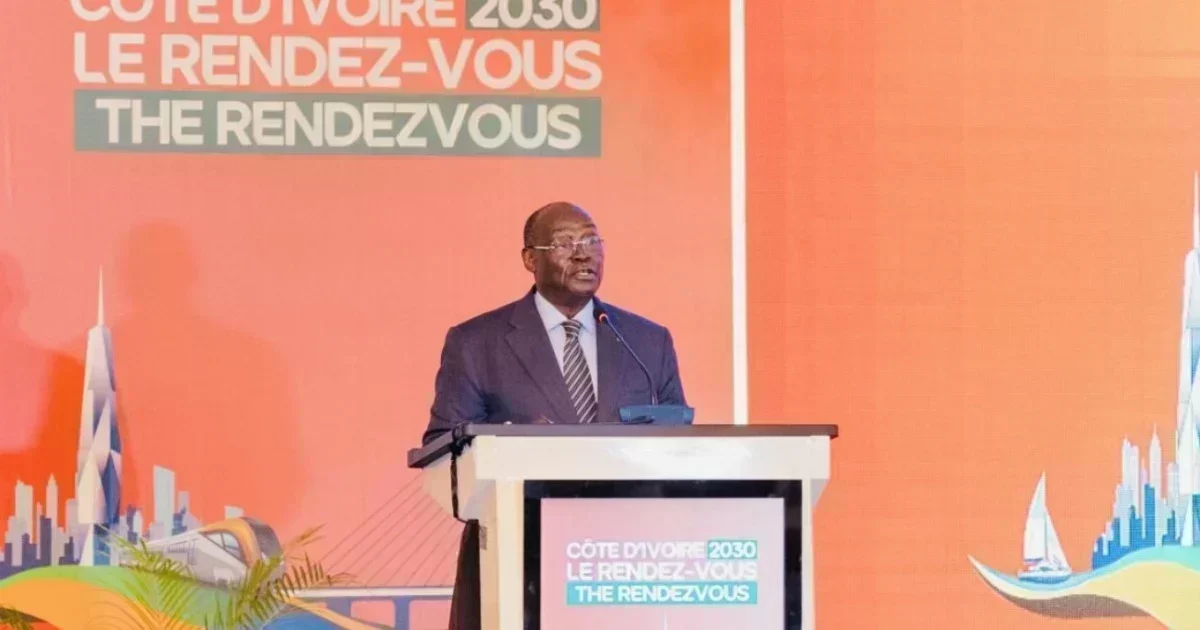
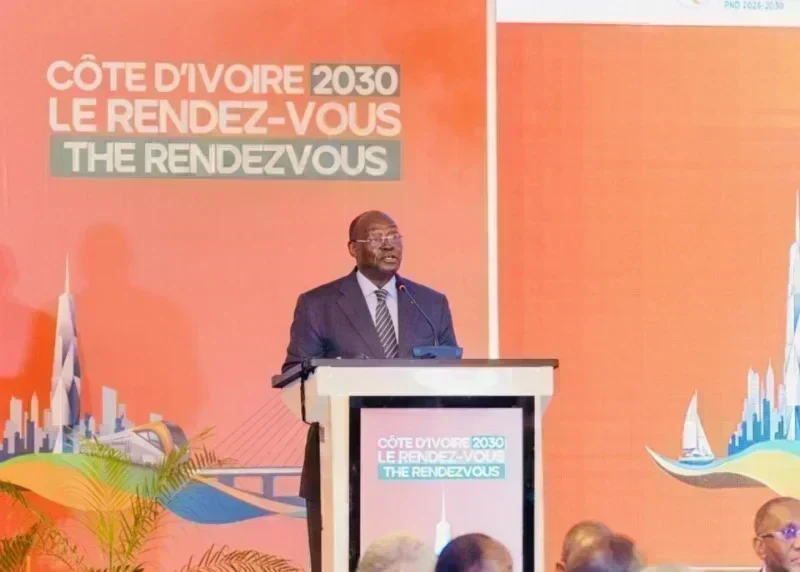
A significant event held in Abidjan on Wednesday and Thursday brought together government officials and hundreds of public and private investors. The gathering aimed to secure funding for the NDP, which encompasses vital initiatives such as bolstering security measures, modernizing the agricultural sector (accounting for 20% of GDP), fostering the growth of key enterprises to establish them as “national champions,” and developing critical road infrastructure, including plans for a high-speed rail network.
Significant funding commitments secured
“Côte d’Ivoire sought approximately 20 billion dollars in public financing,” stated Minister Souleymane Diarrassouba on the sidelines of the event. “Ultimately, development partners pledged over 80 billion dollars to support Côte d’Ivoire, quadrupling our requested amount.”
Key international financial institutions, including the World Bank, the African Development Bank (AfDB), and the European Union, are among these committed donors.
“This indicates that nearly all our economic indicators are favorable,” he remarked, reiterating that over 70% of the total funding, amounting to more than 147 billion dollars, is expected to come from the private sector.
The comprehensive funding required for the NDP is projected at 209 billion dollars, with the Ivorian state also contributing a significant portion.
Côte d’Ivoire previously demonstrated its strong market appeal in February by successfully raising 1.3 billion dollars on international markets, securing a remarkably favorable interest rate for an emerging economy.
Furthermore, in late June, the International Monetary Fund (IMF) confirmed its readiness to disburse nearly 833 million dollars to the nation through various aid programs.
The IMF commended Côte d’Ivoire’s “resilient” economy, although it projected a slight moderation in growth to 6% in 2026, down from 6.5% in 2025. It also anticipated an increase in inflation, expected to settle around 3.3% this year.
Traditionally reliant on agriculture, the Ivorian economy has actively pursued diversification in recent years, notably boosted by new discoveries of mineral, gas, and oil resources.