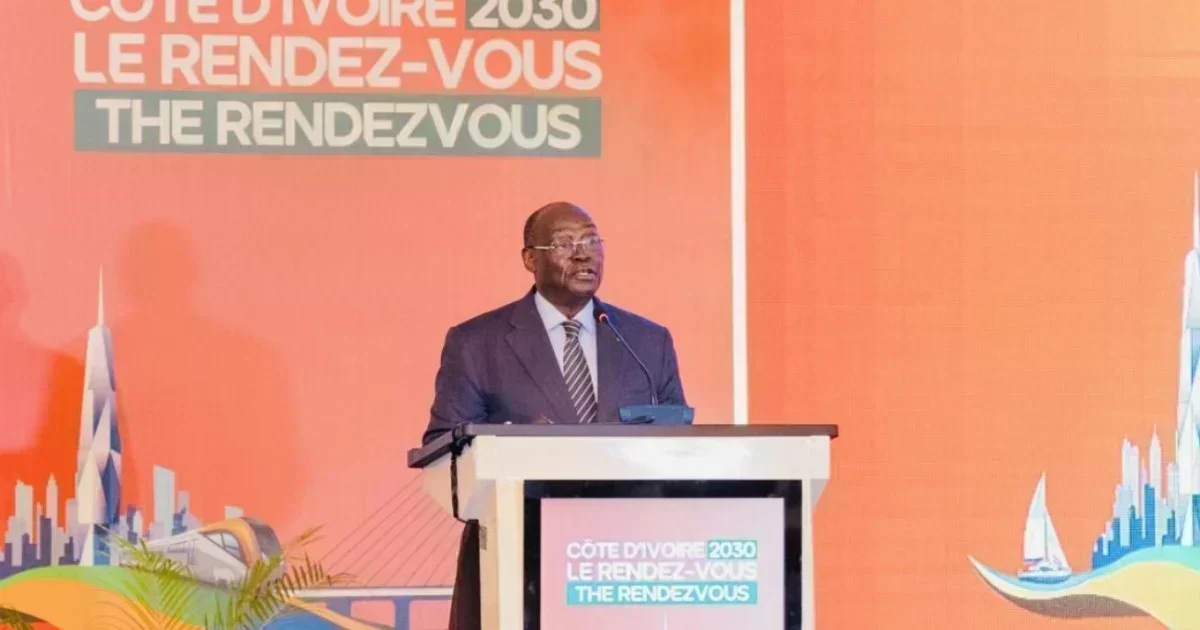
With a landmark gathering of global investors in Abidjan, Côte d’Ivoire has surpassed all expectations by securing over $80 billion in international funding for its National Development Plan (PND) 2026–2030. This unprecedented financial commitment underscores the country’s economic resilience and renewed stability, positioning it as a prime destination for foreign investment in West Africa.
The surge in investor confidence comes as Côte d’Ivoire achieves one of the region’s strongest growth trajectories, averaging 6.5% annually in recent years. This economic momentum follows a decade of recovery from the political-military turmoil that marked the early 2000s, demonstrating the nation’s ability to transform adversity into opportunity.
During the two-day event in Abidjan, government officials and representatives from public and private sectors outlined ambitious initiatives under the PND, including enhanced security measures, agricultural modernization (accounting for 20% of GDP), the cultivation of national champion enterprises, and major infrastructure projects like a high-speed rail network.
Record-breaking funding commitments
Initially targeting approximately $20 billion in public financing, Côte d’Ivoire received commitments exceeding $80 billion—four times the anticipated amount. Key contributors include international institutions such as the World Bank, the African Development Bank (AfDB), and the European Union, validating the country’s strong macroeconomic indicators.
Minister of Planning Souleymane Diarrassouba highlighted the overwhelming response: “All our economic indicators are in excellent shape.” He further noted that over 70% of the total PND funding—amounting to $147 billion—is expected to come from the private sector, signaling robust investor trust.
The comprehensive PND budget now totals $209 billion, including contributions from the Ivorian state. This financial windfall follows earlier milestones, such as a $1.3 billion international bond issuance in February at exceptionally favorable terms for an emerging market. Additionally, the International Monetary Fund (IMF) approved nearly $833 million in support programs, affirming Côte d’Ivoire’s economic resilience while projecting a slight growth moderation to 6% in 2026 (from 6.5% in 2025) and a modest inflation increase to 3.3%.
Once dominated by agriculture, Côte d’Ivoire’s economy is diversifying rapidly, with newfound opportunities in mining, natural gas, and oil exploration driving further investor interest.