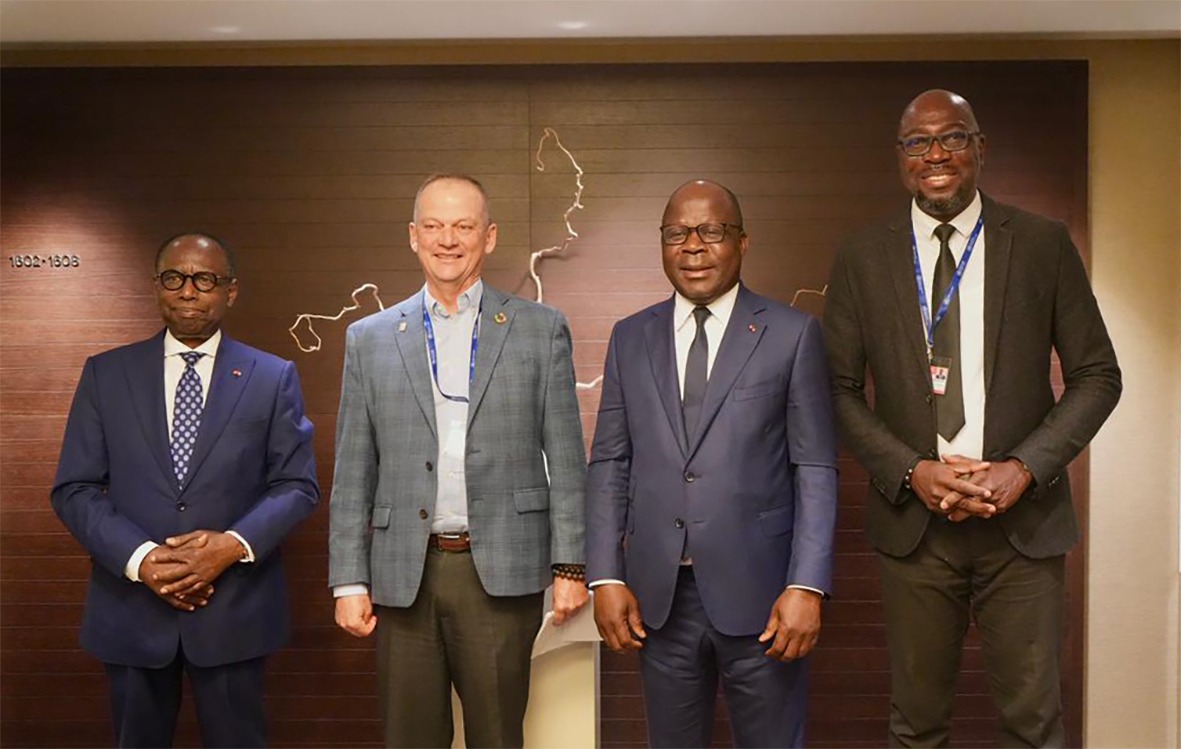
Abidjan, May 20, 2026 – Côte d’Ivoire is steadfast in its commitment to elevating nutrition as a foundational element of its public health and social development agenda. This resolute stance was reiterated by Pierre N’Gou Dimba, the Minister of Health, Public Hygiene, and Universal Health Coverage, during a meeting with Shawn Baker, Executive Vice President of Programs and Partnerships for Helen Keller International. The discussion took place on Tuesday, May 19, 2026, in Geneva, amidst the proceedings of the 79th World Health Assembly.
The high-level encounter aimed to deepen dialogue on critical issues surrounding nutrition and maternal and child health. A key objective was also to foster the expansion of high-impact programs specifically designed to benefit the nation’s most vulnerable communities.
Among the significant topics discussed were Côte d’Ivoire’s proactive measures in nutritional supplementation, the fortification of staple foods, and comprehensive strategies to combat anemia and micronutrient deficiencies affecting both pregnant women and young children.
Minister Dimba underscored the pivotal role of the National Multisectoral Nutrition Plan, which serves as the government’s guiding framework in its extensive fight against all forms of malnutrition. He emphasized the ongoing efforts to progressively secure funding, crucial for bolstering the country’s achievements in this vital sector, a process greatly aided by the invaluable support of technical and financial partners.
Shawn Baker, representing the global non-governmental organization Helen Keller International, expressed his strong commendation for the Ivorian government’s launch in 2026 of a new program. This initiative introduces multiple micronutrient supplementation for expectant mothers, seamlessly integrated into the existing prenatal care package. Its purpose is to address critical nutritional requirements during pregnancy, diminish the prevalence of anemia, and aid in preventing low birth weight infants.
Furthermore, Baker lauded the significant strides made by Côte d’Ivoire and highlighted the exemplary quality of its collaboration with Helen Keller International. This partnership has proven particularly effective in programs providing Vitamin A supplementation to children under five years old and in various community-based nutrition initiatives.
Evidently, Côte d’Ivoire remains committed to strengthening its strategic alliances, viewing this as a crucial pathway to accelerate advancements in nutrition, maternal and child health, and ultimately, sustainable human development.