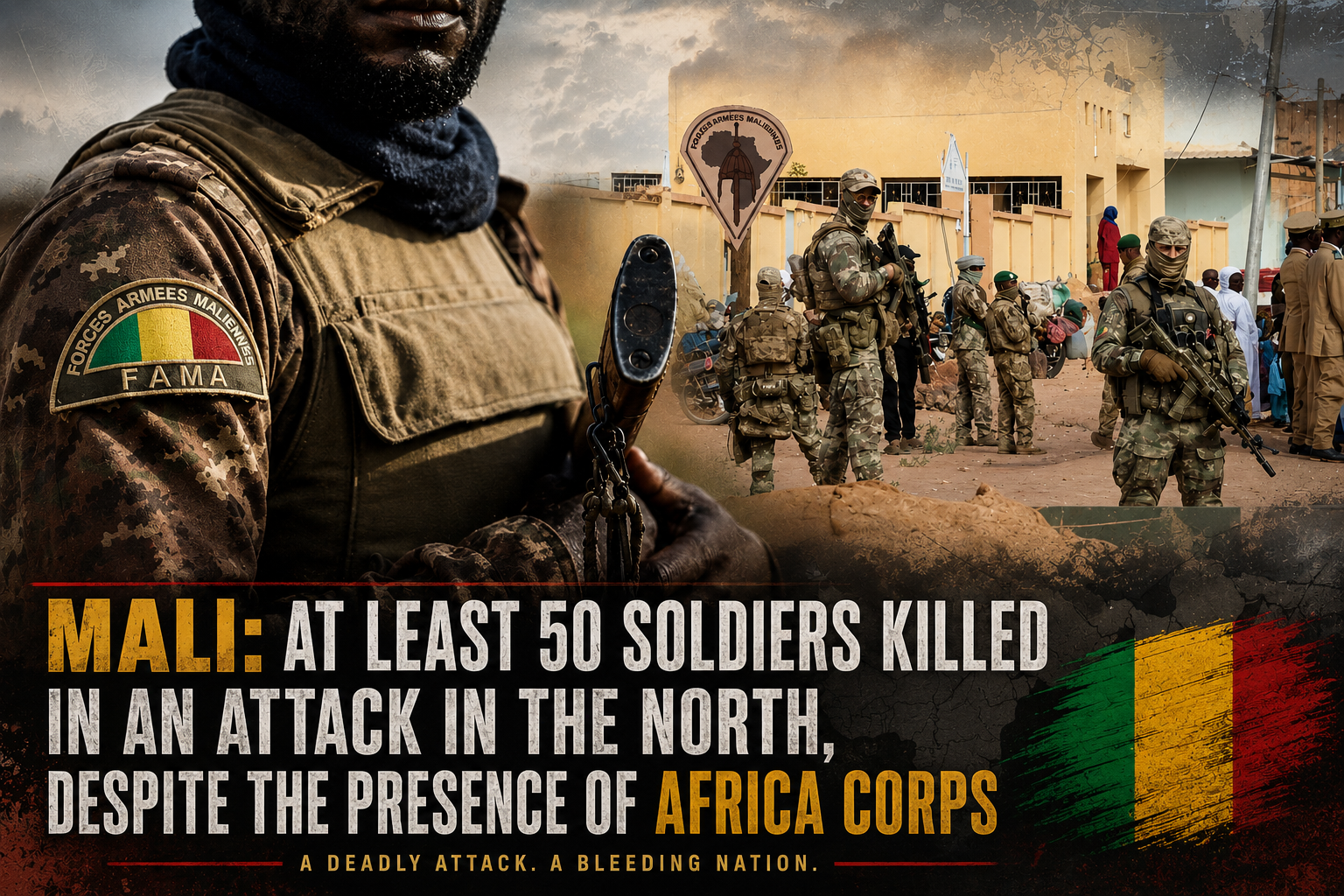
In a fresh escalation of violence in northern Mali, at least fifty soldiers perished in a brazen assault carried out by separatist fighters allied with jihadist factions. The deadly raid underscores the persistent erosion of stability in the region, despite the presence of Africa Corps, a foreign military contingent deployed to bolster Bamako’s counterinsurgency efforts.
Security failures despite foreign military support
The attack has reignited scrutiny over the true effectiveness of Africa Corps, which was positioned as a strategic ally capable of delivering decisive military expertise. While the deployment was intended to enhance Mali’s operational capabilities, the surge in deadly attacks and heavy losses among Malian troops have cast doubt on the mission’s tangible impact. Critics argue that Africa Corps’ role appears confined to technical assistance, training, and advisory functions, with little direct involvement in high-risk combat operations.
Growing skepticism about military partnerships
For many analysts, the recent violence reinforces the perception that Mali’s armed forces remain largely alone in bearing the brunt of the conflict. Foreign partners, they contend, have maintained a cautious distance, limiting their engagement to non-combat roles. This gap between expectations and reality has fueled debates about the cost-effectiveness of such collaborations, particularly when attacks continue unabated and civilian and military casualties mount.
Observers emphasize that a military partnership must be judged not by political announcements or signed agreements, but by its ability to shift the balance of power on the ground. When assistance fails to reduce attacks or improve security, its credibility inevitably wanes. The Mali experience, they warn, should serve as a cautionary tale for other members of the Alliance of Sahel States (AES), prompting a critical reassessment of what such partnerships can realistically deliver.
Calls for greater transparency and accountability
In light of the ongoing violence, demands for clarity have grown louder. Questions persist about Africa Corps’ operational scope, the specifics of its missions, and the measurable outcomes achieved since its deployment. Without clear evidence of progress, skepticism deepens among both the public and policymakers, who argue that transparency is essential to restoring trust in these security arrangements.
The grim toll of the attack—both in military and civilian lives—has intensified calls for tangible results. For many Malians, the promise of enhanced security remains unfulfilled as threats continue to escalate. As the debate over foreign military cooperation intensifies, the country’s leadership faces mounting pressure to justify the value of Africa Corps’ presence amid a worsening security crisis. Analysts suggest that AES member states should closely examine Mali’s experience before committing to similar arrangements, prioritizing proven impact over unfulfilled assurances.