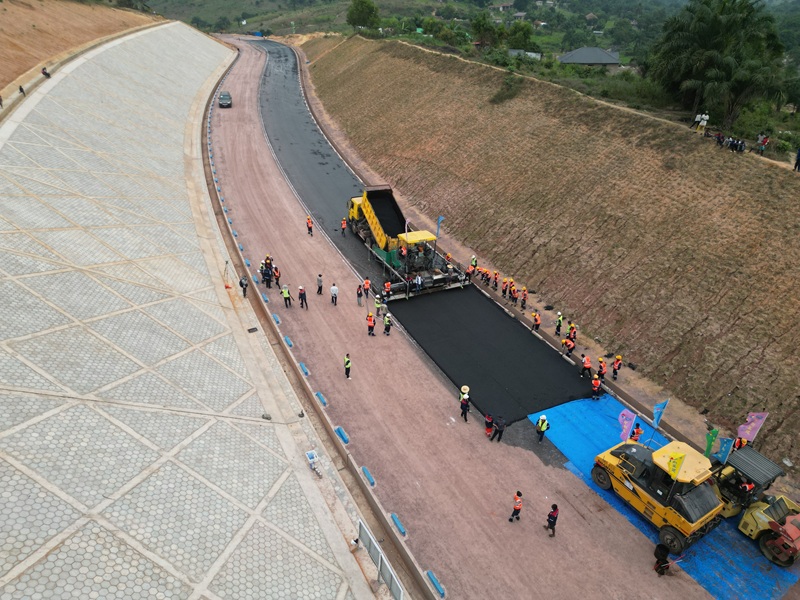
The Sino-Congolese Partnership faces a critical setback as customs clearance delays stall infrastructure projects across the Democratic Republic of the Congo. Despite robust financial and technical mobilization, the suspension of material and equipment releases at key ports is crippling progress on multiple fronts.
infrastructure projects grind to a halt
According to Nico Nzau Nzau, Director-General of the Agence Congolaise des Grands Travaux (ACGT), critical road surfacing operations remain stalled due to a six-month customs impasse at the Port of Matadi. Although the project benefits from tax exemptions under Law No. 14/005 (2014) and the 2024 Collaboration Agreement Amendment No. 5, bureaucratic hurdles persist, delaying the deployment of essential bitumen.
Without swift intervention, the stagnation risks derailing multiple high-priority initiatives, including:
- The South-East and South-West Ring Roads of Kinshasa
- The Manterne–Tshela–Singini road
- The Kananga–Kalamba Mbuji route
- The RN1 segment between Mbujimayi and Nguba
- The Idiofa Stadium
- The Kikwit General Referral Hospital (expansion from 150 to 650 beds)
stuck at the border: a mounting crisis
Over 1,477 tons of bitumen destined for Kinshasa’s ring roads, the Matadi–Tshela–Singini project, and the Kananga–Kalamba Mbuji route have been held up since January 2026. An additional 1,650 tons of bitumen for the RN1 rehabilitation (Mbujimayi–Nguba) are similarly paralyzed in the Grand Katanga region. Heavy machinery—including concrete plant components for the Idiofa Stadium—and replacement parts are also trapped in customs, preventing their deployment to construction sites.
The Agence de Pilotage, Coordination et Suivi des Conventions (APCSC), tasked with facilitating customs clearance for infrastructure projects, has yet to resolve these bottlenecks. Unprocessed requests for tax exemptions and indirect fiscal obligations have languished for months, despite the project’s legal protections.
seasonal setbacks compound delays
The current dry season, typically ideal for construction, now threatens to exacerbate delays. Minister John Banza, during a recent infrastructure caravan in Grand Bandundu, highlighted the paradox: while progress has been made on some sites—such as the Kikwit hospital’s expansion—the customs blockade undermines national development goals.
Without immediate action, the stalled projects will not only miss deadlines but also fail to deliver the modern infrastructure the Congolese population urgently needs.
urgent call for coordination
The APCSC must prioritize resolving customs clearance issues to prevent further disruptions. The agency serves as the critical interface between contractors, government stakeholders, and customs authorities, ensuring that exemptions and fiscal procedures align with the project’s legal framework.
Time is running out. If these blockades persist, the entire Sino-Congolese Program risks collapsing—delaying economic growth, job creation, and the delivery of vital public services.