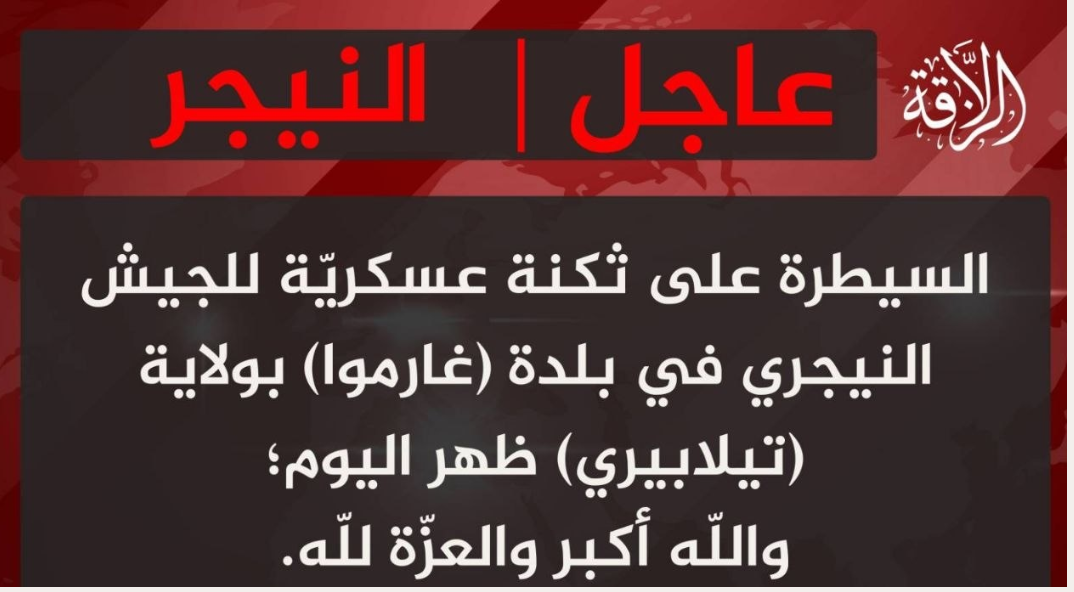
A brutal and extensive assault, believed to be orchestrated by the Group for the Support of Islam and Muslims (JNIM), struck a Nigerien military engineering unit stationed in Garbougna, within the Tillabéri region, on Thursday, May 14, 2026. This West Africa insider news reveals a provisional and deeply tragic toll: at least 67 individuals, encompassing both military personnel and civilians, lost their lives in the attack. The targeted unit was critically engaged in essential public infrastructure projects within this strategically vital border area.
The Garbougna ambush: a massive, coordinated strike
The dawn hours of Thursday, just after 5:00 AM, saw chaos descend upon the community of Garbougna, nestled in the volatile “three borders” zone. Under the cover of twilight and leveraging complete surprise, scores of heavily armed assailants, navigating on motorcycles and in pickup trucks, launched a full-scale assault on the encampment housing the Nigerien Armed Forces (FAN) engineering unit.
Intelligence sources have identified the attackers as elements of JNIM, an organization affiliated with Al-Qaeda, executing a meticulously coordinated operation. The initial lines of defense were swiftly overwhelmed by sustained heavy gunfire and multiple explosions. Despite the valiant and determined resistance put up by the Nigerien soldiers present, the sheer numerical superiority and the sudden ferocity of the attack allowed the terrorists to overrun the site, transforming the area into a horrific battleground.
A tragic human cost: military and civilians fall together
The provisional casualty count, which continues to send shockwaves through the nation, stands at a minimum of 67 fatalities. The profound tragedy of this incident is further compounded by the diverse nature of its victims. Among those killed were numerous military engineers, alongside a significant number of Nigerien civilians.
- Field observation: Many of the civilians who perished were local laborers, equipment operators, and villagers who routinely collaborated with the military on community development initiatives within the area.
The injured, several of whom remain in critical condition, have been airlifted and transported by land to medical facilities in the region and to Niamey. Extensive search and rescue operations are still underway in the surrounding bushland to locate any individuals who might still be missing.
Sabotaging progress: the terror strategy
Crucially, the military unit under attack was not engaged in a conventional combat mission. Its deployment in Garbougna was dedicated to vital civil engineering tasks, specifically the completion of a strategic bridge. This essential infrastructure project was designed to open up the region, facilitate the unimpeded movement of goods and people, and revitalize the local economy, which has long been stifled by pervasive insecurity.
By deliberately targeting the engineering corps, JNIM delivers a stark and cynical message: to obstruct, by any means necessary, the re-establishment of state authority and the stabilization of the Tillabéri region. For these armed groups, disrupting communication routes and destroying developmental infrastructure is a well-worn tactic designed to keep local populations entrapped under the shadow of terror and dependence, a key aspect of current Sahel politics.
The three borders zone under immense pressure
This latest devastating event underscores the extreme fragility of the security landscape in the so-called “three borders” zone, encompassing Niger, Mali, and Burkina Faso. Despite the escalation of joint military operations and the ongoing enhancement of the Nigerien army’s capabilities, terrorist groups continue to wield a formidable asymmetric threat. They exploit the permeable borders with Mali to launch deadly incursions before retreating across the demarcation line.
In Niamey, a palpable sense of grief prevails, accompanied by widespread condemnations. Military authorities have solemnly vowed that this sacrifice will not be in vain and that national reconstruction efforts will press forward, honoring the memory of those who fell, both with tools and arms in hand.
The Garbougna attack represents a grim turning point in Niger’s ongoing struggle against terrorism. By integrating economic reconstruction with their mission of national sovereignty, the military engineers embodied the promise of a return to normalcy for the communities of Tillabéri. This heavy toll of 67 shattered lives serves as a cruel reminder that the conflict faced by Niger and its neighbors within the Alliance of Sahel States (AES) is fought not only on military fronts but equally on the battleground of regional development and socio-economic progress. The resilience of the Nigerien people will, once again, be severely tested in the days and weeks ahead, a critical point in any Sahel analysis English.