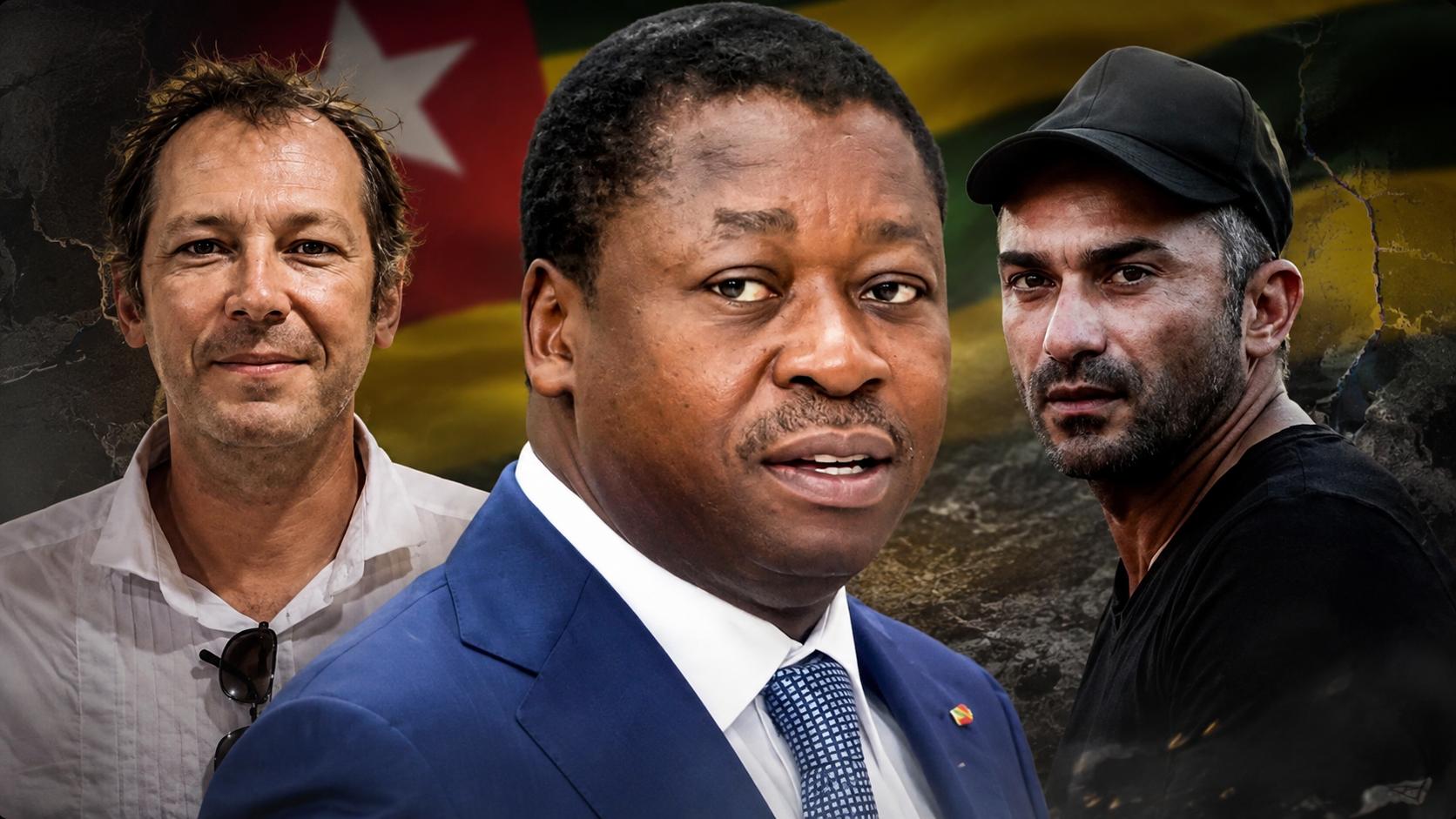
The mid-August 2026 arrest and subsequent formal incarceration on Monday, August 17, of two French documentary filmmakers and journalists in Togo signals a significant escalation in the security and diplomatic tensions emanating from the Lomé regime. This incident has drawn international attention to the state of press freedom in the West African nation.
Sébastien Perez Pezzani and Gaël Mocaër, apprehended in the northern region of the country while working on a documentary project, have been formally charged and placed under a warrant of committal. What initially appeared to be a minor administrative infraction has quickly morphed into a matter with profound political implications.
The administrative guise for enhanced security control
Togolese authorities justify the detention of these two media professionals by citing non-compliance with accreditation protocols and a breach of visa conditions:
- A region under intense scrutiny: Northern Togo, an area frequently impacted by incursions from armed groups originating in the Sahel, operates under a declared state of security emergency. Consequently, the government enforces stringent controls over information dissemination and prohibits all unsupervised reporting within these sensitive zones.
- Echoes of a previous expulsion: This approach bears a striking resemblance to the arrest and swift expulsion of French journalist Thomas Dietrich in April 2024. It further underscores Lomé’s near-paranoid suspicion of foreign media, which is often perceived as a potential source of destabilization for the country.
A potential bargaining chip: ferdinand ayité?
Beyond the strict application of legal statutes, numerous observers and independent media outlets interpret these arrests as a calculated strategic pressure tactic employed by Lomé against Paris:
- Pursuing exiled opposition figures: The administration led by Faure Gnassingbé appears to be leveraging the detention of the two French nationals to extract concessions from French diplomacy. A key objective in this strategy is believed to be the Togolese investigative journalist Ferdinand Ayité, who resides in France as a refugee and remains a constant target of the Togolese government.
- A form of media hostage diplomacy: By keeping these filmmakers imprisoned, Lomé may be attempting to shift the power dynamics with France. This high-stakes move, however, risks further tarnishing Togo’s reputation on the international stage.
Foreign press silenced in Togo
By targeting international journalists, following a sustained effort to suppress independent local media, the Togolese government affirms its resolute intent to dictate the national narrative. As diplomatic channels work tirelessly behind the scenes to secure the release and repatriation of the two filmmakers, this incident casts a harsh light on the methods of a regime seemingly prepared to wield the deprivation of liberty as a tool for political negotiation. This situation highlights critical concerns about press freedom in Togo and the broader West Africa region.