Eastern DRC: National unity cannot be shaken by occupation, declares parliamentary leader
The President of the National Assembly, Aimé Boji Sangara, has delivered a powerful message of solidarity to the people of eastern Democratic Republic of the Congo (DRC), reaffirming the unbreakable bond between the nation and its citizens, regardless of the challenges they face.
Honoring resilience in times of crisis
Speaking at the close of the March 2026 ordinary session, Boji first paid tribute to the internally displaced persons and refugees whose humanitarian plight continues to weigh heavily on national consciousness. Addressing the people of North Kivu, South Kivu, and Ituri, he conveyed a message of hope and endurance in the face of armed conflict and foreign aggression.
“Let us pause to honor the extraordinary resilience of our displaced and refugee brothers and sisters. Their suffering is our suffering. Today, we stand with the people of North Kivu, South Kivu, and Ituri, who continue to demonstrate remarkable strength against the forces of occupation backed by Rwanda and its proxies in the AFC/M23,” declared Boji.
A firm rejection of occupation and division
In a stirring address delivered in both Swahili and French, Boji categorically rejected any notion that the people of eastern DRC could ever renounce their national identity or succumb to foreign domination. He emphasized that the current occupation is neither permanent nor irreversible, framing it as a temporary injustice in the long arc of Congolese history.
“North Kivu, South Kivu, and Ituri are not and will never be anything other than integral parts of the Democratic Republic of the Congo — a nation blessed by God and a sacred legacy from our ancestors. We firmly believe that this illegal occupation, though barbaric, is neither definitive nor irreversible. Like all injustices throughout history, this dark chapter too shall pass.”
Defending sovereignty and unity
Boji issued a stern warning to those who seek to undermine national unity or exploit the occupation to fragment the country. He underscored the unyielding commitment of the National Assembly to defend the territorial integrity and sovereignty of the DRC, regardless of the circumstances.
“To those who believe that our brothers and sisters living under occupation can abandon their national identity or betray the motherland, we say this: you are mistaken. We remain united with them in spirit and in action. Our greatest weapon is not just military strength, but our unshakable patriotism, our national unity, and our collective resilience.”
The parliamentary leader also rejected any attempts to sow division or manipulate the populations of eastern DRC. He reaffirmed the indivisibility of the country and the determination of its institutions to defend every inch of national territory.
“Let the dark forces attacking our nation know this: we will oppose them with an unbreakable wall of solidarity. The DRC is one, indivisible, and diverse. Whether you are in Goma, Muanda, Gemena, or Lubumbashi, the blood flowing in the East is our blood. National unity is not a hollow phrase — it is the foundation of our survival and our greatness. We will defend every square inch of our land, down to the last centimeter.”
Security and diplomatic challenges persist
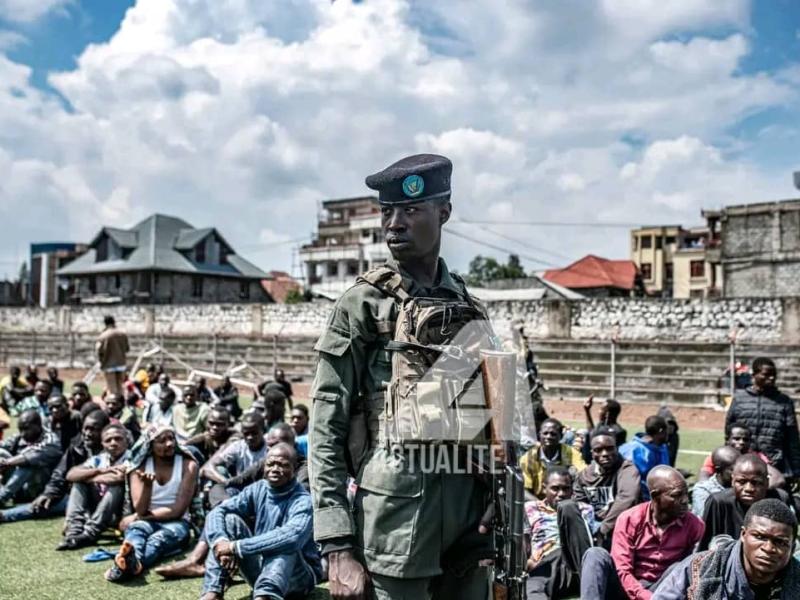
Despite the existence of international agreements such as the Washington Accord and the Doha Process, the security and humanitarian situation in eastern DRC remains dire. Civilian populations continue to bear the brunt of violence and forced displacement, exacerbating an already catastrophic humanitarian crisis. The international community’s response, marked by declining funding for humanitarian aid, has failed to translate diplomatic progress into tangible relief on the ground.
Calls for respect of peace commitments continue to echo at national, regional, and international levels, yet implementation remains elusive. Each party interprets the terms of peace agreements differently, rendering their enforcement increasingly uncertain. The gap between diplomatic promises and the harsh realities faced by the people of eastern DRC grows ever wider.