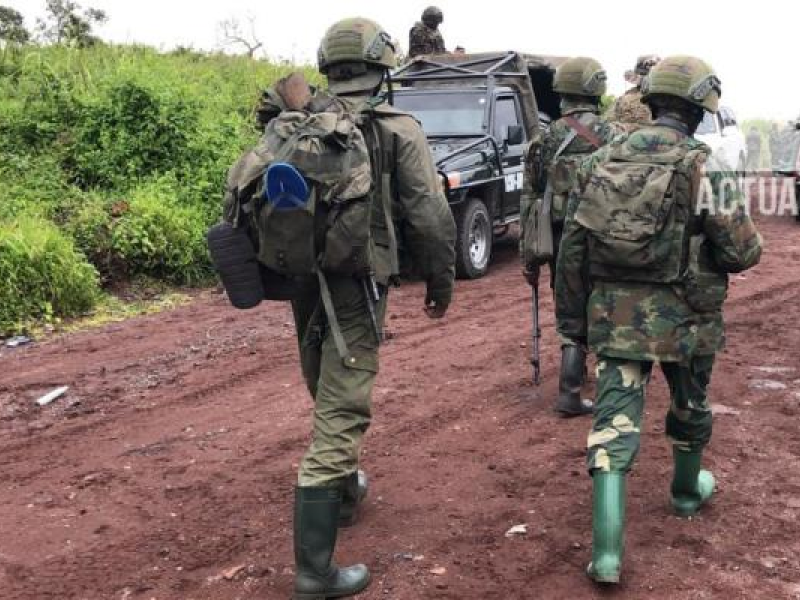
Eastern DRC: military strategy under scrutiny as conflict drags on
The prolonged conflict in eastern Democratic Republic of Congo has reached a critical juncture, with military operations failing to achieve decisive results despite substantial investments. Analyst Christian Moleka delivered a sobering assessment during a recent Space Live session, highlighting the widening gap between diplomatic gains and ground realities.
Military efforts fail to reverse rebel gains
Since the fall of Bunagana in 2022, the Armed Forces of the DRC (FARDC) have struggled to regain strategic momentum against the March 23 Movement (M23) and allied forces. Despite a $4.5 billion military budget allocated between 2022 and 2025 under the military programming law, tangible battlefield successes remain elusive.
Christian Moleka, a political analyst, emphasized that the military dimension has been the weak link in the DRC’s response. “You cannot maintain a diplomatic position without a corresponding military counterpart,” he stated, comparing the interplay between diplomacy and warfare to a dance requiring synchronized effort.
Diplomatic wins overshadowed by battlefield losses
On the diplomatic front, Kinshasa has notched several victories: European sanctions against Rwanda, shifting perceptions in Washington, and unanimous adoption of a UN Security Council resolution. However, these achievements have not translated into territorial control. According to the UN Group of Experts, the M23 has expanded its occupied territory by 35% since the Doha agreements.
Moleka characterized these diplomatic tools as “partial solutions,” warning that international support could backfire if not backed by military leverage. “These are tools with limited shelf life,” he cautioned.
A war of attrition demands long-term resilience
The conflict has entered its third decade, morphing into a grueling war of attrition where endurance matters more than intensity. “This is not about the ferocity of battles but the ability to sustain them,” Moleka noted, stressing that both diplomacy and military strategy must adapt to this prolonged challenge.
- Military shortcomings: Despite a $4.5 billion budget, the FARDC has failed to reclaim lost territory since 2022.
- Diplomatic advances: Sanctions, UN resolutions, and international pressure on Rwanda mark progress, but ground realities remain unchanged.
- Attrition warfare: The conflict demands endurance, with neither side able to achieve a knockout blow.
- Interconnected strategies: Diplomacy alone cannot succeed without military backing; both must advance in tandem.
The analyst’s remarks underscore the urgency for Kinshasa to reassess its approach, balancing international advocacy with battlefield realities to break the current deadlock.