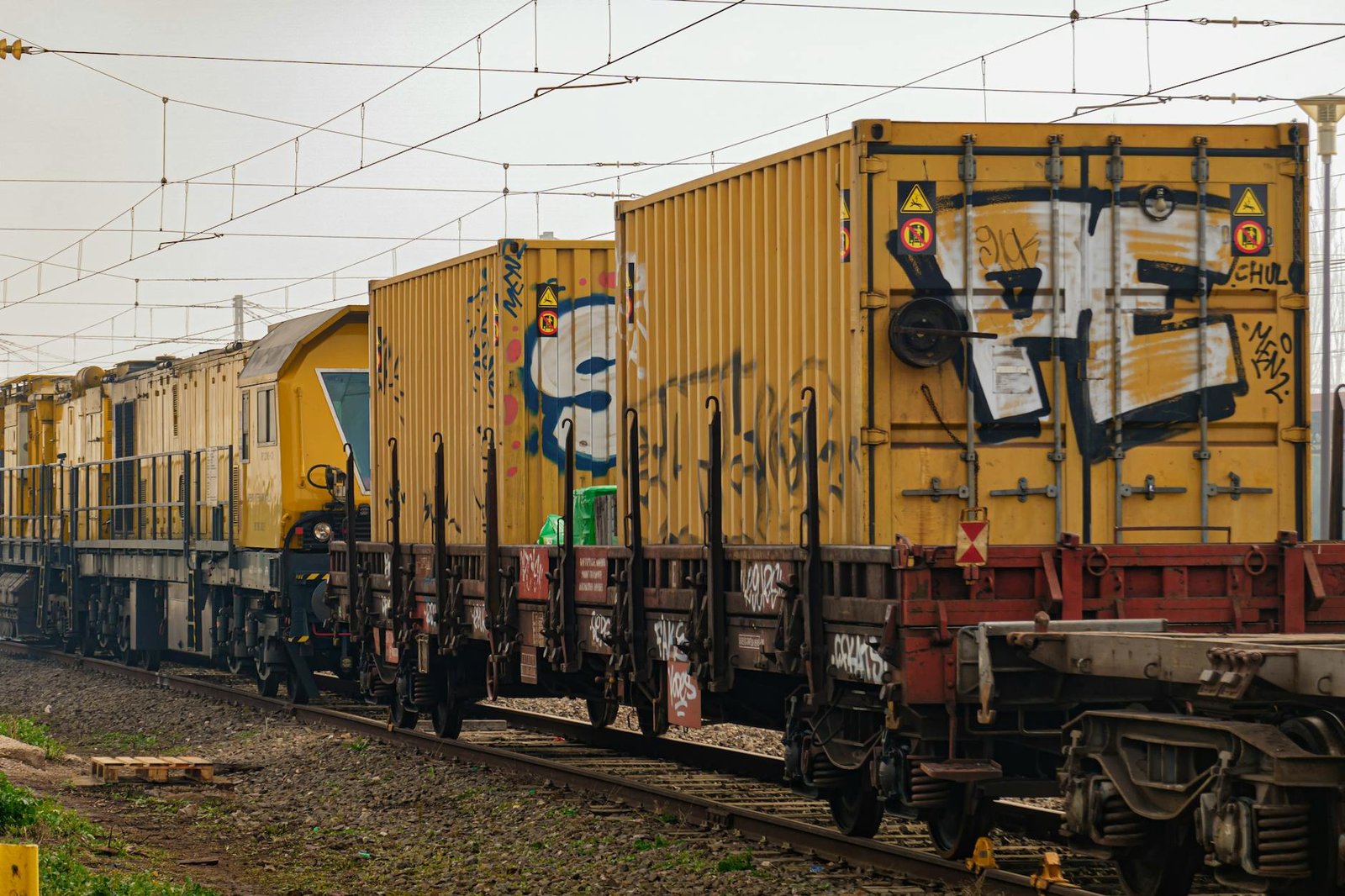
Cameroon is advancing a pivotal railway corridor linking Edéa, Kribi, Lolabé, and Campo, marking a significant milestone with a memorandum of understanding (MoU) signed in Yaoundé. The agreement, set to be formalized at the Starland Hotel, involves the Cameroonian government, Africa Global Logistics (AGL), and Camalco, a subsidiary of Australia-based Canyon Resources. Under the guidance of Transport Minister Jean Ernest Massena Ngallè Bibehe, the initiative aims to integrate the national rail network with Kribi’s deep-water port and future mining export flows.
Railway corridor aligns with Cameroon’s logistics transformation
This MoU isn’t just about laying tracks; it’s about reshaping Cameroon’s logistics landscape by merging rail, ports, and mining sectors. The Edéa–Kribi–Campo corridor has been a cornerstone of national rail planning for years. Since 2021, authorities have been strategizing two key sections totaling 291.5 km: Edéa–Kribi–Campo (184.5 km) and Douala–Limbé–Idénau (107 km). The revised project now includes Lolabé, adjacent to the deep-water port, to enhance southern connectivity.
The proposed public-private partnership will cover the entire lifecycle of the project: studies, financing, construction, operations, and maintenance. However, no final investment decision has been made yet. Key details remain undecided, including the exact route length, phased construction timeline, total budget, concession duration, and commissioning schedule. For the government, the project addresses southern regional development and boosts export corridor competitiveness. For AGL, already a major player in Central African logistics, it reinforces its dominance in freight transport.
Kribi port: a critical link for mineral exports
The economic viability of this corridor hinges on Kribi, Cameroon’s sole deep-water port. Its potential is currently limited by inadequate overland connections, a gap that a railway link would fill. This connection would streamline operations between the port, nearby industrial zones, and international markets. Kribi could then handle volumes that Douala, constrained by the Wouri estuary, struggles to process efficiently due to nautical challenges.
Camalco’s involvement underscores the corridor’s mining significance. The company is developing the Minim Martap bauxite project in the Adamaoua region, touted as a world-class deposit. Canyon Resources estimates proven reserves at 144 million tonnes, with an average alumina content of 51.2% and silica at 1.7%. Total resource potential reaches 1.102 billion tonnes. Such massive volumes demand a robust evacuation chain, integrating mines, railways, storage terminals, and mineral ships.
Camalco secures mine-to-port supply chain
In the short term, Canyon Resources’ strategy still relies on Douala. To strengthen this link, Camalco invested 9.852 billion FCFA to increase its stake in Camrail, the rail network concessionaire, from 9.1% to 26.9%. The subsidiary also injected 347.447 million FCFA into Terminal Bois du Port de Douala S.A. Preparations are underway for the Inland Rail Facility and port infrastructure, with locomotives expected in late Q2 2026 and wagons by July. The first bauxite shipment is scheduled for late Q3 2026.
Yet, Douala’s nautical constraints inherently inflate unit costs for bulk mineral shipments. The Edéa–Kribi–Lolabé–Campo corridor offers a direct alternative to a deep-water port, reducing reliance on the current system. For Cameroon, this project combines regional development, natural resource valorization, and strengthening Kribi as an export hub.
Several structural uncertainties persist. The MoU doesn’t specify investment costs, risk-sharing among partners, or the railway’s environmental and land-use impacts. These factors will determine the project’s appeal to international investors and the robustness of its economic model. The Yaoundé signing signals the corridor’s return to Cameroon’s priority infrastructure agenda, outlining a future logistics framework that harmonizes rail, ports, and mining.