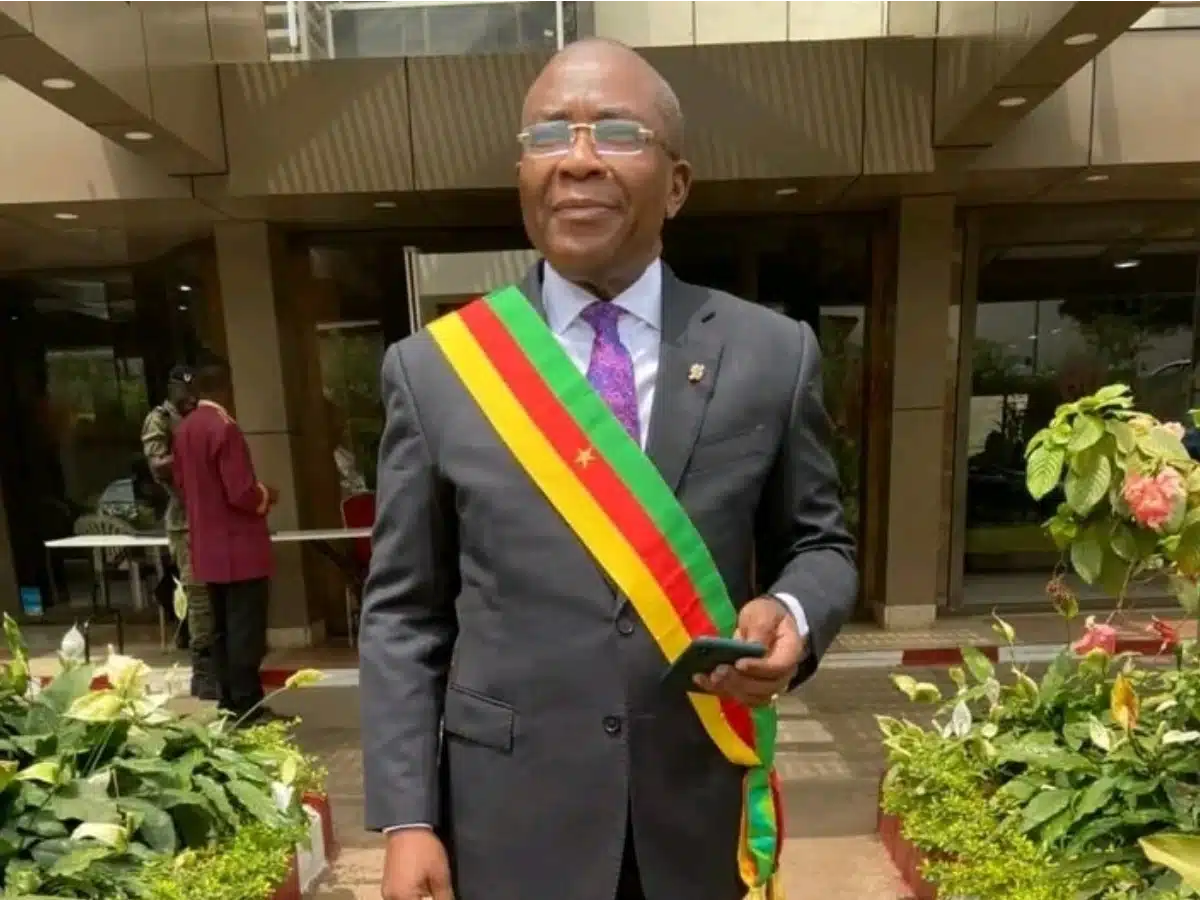
In a bold political move, opposition leader Jean-Michel Nintcheu has called on Cameroon’s Constitutional Council to formally recognize a power vacuum at the helm of the state. This call comes as the country marks its 44th day without visible leadership from President Paul Biya, who has been absent from the national territory since June 7.
Nintcheu, a former Social Democratic Front (SDF) member from Douala, took to social media to demand immediate constitutional intervention. « The Constitutional Council must acknowledge the vacancy at the summit of the State », he declared on July 17. His statement has reignited discussions about the 93-year-old leader’s prolonged absence and its implications for governance.
Political divide over the presidency’s absence
The president’s extended stay in Switzerland—initially described as a private trip—has sparked sharply contrasting reactions. While some question the state of Biya’s health, others dismiss concerns as politically motivated. Supporters of the ruling Cameroon People’s Democratic Movement (RDPC) have sought to downplay the situation.
Christophe Mien Zok, RDPC’s propaganda director, reassured the public with a symbolic message: « The power is not vacant. The Lion has not left ». Despite his absence, Biya continues to sign official documents from Geneva, including congratulatory messages to foreign leaders such as France’s Emmanuel Macron on Bastille Day.
Constitutional mechanisms under scrutiny
The debate extends beyond political rhetoric, touching on Cameroon’s constitutional framework. Article 6 of the country’s constitution outlines procedures for handling presidential incapacity, including a formal declaration by the Constitutional Council. Nintcheu’s intervention pushes the issue into the legal spotlight, raising questions about the council’s role in verifying leadership continuity.
As the nation watches, the prolonged absence of a head of state—however symbolic—highlights the fragility of institutional checks and balances in Cameroon’s political landscape.