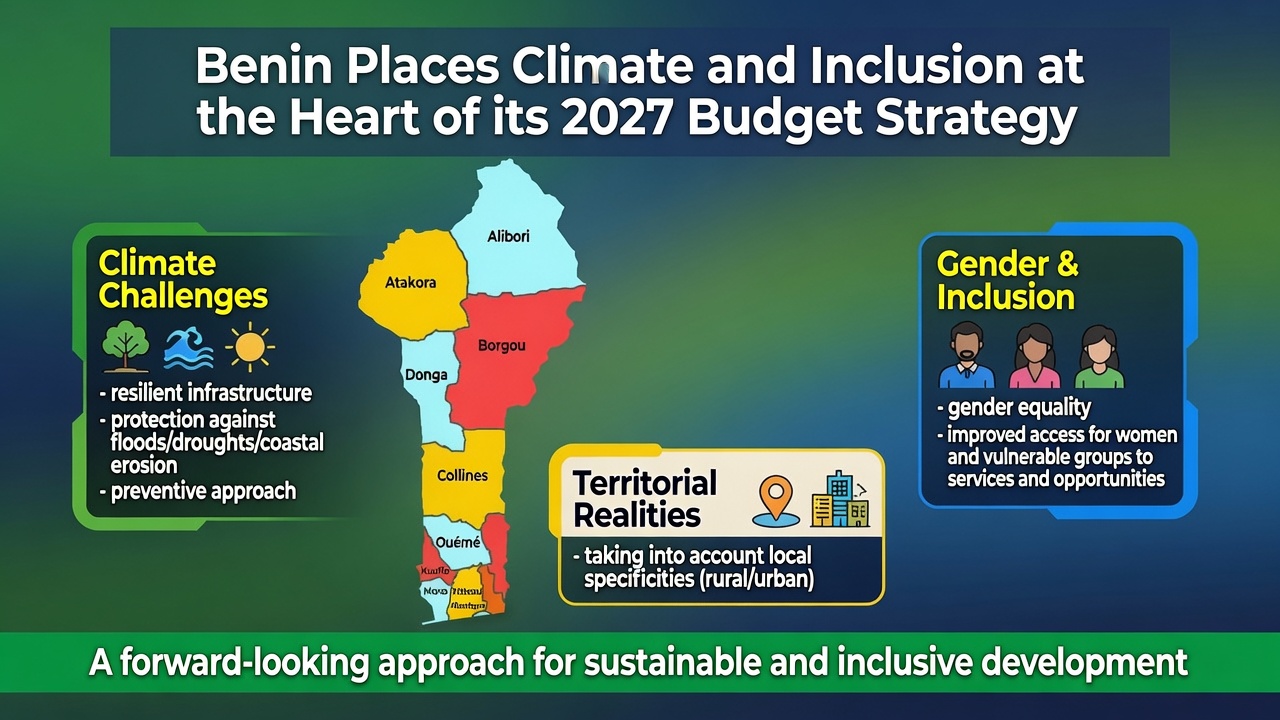
Benin is advancing its public policy modernization with the introduction of its 2027 budget framework, which embeds long-term priorities such as climate resilience, gender equality, and regional disparities into fiscal planning. This strategic shift goes beyond conventional budgeting by positioning public investment as a tool for sustainable development and community resilience.
The decision reflects a forward-thinking approach necessary in an era of escalating climate-related challenges, resource scarcity, and persistent social inequalities. Rather than reacting to crises after they occur, the government is prioritizing prevention through proactive fiscal measures embedded in the 2027 framework.
Climate resilience as a fiscal pillar
One of the most significant innovations in the 2027 budget framework is the integration of climate risk into fiscal decision-making. This ensures that public funds are strategically allocated to build resilient infrastructure, protect vulnerable populations, and mitigate the impacts of flooding, droughts, and coastal erosion. By addressing these risks in advance, the government not only strengthens national preparedness but also enhances governance by reducing the long-term economic and social costs of environmental disasters.
Advancing gender equality through budgetary planning
The inclusion of gender considerations marks another critical milestone. Recognizing that public policies often produce uneven outcomes, the government is committed to fostering an inclusive development model. This approach ensures equitable access to essential services, economic opportunities, and social protection for women, youth, and marginalized groups. By embedding gender equity into budgetary planning, the framework promotes fairness and empowers communities that have historically faced systemic barriers.
Localizing development through territorial equity
The 2027 budget framework also emphasizes territorial diversity, acknowledging that urban and rural regions face distinct challenges. By incorporating local needs into national planning, the government enhances the efficiency and relevance of public policies. This localization strategy ensures that investments are tailored to regional realities, thereby improving service delivery and fostering inclusive growth across the country.
The framework underscores a broader shift toward strategic fiscal governance that aligns with evolving economic, social, and environmental dynamics. Beyond numerical allocations, the budget is designed as a transformative instrument capable of guiding sustainable development while addressing vulnerabilities within the population.
This forward-looking strategy also strengthens Benin’s standing with international partners. Development institutions increasingly prioritize climate-smart budgets, social inclusion, and sustainable planning. By embracing these principles early, Benin positions itself to attract greater funding for resilience projects, ecological transition initiatives, and locally driven development programs.
The 2027 budget framework is more than a technical exercise—it is a blueprint for equitable and sustainable progress. It reflects a national commitment to resilient growth, inclusive governance, and long-term stability, ensuring that all segments of Beninese society benefit from the country’s development trajectory.