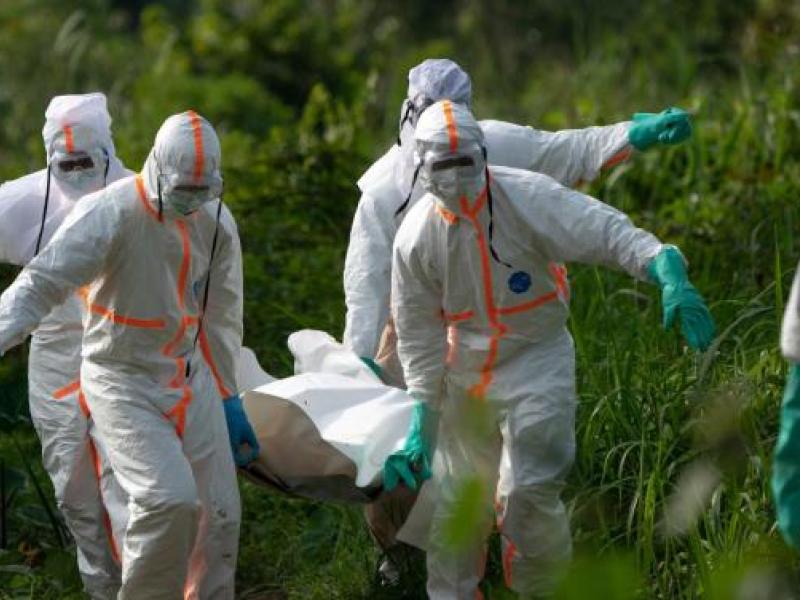
Deadly Ebola surge in Democratic Republic of Congo: WHO issues urgent call for political intervention
- Health
The World Health Organization has raised an unprecedented alarm over the escalating Ebola crisis in the Democratic Republic of Congo (DRC), declaring the situation the third-largest outbreak in history just two months after its official declaration.
The WHO Director-General, Dr. Tedros Adhanom Ghebreyesus, speaking from Geneva, revealed that the virus is spreading at an alarming rate, outpacing all previous outbreaks in the country. “When the DRC government declared this Ebola epidemic two months ago, we witnessed an immediate and concerning acceleration,” he stated. “This is now the third-largest Ebola outbreak ever recorded, with 2,073 cases and 796 deaths. For comparison, the 2018-2019 DRC outbreak took over ten months to reach 2,000 confirmed cases.”
Uncontrolled transmission in Ituri province
The situation remains particularly dire in Ituri Province, where over 80% of new cases are emerging outside known contact tracing lists, indicating undetected transmission chains. “More than two-thirds of deaths are occurring within communities, with patients never accessing healthcare facilities,” Dr. Tedros emphasized. The lack of early detection and isolation measures has severely hampered containment efforts.
International response and scientific breakthroughs
Despite these challenges, the WHO, in partnership with the Africa Centres for Disease Control and Prevention (Africa CDC) and other global health actors, continues to scale up its response. “Treatment capacity now exceeds 800 beds, with 16 operational laboratories—up from just one at the outbreak’s start. Contact tracing has reached nearly 80%, and over 21,000 community health workers are being trained,” the WHO chief reported. Safe and dignified burials have also seen significant improvements.
The scientific community has made remarkable progress in vaccine and treatment research. “Clinical trials for monoclonal antibody MBP134 and antiviral remdesivir are underway, while Oxford University has initiated the first safety trial for the ChAdOx1 vaccine. Additionally, an obeldesivir prophylaxis trial for post-exposure contacts has begun,” Dr. Tedros announced. To date, 377 patients have recovered, demonstrating that early diagnosis and appropriate care can save lives even without approved vaccines or treatments.
Security threats and political urgency
The crisis has been further complicated by ongoing armed conflicts, which restrict access to affected areas. “Armed groups continue to disrupt response efforts. Just yesterday, a treatment center in Bunia was attacked, highlighting the urgent need for political intervention to facilitate unimpeded humanitarian access,” Dr. Tedros warned.
While neighboring Uganda has made progress—with its last confirmed patient discharged today, marking the start of the 42-day countdown to declaring the end of its outbreak—the DRC’s situation remains critical. “The rapid spread in DRC contrasts sharply with Uganda’s controlled response, underscoring the need for immediate political action to support containment efforts,” he added.
Immediate priorities for containment
The WHO has outlined urgent priorities: strengthening surveillance in Ituri, ensuring safe burials, improving clinical care, and mobilizing communities. “We must also bolster response capacities in newly affected provinces before transmission becomes entrenched,” Dr. Tedros stressed.
The outbreak, caused by the Bundibugyo strain, was declared a Public Health Emergency of International Concern (PHEIC) on May 17, two days after its official declaration. The WHO has warned that the actual scale of the epidemic may be underestimated due to population mobility, fragile health systems, and the challenges of accessing conflict-affected zones. The absence of a licensed vaccine or specific treatment for this strain further complicates the response.
Despite the alarming situation, DRC authorities remain committed to containing the outbreak, leveraging lessons learned from sixteen previous Ebola epidemics successfully managed in the country. “Collaboration with national and international partners has been instrumental in our past successes,” they affirmed.