Gabon and EU strengthen economic partnership in Libreville talks
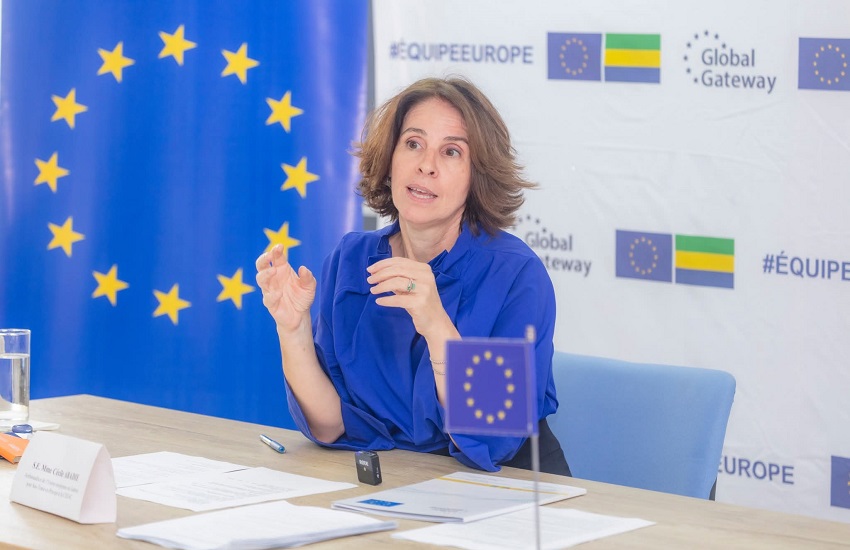
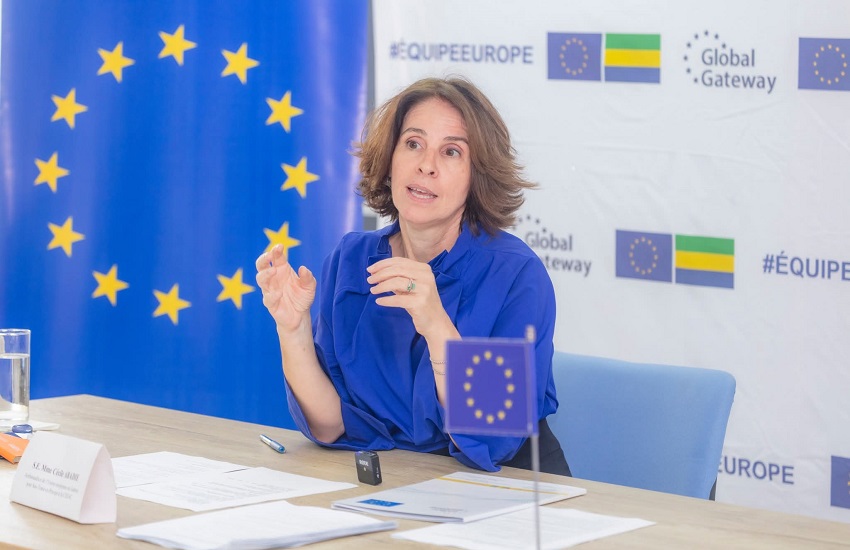
Libreville, June 8, 2026 — The second Gabon-European Union Political Dialogue, held today in Libreville, marks more than just another diplomatic engagement. Beneath the formal speeches and institutional consultations lies a broader ambition: reshaping bilateral relations into a platform for shared economic transformation.
The Gabonese government is leveraging its restored political stability to reposition itself as an emerging economic hub, while the European Union seeks to recalibrate its engagement with Africa by prioritizing investment-driven partnerships over traditional development aid. In an era of geopolitical rivalries and shifting alliances, this dialogue signals a strategic pivot toward mutual economic sovereignty.
Speaking at the opening ceremony in the Palais des Congrès de la Cité de la Démocratie, Vice-President of the Government Hermann Immongault emphasized the shared commitment to a cooperation framework built on multilateralism, peace, security, and sustainable development. This aligns with Gabon’s evolving diplomatic doctrine, which now prioritizes measurable economic outcomes over symbolic gestures.
From diplomatic exchanges to investment catalysts
Historically, Gabon-EU relations centered on political exchanges, development aid, and technical cooperation. Today’s session signals a fundamental shift. The EU delegation underscored that the new partnership model is designed to foster a shared economic agenda—one that positions Brussels as an enabler of investment rather than merely a donor.
Facing competition from emerging partners in Asia and the Middle East, the EU is recasting its African strategy to emphasize infrastructure development, industrial processing, energy diversification, and economic resilience. For Gabon, this realignment unlocks opportunities to reduce its dependence on raw material exports by building high-value domestic industries.
The stakes are high. Gabon’s leadership aims to transition from resource extraction to value-added processing, creating jobs and fostering domestic wealth creation. This economic reorientation is central to the country’s post-2023 transformation strategy.
Reforms and governance under the spotlight
The dialogue coincides with Gabon’s ongoing institutional and economic reforms following the establishment of the Fifth Republic under President Brice Clotaire Oligui Nguema. Key discussion points include political reforms, governance strengthening, rule of law, business environment improvements, and administrative modernization—all critical to enhancing the country’s economic attractiveness.
Foreign Minister Marie Edith Tassyla Doumbeneny highlighted that the talks will assess the full spectrum of Gabon-EU relations, both at the community level and through bilateral partnerships with individual member states. The Samoa Agreement, now the framework for this cooperation, prioritizes good governance, sustainable development, energy transition, and economic resilience—directly aligning with Libreville’s national objectives.
Gabon’s bold bid for regional investment leadership
Perhaps the most striking aspect of this dialogue is Gabon’s transformation from aid recipient to investment magnet. No longer seeking financial assistance alone, Libreville is actively courting productive capital to accelerate its economic metamorphosis. Priority sectors include forestry, mining, infrastructure, agriculture, digital innovation, and renewable energy.
Sustainable natural resource management remains a cornerstone of the discussions. As a global leader in Congo Basin forest conservation, Gabon is positioning its environmental capital as a driver of sustainable growth while reinforcing its influence in international climate negotiations.
This vision reflects a broader commitment to economic sovereignty. As Immongault noted, the dialogue exemplifies a new era of economic diplomacy, where Gabon advances its strategic priorities with clarity and consistency. The true measure of success will be the tangible outcomes: mobilized investments, implemented reforms, and completed projects.
This Gabon-EU Political Dialogue stands as one of the Fifth Republic’s first major international engagements. It encapsulates Libreville’s determination to convert political stability into tangible economic development. In a fiercely competitive global landscape, Gabon is choosing strategic openness, partnership depth, and investment as the pillars of its emergence. This approach could redefine the country’s role in both African and global economies for decades to come.