Why Maïmouna Dièye’s remarks on Ousmane Sonko stirred controversy in Khombole
A seemingly harmless phrase at first glance became the center of a heated debate when Maïmouna Dièye linked Ousmane Sonko to a sacred Islamic invocation, revealing deeper tensions in Senegalese political discourse.
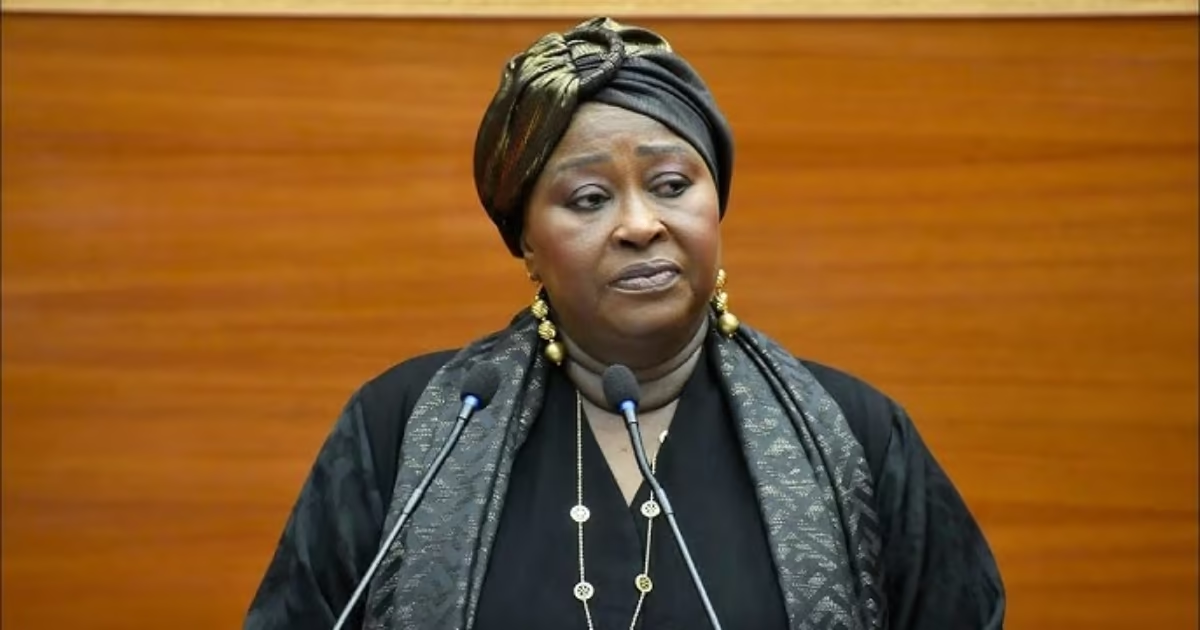
The words spoken by Maïmouna Dièye during a public gathering in Khombole on Saturday left an indelible impression—not just on the audience, but on Ousmane Sonko himself. The phrase she chose crossed a line deeply embedded in Senegal’s religious fabric, triggering an immediate reaction.
What exactly was said?
By addressing Ousmane Sonko with the phrase « Seyidina Ousmane Sonko Salalahou Aleyhi Wa Salam », Dièye elevated him to a spiritual status reserved exclusively for the Prophet Mohammad (peace and blessings upon him) and, in some interpretations, other revered prophets. This invocation, known as salat, is a cornerstone of Islamic practice, recited whenever the Prophet’s name is mentioned. Using it for a political leader—regardless of popularity—implies a level of sanctity that transcends the boundaries of secular leadership, which is precisely why the statement sparked such strong reactions.
Ousmane Sonko’s response and the broader debate
Sonko swiftly addressed the remarks, emphasizing the affection his supporters hold for him while firmly clarifying that such sacred terminology should never extend beyond the Prophet. His intervention was not merely a personal defense but a pointed reminder of the delicate balance between political respect and religious veneration in Senegal. The incident has reignited discussions about the risks of political sacralization, a concern frequently raised by religious leaders who warn against blurring the lines between admiration for a leader and the reverence owed to the divine.
In a country where religious sensitivity shapes public discourse, Sonko’s quick correction underscores the importance of maintaining clear distinctions. His acknowledgment of the gesture’s intent—while rejecting its theological implications—reflects the nuanced approach required in navigating Senegal’s complex social and religious landscape.