Gabon launches 700 billion FCFA plan to build national poultry industry
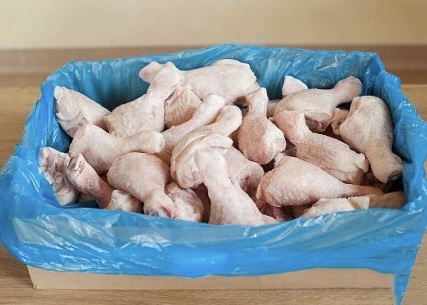
The Gabonese government will prohibit frozen chicken imports starting January 1, 2027, as part of an ambitious plan to boost local poultry production. By 2028, the country aims to produce 125,000 tons of broiler chicken annually to meet growing domestic demand.
This strategy, unveiled by Agriculture Minister Pacôme Kossi in June 2026, addresses a critical dependency: Gabon currently imports 65,000 tons of frozen poultry each year. The initiative seeks to shift from reliance on foreign supply toward self-sufficiency, easing pressure on household budgets while strengthening food security.
Building a sustainable poultry ecosystem
Achieving this goal requires more than just production capacity—it demands a fully integrated ecosystem. According to Hervais Omva, poultry industry expert and president of IDRC AFRICA, success hinges on local feed production, particularly maize and soybeans, which make up 75% of poultry diets. « The President has set the direction. Now, sector players must build the entire upstream and downstream infrastructure, » he explains.
Omva highlights two critical challenges: scaling up local grain production to millions of tons and ensuring job creation aligns with local realities. « Automated processing plants can handle 60,000 birds daily with just 20 workers, but if youth employment is a priority, we need a model that balances efficiency with human capital development, » he notes.
Attracting African investors for long-term growth
Libreville is turning to African investors to drive this transformation. Following a call for investment at the Kigali Summit in May 2026, government officials met with continental operators in early June to discuss partnerships. A dedicated investment bank is already operational, and technical frameworks are being rolled out progressively.
Local poultry farmer G.M., who manages a 10,000-bird operation in Port-Gentil, sees opportunity in the policy shift. « The potential is undeniable, but scaling to industrial levels will require significant capital and infrastructure, » he observes.
From crisis response to economic empowerment
Recent global disruptions—from the Covid-19 pandemic to the Ukraine war—exposed vulnerabilities in relying on international poultry markets. Gabon’s push for self-sufficiency isn’t just economic; it’s social. With over half the population under 26 and youth unemployment ranging between 30% and 38%, the poultry sector could create thousands of jobs while reducing food import costs.
Omva’s message to young Africans is clear: « The path is set. Investors are ready. Now is the time to act. »