Gabon’s governance and faith: a strategic alliance for stability
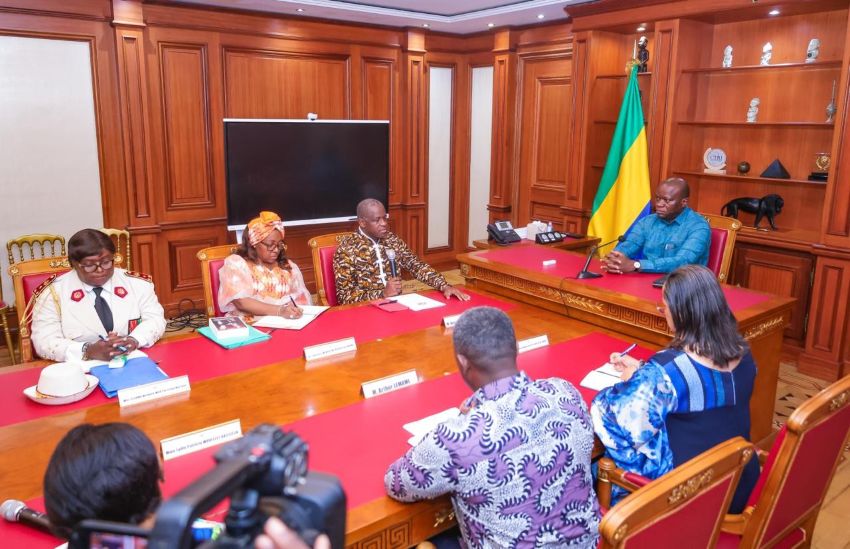
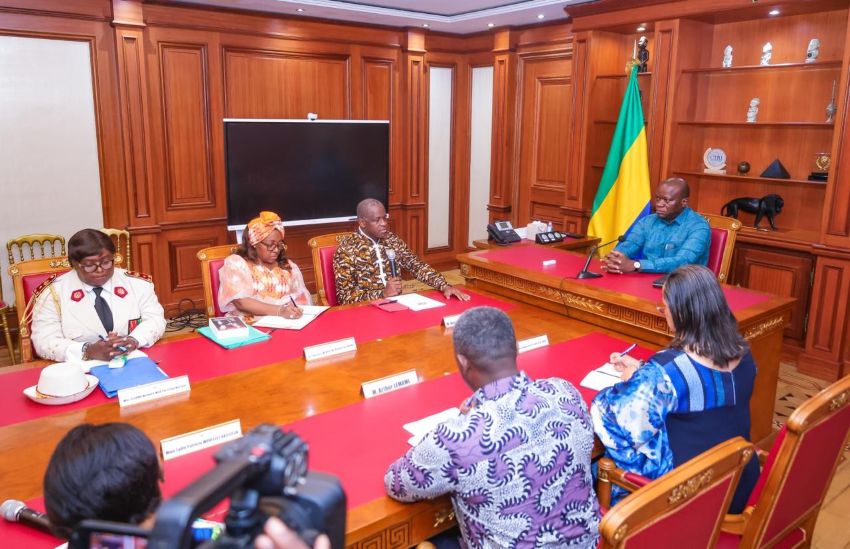
Libreville, June 13, 2026 — In times of political upheaval, nations often seek balance not only in formal institutions but also in the moral frameworks that shape society. Gabon’s recent meeting between President Brice Clotaire Oligui Nguema and Reverend Louis Sylvain Allogo Engo, head of the Evangelical Church of Gabon, exemplifies this evolving approach to governance.
The encounter, held at the presidential palace, was far more than a diplomatic formality. It underscored the growing recognition of religious institutions as pivotal partners in national stability, social cohesion, and the consolidation of Gabon’s Fifth Republic. As Gabon navigates its post-transition institutional reforms, this dialogue between state authorities and spiritual leaders has emerged as a key pillar of governance—one with deep political, social, and symbolic significance.
The silent power of faith in nation-building
Religious organizations in Gabon have long played a foundational role in the lives of its citizens. Beyond spiritual guidance, churches actively contribute to education, healthcare, youth mentorship, and community mediation. Their reach extends into nearly every corner of the country, making them indispensable allies in fostering civic values and collective responsibility.
President Oligui Nguema’s decision to engage with these institutions reflects a broader trend across Africa, where faith-based groups often wield greater influence than some government agencies. Their ability to mobilize communities and mediate disputes positions them as natural custodians of peace and social harmony. The presence of the Vice President during the meeting further signaled the administration’s commitment to integrating moral and spiritual actors into the nation’s governance model.
Laïcité as a foundation for collaboration
A key takeaway from the discussion was President Oligui Nguema’s emphasis on balanced cooperation between the Republic and religious institutions—one firmly rooted in the principle of laïcité. This approach challenges the misconception that secular governance must exclude faith from public life. Instead, it advocates for a model where each sector operates within its mandate while contributing to the common good.
The Evangelical Church of Gabon, one of the country’s most prominent religious bodies, has been a constant presence through decades of national evolution. Reverend Allogo Engo highlighted the church’s role in providing spiritual guidance during pivotal moments, reinforcing the mutual trust between state and faith communities. Such collaboration ensures that governance remains anchored in both institutional integrity and societal values.
Human development as a shared priority
The talks also touched on the upcoming national synod of the Evangelical Church, scheduled for July 20–26, 2026, in Baraka Mission. The President’s willingness to support this event reflects a holistic vision of development—one that encompasses moral guidance, civic education, and community resilience alongside economic progress.
This perspective aligns with global best practices, where resilient societies thrive by integrating institutional strength with social capital. By prioritizing dialogue with spiritual leaders, Gabon’s leadership acknowledges that sustainable progress depends not only on policies and infrastructure but also on the moral and ethical foundations of its people.
In essence, this meeting symbolizes the Fifth Republic’s governance philosophy: one that values consensus, inclusivity, and the synergy between public institutions and the moral forces that shape the nation. In an era marked by global polarization, Gabon’s commitment to bridging these divides may well be the cornerstone of its long-term stability.