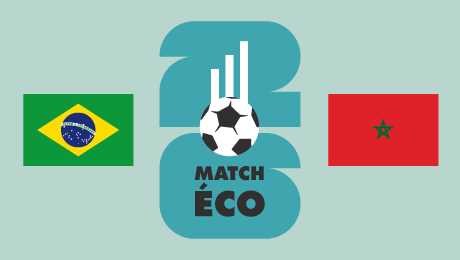
The upcoming 2026 World Cup isn’t just about goals on the pitch—it’s also a clash of economic might between Brazil and Morocco. While Brazil enters the game with certain advantages, Morocco appears poised to outperform when examining key indicators.
Brazil: A giant with structural weaknesses
Brazil stands as one of the world’s economic titans, with a population of 212 million and the 10th largest economy globally. In 2024, its GDP per capita (PPP) reached $22,000, nearly double Morocco’s $10,000. This gap reflects Brazil’s more advanced economic development, supported by a diverse industrial base, robust agricultural sector, and thriving services industry.
Yet beneath the surface, Brazil’s public finances reveal significant vulnerabilities. National debt stands at 83% of GDP in 2024, compared to Morocco’s 70%. While both nations grapple with high debt levels, Brazil’s trajectory draws closer scrutiny from global markets due to persistent budget deficits and crippling interest payments. Morocco, meanwhile, is actively pursuing structural reforms to rein in debt, particularly ahead of hosting the World Cup.
Scoreboard: Brazil 1 – Morocco 1
Morocco dominates in social and strategic metrics
Where Morocco truly pulls ahead is in social and strategic indicators. By 2026, the minimum wage in Morocco reaches $275, surpassing Brazil’s $226. This underscores a critical insight: a higher GDP per capita doesn’t automatically translate to better living standards for all citizens.
Morocco also edges out Brazil in defense spending, allocating 3.5% of GDP compared to Brazil’s 1%. This heavier military investment signals Morocco’s proactive geopolitical strategy in a volatile regional landscape. Life expectancy is nearly identical, with Brazil at 76 years and Morocco at 75.
Final score: Brazil 2 – Morocco 3
Economically, Morocco emerges as the surprise leader, mirroring its recent triumphs on the global sports stage. Brazil retains substantial strengths but struggles to convert them into widespread prosperity. Morocco’s performance highlights how a developing economy, through bold policy choices, can challenge even the most entrenched global players.
Tonight’s match will reveal whether this economic victory translates to sporting glory!