The barracks are no longer loyal
More than eighteen months after the 26 July 2023 coup, the patriotic façade displayed by Niger’s military government is cracking in spectacular fashion. Behind the sovereignist speeches and the parades staged by the Conseil national pour la sauvegarde de la patrie (CNSP), the operational reality on the ground tells a very different story. Niger’s army is not merely buckling under asphyxiating security pressure along its borders: it is crumbling from within. The glaring wave of defections has become the clearest sign that General Abdourahamane Tiani is now rejected by a large slice of his own troops.
An exodus that began as scattered insubordination
What first looked like isolated cases of disobedience has turned into a steady stream of abandoned posts. Dozens of soldiers, stripped of their illusions and left to fend for themselves in remote garrisons, are choosing to flee. More alarming still for Niamey, these deserters no longer simply slip back into civilian life: they carry away their tactical know-how, and sometimes their weapons, and hand them to armed opposition movements or terrorist organisations.
The FPL, a political rebellion transformed into a paramilitary threat
A considerable number of experienced fighters have joined the Front Patriotique pour la Libération (FPL), the rebel movement led by Mahmoud Sadi, which calls for the restoration of constitutional order and the release of deposed president Mohamed Bazoum. By swelling the FPL’s ranks, these soldiers lend the movement a disturbing tactical legitimacy, converting a political rebellion into a structured paramilitary force able to target strategic infrastructure, such as the oil pipeline linking Niger to Benin.
Crossing the red line into JNIM
Even more damaging for regional stability, some soldiers step over the ultimate line by joining Jama’at Nusrat al-Islam wal-Muslimin (JNIM), al-Qaeda’s Sahel branch. Pushed by despair, a sense of abandonment or material motives, these former regular soldiers give jihadists intimate knowledge of the local security grid, which leaves military bases in western Niger more vulnerable than ever before.
Sent to the front without the means to survive
How did it reach this point? In the field, the bitterness of the rank and file grows out of living and fighting conditions that have become unbearable. Whatever the regime’s warlike rhetoric may suggest, supplies never follow. Troops deployed to the burning fronts of Tillabéri or Diffa face a dramatic shortage of the most basic resources.
- Spare parts for the armoured vehicle fleet are missing, fuel is rationed and reserve ammunition is quickly exhausted during firefights.
- Soldiers confront mobile armed groups equipped with light drones and modern assault rifles, while they themselves often lack basic personal protective equipment or secure communication systems.
- Risk bonuses are paid late month after month, and wounded men brought back from the front receive inadequate care.
The perceived gap between the comfort enjoyed by junta dignitaries in Niamey and the misery of the soldier in combat keeps a stubborn resentment alive.
The night of 28-29 August, when foreign rifles fired on Nigerien troops
Distrust toward the top of the state reached a point of no return late in the summer. During the night of 28 to 29 August, an extremely serious event laid bare the gaping fracture between the ranks and the general staff: an attempted uprising put down in blood, with the regime’s Russian allies at the centre of it.
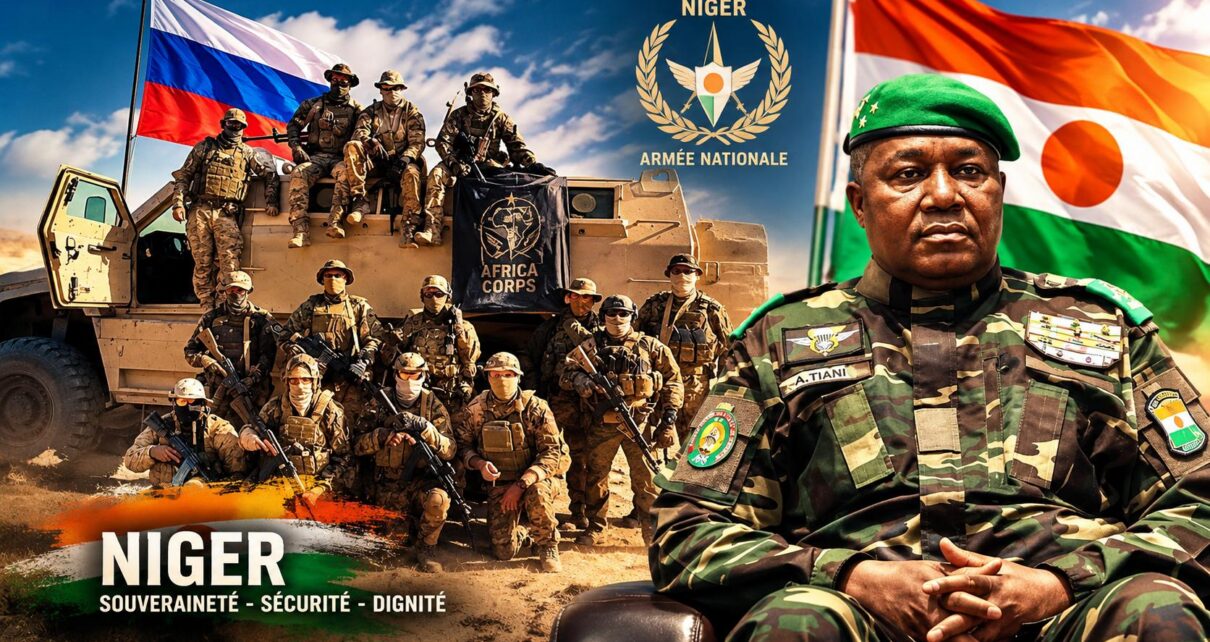
As discontent spread through several units of the Nigerien army, the junta turned to Russian Africa Corps personnel to secure key positions and crush any appetite for mutiny. During those night-time confrontations, Russian mercenaries opened fire directly on Nigerien soldiers. Several national troops lost their lives to foreign bullets on their own soil, an episode that triggered a shockwave and indescribable outrage across the barracks.
For non-commissioned officers, watching a regime that calls itself sovereignist order foreign mercenary forces to shoot at its own troops amounts to the ultimate betrayal. General Tiani’s moral authority over his rank and file collapsed that night.
A government trapped by the institution that placed it in power
Far from the image of a united and unshakeable military power, Niger’s junta now appears weakened by the very base of the institution that carried it to power. By answering neither the logistical needs of its troops nor the population’s longing for stability, General Tiani finds himself isolated. Mass desertion and the flight of skills toward rebellion or jihadism prove that Niger’s army refuses to serve as cannon fodder for a regime whose objectives it no longer shares. Should the crack keep widening at its current pace, the principal threat to the CNSP will not come from outside — it will emerge from inside its own barracks.