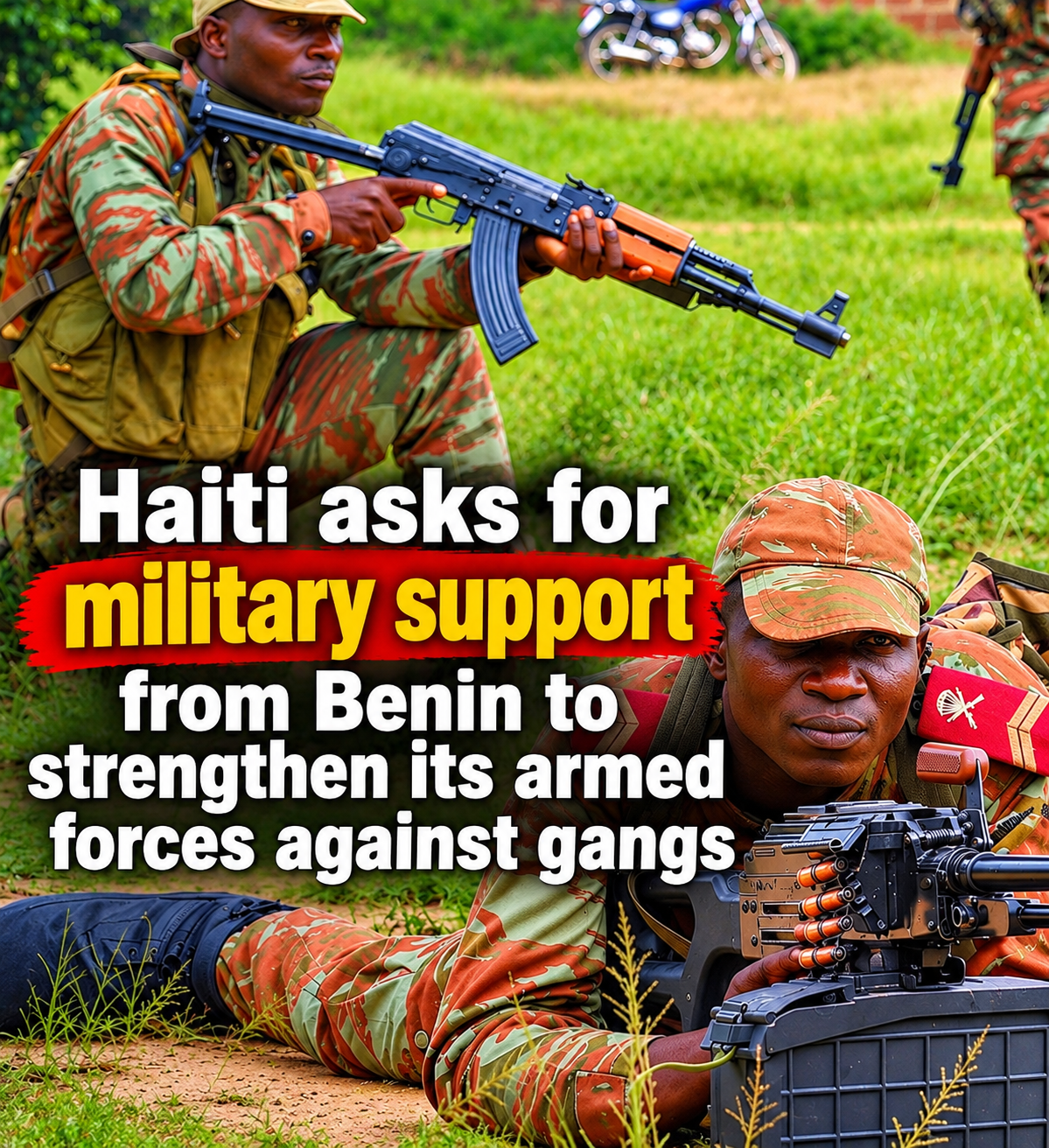
Haiti’s escalating gang crisis demands bold security solutions
As armed gangs extend their grip across Haiti, paralyzing institutions and terrorizing civilians, Port-au-Prince faces an urgent dilemma: how can its security forces regain control? The answer may lie thousands of miles away, in the West African nation of Benin, whose military is now being considered as a key partner in strengthening Haiti’s operational capabilities through targeted training and knowledge sharing.
Diplomatic consultations in Cotonou set the framework for military cooperation
Senior military leaders from Haiti and Benin convened in Cotonou to discuss a concrete framework for cooperation aimed at bolstering Haiti’s armed forces. The discussions centered on practical measures, including specialized training programs designed to enhance soldier readiness, tactical coordination, and crisis response in high-risk urban environments.
Shared challenges, converging solutions
Benin, no stranger to asymmetric threats in its northern regions, has developed robust counter-insurgency strategies, rapid deployment protocols, and community-based security frameworks. Haitian officials are now evaluating how these proven methods could be adapted to the uniquely volatile conditions of Port-au-Prince and other major cities, where armed groups operate with impunity and influence local governance.
Why training takes precedence over technology in Haiti’s recovery
While expanded troop numbers and modern weaponry are often prioritized in security discussions, Haitian analysts and military planners emphasize that sustainable stability begins with human capital. Effective training transforms raw recruits into disciplined, adaptable soldiers capable of operating under pressure, navigating complex terrain, and protecting civilians without escalating violence.
Operational discipline: Structured training reinforces chain of command, reduces rogue behavior, and ensures adherence to rules of engagement.
Urban combat readiness: Modules focused on crowd control, hostage rescue, and non-lethal intervention are critical in densely populated areas under gang control.
Intelligence integration: Officers learn to collect, analyze, and act on real-time intelligence, a vital edge against decentralized criminal networks.
A model rooted in African experience
This initiative reflects a growing recognition that African nations having faced similar threats possess valuable institutional knowledge that Western partners may overlook. Benin’s partnership approach, built on long-term mentorship rather than short-term deployments, offers Haiti a model of sustainable security cooperation without foreign military occupation.
From dialogue to deployment: turning plans into protection
The November talks in Cotonou established a roadmap, but its success hinges on execution. Haitian authorities must identify priority training gaps, allocate sufficient resources, and ensure that lessons translate into measurable improvements in soldier performance and public safety. Without this follow-through, the initiative risks becoming symbolic rather than transformative.
The broader implication is clear: in an era where conventional warfare is giving way to hybrid threats, South-South military cooperation offers a pragmatic path forward. Benin’s involvement is not a foreign intervention in the traditional sense, but a partnership built on shared experience and mutual accountability one that could redefine crisis response across the Global South.
Measuring impact: what success looks like in Port-au-Prince
Ultimately, the value of this cooperation will be judged not by statements or visits, but by tangible outcomes: fewer civilian casualties, improved arrest and prosecution rates for gang leaders, and restored freedom of movement in previously controlled zones. These are the metrics that will determine whether Haiti’s gamble on Benin-trained forces has paid off or whether a new crisis strategy is needed.
By AMINA SALEY — Journalist