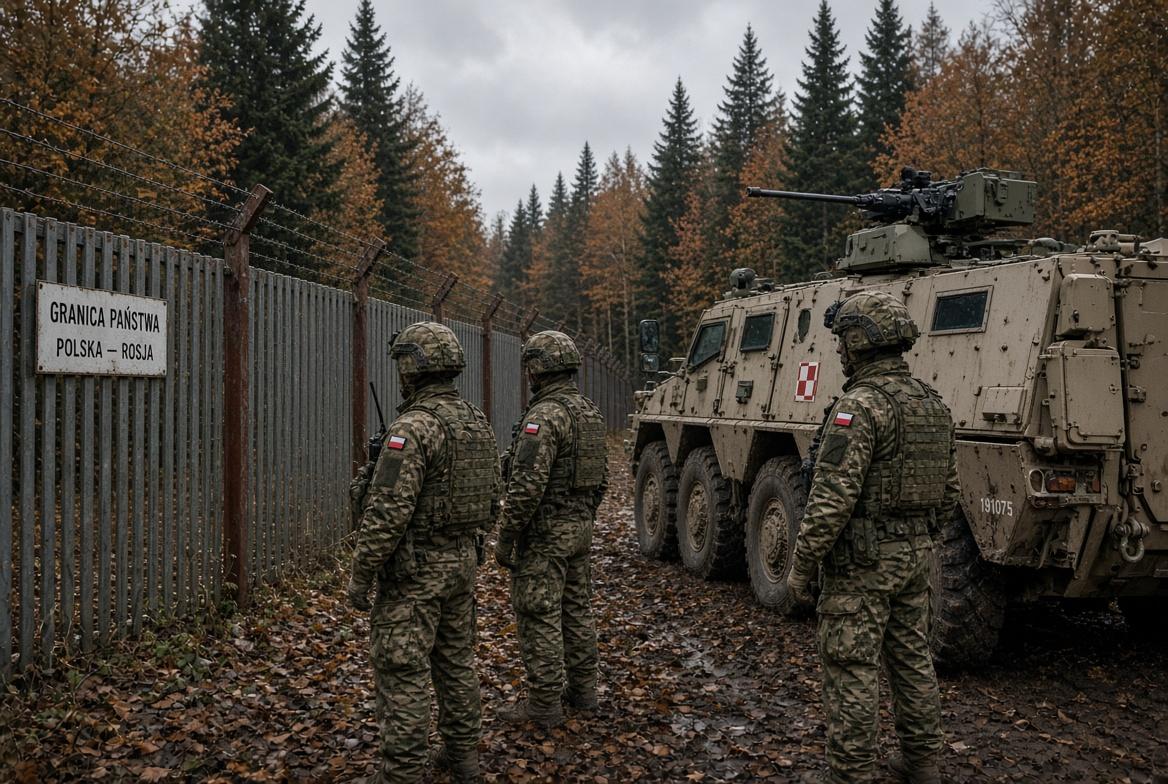
The geopolitical chessboard in Eastern Europe has just entered a new phase of high-stakes confrontation along the Baltic Sea. With mounting evidence of covert operations, repeated provocations, and an imminent risk of clandestine actions orchestrated from Moscow, Warsaw has activated an unprecedented security operation along its northeastern border—directly adjacent to the heavily militarized region of Kaliningrad. This decisive move underscores Poland’s resolve to thwart any attempt to destabilize this volatile flank of the continent.
The anatomy of a fortress: how Poland is reshaping its eastern defenses
This isn’t just another border patrol exercise. The new security framework deployed by Polish authorities represents a dramatic escalation in national defense strategy. A tightly integrated network now connects border guards, national police forces, elite counterterrorism units, and regular army battalions into a single, synchronized defense system.
The primary mission? Twofold: to seal off the border zone against any infiltration by Russian-trained sabotage cells or clandestine operatives, and to fortify critical national infrastructure in northern Poland—including energy grids, transportation hubs, and communication networks—that have become prime targets in the shadow war of asymmetric tactics.
From drones to sabotage: the invisible war reshaping European security
The Baltic region has been caught in a growing storm of tension. Unidentified drone incursions, unauthorized airspace violations, and suspicious aerial activities have surged in recent months, keeping governments across the Baltics on high alert. These incidents form part of a broader pattern: a calculated campaign of hybrid warfare conducted not through open conflict, but through covert, deniable operations designed to test NATO’s resolve without triggering overt war.
Poland’s message to the Kremlin: deterrence is not optional
By positioning advanced military and police assets at the gates of Kaliningrad, Poland has sent a clear signal: no weak points will be left unguarded. As a cornerstone of NATO’s eastern defense architecture, Poland is signaling that it will not tolerate Russia’s playbook of indirect aggression—whether through manipulated migration flows, psychological operations, cyber harassment, or targeted sabotage.
While global attention remains fixed on the conflict in Ukraine, the escalating tension along the Baltic coast serves as a stark reminder: the confrontation between the West and Russia is not confined to one front. It is a multi-dimensional struggle. And with this ironclad border operation, Poland is making one thing unmistakably clear—deterrence through strength is now the only language Moscow understands.
What’s at stake for Europe?
The stakes could not be higher. A single successful covert operation in Poland’s border region could trigger a chain reaction across the Baltic states—triggering panic, fueling instability, and potentially drawing NATO into a conflict it desperately seeks to avoid. Poland’s bold stance may well set the tone for how the transatlantic alliance responds to the next chapter of Russian hybrid warfare.