Why the 2026 budget vote is a make-or-break moment for Senegal
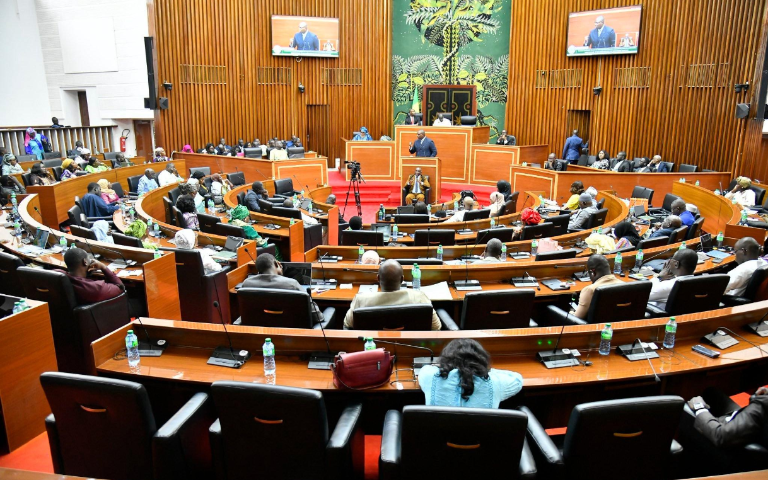
When Senegal’s National Assembly rejected the 2026 budget revision on November 3, 2026, it wasn’t just another parliamentary setback—it was the clearest sign yet that the country’s political foundations are shifting beneath its institutions. With 109 votes in favor of rejecting the rectificative finance law against only 20 against and 3 abstentions, the government now faces a crisis that goes far beyond numbers and spreadsheets. At its core, this vote exposes a widening rift between President Bassirou Diomaye Faye’s administration and the parliamentary majority led by the Pastef party, once allies in the same political movement.
The unthinkable vote: when parliament sides with itself against the government
This rejection wasn’t an accident—it was orchestrated. The parliamentary initiative came from Amadou Ba, a Pastef deputy, who introduced a preliminary question to block the budget before any substantive debate could begin. The motion passed overwhelmingly, halting the revision process in its tracks. What makes this result so unusual is that the Pastef majority doesn’t just disagree with the government—it’s actively using its institutional power to stop it, despite both leaderships originating from the same political movement.
The political paradox is striking: President Faye governs the executive branch, while Ousmane Sonko, the former prime minister and Pastef leader, now presides over the Assembly. Although they once fought side-by-side for change, their visions for Senegal’s economic direction have diverged sharply. Since Sonko’s departure from the premiership in May 2026, the collaboration has crumbled into open resistance, leaving the government without its traditional parliamentary support.
Numbers vs. principles: the real battle over Senegal’s 2026 finances
The budget itself reveals glaring discrepancies. The government proposed revenues of 5,848.7 billion CFA francs—down from the 6,188.8 billion initially planned. Expenses, however, ballooned to 7,583.9 billion CFA francs, pushing the deficit to 7.6% of GDP, well above the original 5.4% target. Amid these figures, Pastef lawmakers argue that the cuts to investment credits (a reduction of 555 billion CFA francs) jeopardize critical national projects. They’re also demanding greater transparency, particularly regarding energy subsidies, family security grants, and priority spending allocations.
Officials from the Ministry of Economy and Finance, led by Cheikh Diba, insist all requested documents were provided. In a statement released two days before the vote, the ministry condemned the commission’s rejection, asserting that every concern raised by deputies had been addressed. Yet, the Assembly wasn’t convinced. This impasse highlights a fundamental clash: a government racing to adjust to economic realities versus parliamentarians determined to assert their constitutional oversight role.
IMF negotiations hang in the balance as fiscal uncertainty grows
The fallout from this deadlock extends beyond Senegal’s borders. The country is in active negotiations with the International Monetary Fund (IMF) for a new financial support program, and the adoption of a revised budget is a critical step in that process. With public debt under scrutiny and macroeconomic stability at risk, the Assembly’s rejection risks delaying or derailing these talks. Domestically, the consequences could be immediate: delayed payments to contractors, suppliers, and key sectors may disrupt operations and erode investor confidence.
This isn’t just a political standoff—it’s a test of Senegal’s ability to maintain economic stability while managing internal divisions. Every day the budget remains in limbo, the strain on state finances intensifies, and the government’s capacity to fund its priorities weakens.
A new kind of political cohabitation—or a warning for the future?
Senegal isn’t experiencing a traditional cohabitation, where opposing parties control the presidency and parliament. But the nation is navigating uncharted waters: an executive branch operating without automatic parliamentary backing, even from its own ranks. The November 3 vote raises a critical question: how far can this confrontation go before it destabilizes the country’s institutions? While no consensus appears on the horizon, both sides know the stakes. The government must find a way out of the budgetary deadlock, while Pastef deputies show no sign of backing down from their demands.
One thing is undeniable: the rejection of the 2026 revised budget marks a turning point in Senegal’s political landscape. Behind the technicalities of finance laws and parliamentary procedures lies a deeper power struggle—one that will define not just Bassirou Diomaye Faye and Ousmane Sonko’s legacies, but the very future of democratic governance in Senegal.