In the high-stakes battle against terrorism sweeping across Africa, one narrative has dominated international headlines: Moscow’s growing influence in the Sahel through high-profile security partnerships. Yet beneath the surface of this strategic narrative lies a critical question: is Russia truly the continent’s largest arms vendor? The answer, according to the latest global defense data, challenges decades of conventional wisdom.
New figures from the Stockholm International Peace Research Institute (SIPRI), covering the 2021–2025 period, reveal a far more complex competitive landscape. While Russian media and political rhetoric often highlight Moscow’s expanding footprint in countries such as Mali, Burkina Faso, and Niger, the data tells a different story. The United States leads African arms imports with a 19% share, followed closely by China at 17% and Russia at 15%. In Sub-Saharan Africa, China takes the top spot with 22%, surpassing Russia (12%) and even Turkey (11%). These statistics dismantle the myth of Russian dominance and expose a more diverse—and competitive—defense vendor ecosystem than commonly perceived.
Why China is quietly dominating the African defense market
The rise of China as Africa’s premier security partner wasn’t inevitable—it was strategic. As extremist violence intensified across the Sahel, African governments scrambled to modernize their armed forces. Beijing seized the opportunity, offering not just weapons, but integrated defense solutions: armored vehicles, surveillance and combat drones, air defense systems, radar, artillery, and transport aircraft. More importantly, it delivered training, maintenance support, and even technology transfer agreements.
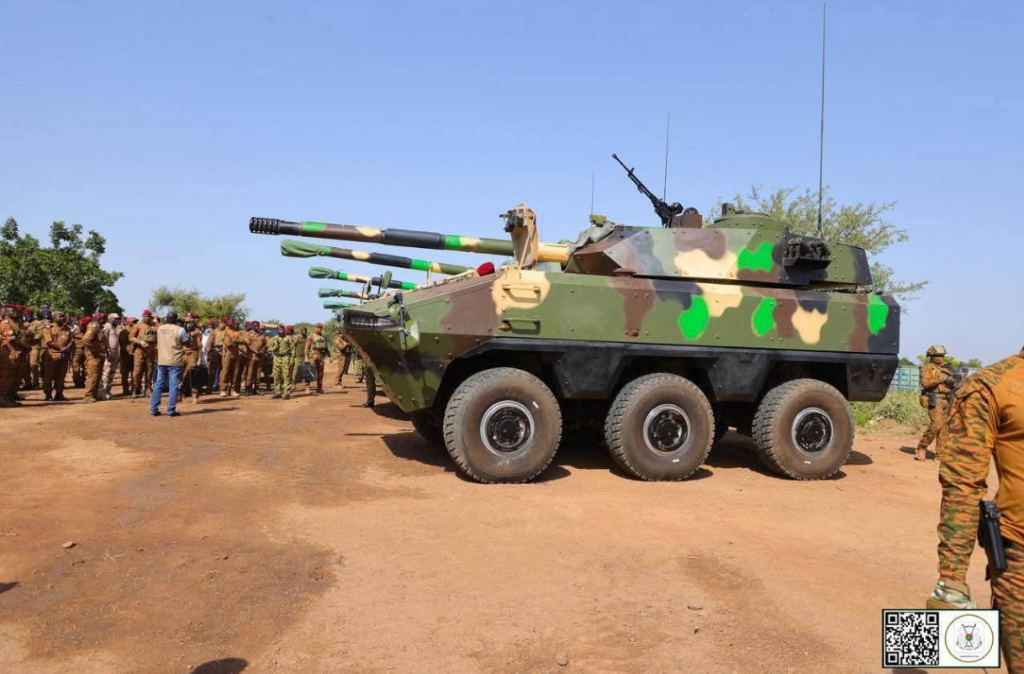
Recent deliveries underscore this trend. In 2024 alone, Burkina Faso received 116 infantry transport vehicles and six assault vehicles from China, according to SIPRI tracking. Mali has entered multiple agreements with China North Industries Group Corporation (NORINCO), securing armored vehicles and artillery systems, along with training programs designed to enhance frontline operational readiness. These acquisitions are not symbolic—they are tactical responses to immediate threats.
The real value of Chinese partnerships lies not only in firepower, but in sustainability. African armies need mobility, intelligence, and survivability. Chinese drones provide real-time reconnaissance, helping units avoid ambushes and track insurgent movements. Armored logistics vehicles enable rapid redeployment in remote, roadless terrain. Unlike traditional vendors that focus solely on sales, Beijing includes after-sales service, spare parts, and training, reducing long-term operational costs for cash-strapped governments.
Inside Russia’s strategic paradox: visibility vs. commercial weight
Russia’s military influence in Africa remains undeniable—especially in Central African Republic and Mali, where advisory missions and Wagner-affiliated structures (now operating under the Africa Corps banner) operate openly. Moscow provides weapons, yes, but also boots on the ground: trainers, logistics experts, and counterterrorism advisors embedded with local forces. This dual approach amplifies its geopolitical clout in ways that pure sales cannot match.
Yet the numbers tell a humbling story. SIPRI data shows Russian arms exports globally plummeted by 64% between 2016–2020 and 2021–2025—a direct consequence of international sanctions and Moscow’s urgent need to resupply its own war effort in Ukraine. While Russia maintains political leverage through advisory roles, its commercial footprint is shrinking. In an era where African nations require not just weapons, but sustainable partnerships, Moscow’s model—built on contracts and mercenary support—is increasingly seen as fragile.
What really matters: weapons alone won’t stop terrorism
African governments are facing a harsh truth: firepower is necessary, but insufficient, in countering terrorism. The battle is won not by how many tanks or drones a country buys, but by intelligence sharing, cross-border cooperation, state presence in remote areas, and well-trained, resilient forces. As new defense partners emerge, so do new risks—technological dependency, spiraling maintenance costs, and the potential for weapons to leak into civilian hands.
This makes the diversification of suppliers more than a strategic choice—it’s a necessity. With China and the U.S. leading in arms imports, and Russia maintaining niche influence, African countries now have real leverage. They can negotiate better terms, demand technology transfer, and build long-term capacity rather than rely on ad-hoc contracts.
No single nation holds the monopoly on African security. The future of the continent’s counterterrorism fight will be shaped not by who shouts the loudest, but by who delivers the most reliable, sustainable, and locally appropriate defense solutions.
What comes next: a shifting balance of power
The defense landscape in Africa is undergoing a quiet but profound transformation. For decades, Western powers and former colonial allies dominated the market. Now, Beijing and Washington are rising as major vendors, each bringing distinct strengths: China with industrial capacity and long-term partnerships, the U.S. with high-end technology and training programs. Russia, despite its operational visibility, is receding commercially.
As African states rethink their alliances, the message is clear: the most effective counterterrorism strategies are built on partnerships, not propaganda. The next chapter in Africa’s security saga will be written not in headlines, but in hangars, training grounds, and command centers across the continent.