Benin’s classrooms come back to life on 14 September
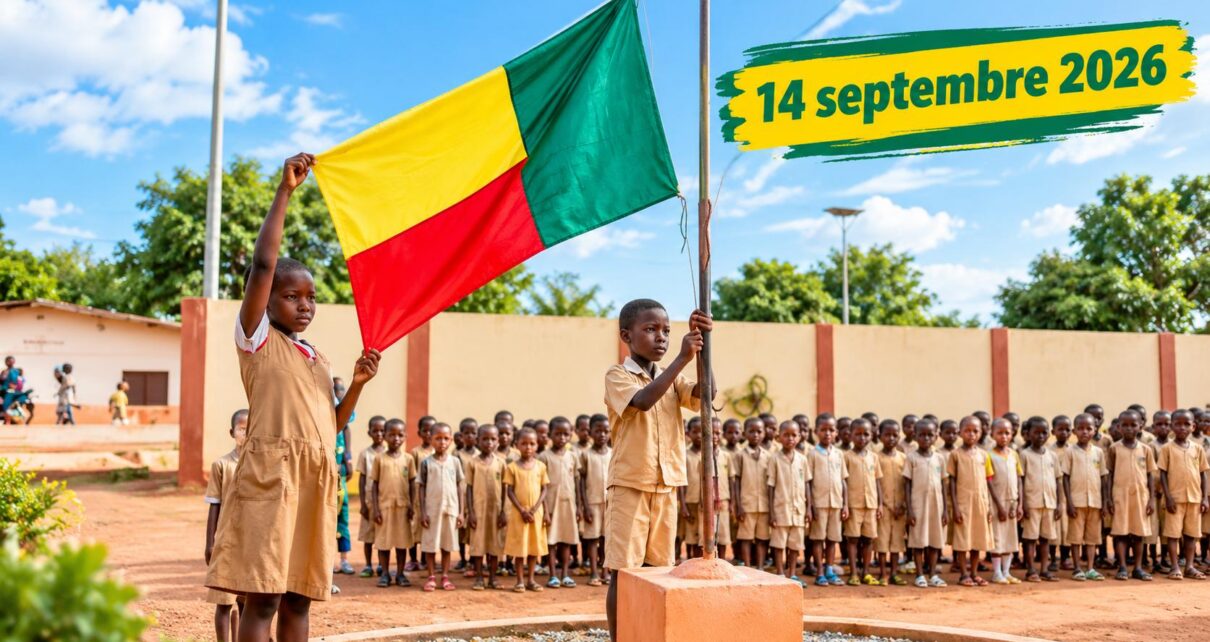
On Monday 14 September 2026, schools across Benin opened their doors once again. Pupils returned to their desks, teachers took up their posts, and the familiar rhythm of a school year began to settle in from the northern departments down to the southern coast.
The return was effective everywhere in the country, a detail that matters in a region where armed violence has disrupted schooling in several neighbouring states. For families, the first bell of the year signals the start of months devoted to learning, exams and the slow building of a future.
The first day, seen from the school gate
Head teachers and their staff spent the morning welcoming learners, checking registers and organising classes. Primary schools and secondary establishments alike moved into teaching mode, with timetables distributed and lessons already under way in many places.
Getting everyone back on the same day required preparation: enrolment formalities, classroom allocation and the practical logistics that quietly hold a school system together. The fact that the reopening happened simultaneously nationwide is an achievement in itself.
Why continuity matters for the education system
Keeping schools running without interruption has become a strategic objective. A year lost to insecurity or to displacement is difficult to recover, and Benin’s authorities have made clear that the school calendar should not become collateral damage of regional instability.
That commitment is visible in the simple fact of this reopening: despite the pressures weighing on the wider sub-region, the country has chosen to keep its educational machinery turning.
A security picture that has gradually improved
The reopening did not happen in a vacuum. Over recent years, Benin has invested heavily in its defence and security apparatus, especially in the northern departments that face the greatest exposure to jihadist incursions.
Operations carried out by the defence and security forces have helped push back armed groups and cut the number of attacks. That shift has made daily life easier to sustain, including for schools that had previously been considered risky to operate.
Surveillance and prevention in exposed areas
None of this means the threat has vanished. Patrols, intelligence work and measures to protect sensitive zones continue, and vigilance remains the order of the day. The aim is to hold onto the conditions that allow children to attend class regularly.
Seen from that angle, the return to school is more than an administrative date. It is a statement that, even where danger persists, education is still being delivered.
Free tuition and the state’s support to households
Money is the other front on which access to education is won or lost. Alongside its security effort, the government has kept in place a set of social measures designed to take the weight of school costs off parents’ shoulders.
At the centre of that package sits the removal of tuition fees at the levels concerned. For households on modest incomes, the saving is concrete and often decisive when the start of the school year arrives.
What it changes for parents
By cutting the expenses tied directly to enrolment, the state hopes to widen access and to reduce the number of children who drop out because a family cannot cover the costs. Parents describe the measure as breathing space at a time of year when spending spikes.
For learners, the effect is a better chance of staying in the classroom and finishing what they started, rather than leaving the system early for financial reasons.
An education policy built around equity
The fee waiver belongs to a broader push for inclusion and fairness. The underlying idea is straightforward: a family’s bank balance should not decide whether a child learns to read, count or prepare for a profession.
Because education drives development, removing financial barriers is also a form of investment — in human capital, in social mobility and in the country’s long-term prospects.
What still needs to be done
Opening the doors, however, is only the beginning. Holding pupils in class throughout the year, delivering quality teaching, ensuring that buildings and equipment are available and improving learning conditions remain substantial tasks.
Success will depend on a shared effort: the government that funds and steers policy, the teachers who stand in front of the classes, the parents who support their children at home, the school leaders who manage day-to-day operations, and the learners themselves.
A school year starting with reasons for optimism
Taken together, the calmer security situation and the social measures create a more favourable setting for education in Benin. The challenge now is to keep that momentum going over the coming months.
That means preserving peace and stability, consolidating the support already offered to families and continuing to push for schools that are both accessible and of good quality.
On 14 September, classrooms across the country filled again. Beyond marking the start of a new academic year, the day carried a wider meaning: the public education service is still running, and every learner is being given the means to prepare for what comes next.