Politics
Cameroun gold scandal: minister accused of ‘magical’ denial tactics
The political bureau member of Cameroon’s Movement for the Renaissance of Cameroon (MRC) led by Maurice Kamto delivers a scathing critique of the interim press briefing held yesterday by the…
Cameroon’s interim mines minister faces scrutiny over gold trafficking allegations
During a press conference held in Yaoundé on July 15, 2026, the interim Minister of Mines, Industry, and Technological Development, Fuh Calistus Gentry, formally denied any theft or disappearance of gold belonging to Cameroon’s state reserves.
This public statement, delivered alongside the Minister of Communication René Emmanuel Sadi, aimed to quell growing controversy sparked by revelations of a fiscal shortfall exceeding 2,000 billion CFA francs.
Cameroon’s government clarifies that the current crisis does not involve embezzlement of public funds but rather large-scale fraud in private sector declarations. Mining companies are accused of underreporting extracted gold volumes.
The state is experiencing a drastic decline in revenue from synthetic mining taxes and export duties. The Extractive Industries Transparency Initiative (EITI) report for 2023 revealed a staggering discrepancy: Cameroon declared only 22 kg of gold exported, while UAE customs recorded 15 tons.
The National Mining Company (Sonamines) estimates that approximately 44 tons of gold evaded formal channels between 2021 and 2025. To combat trafficking and clean up the gold supply chain, Interim Minister Fuh Calistus Gentry announced immediate reforms, including the deployment of a permanent field team comprising Sonamines, the General Tax Directorate (DGI), and the General Customs Directorate (DGD).
This team will conduct direct on-site inspections of production sites. Plans also include hiring an international expert to assess actual deposit potential and impose a minimum tax independent of operators’ declarations.
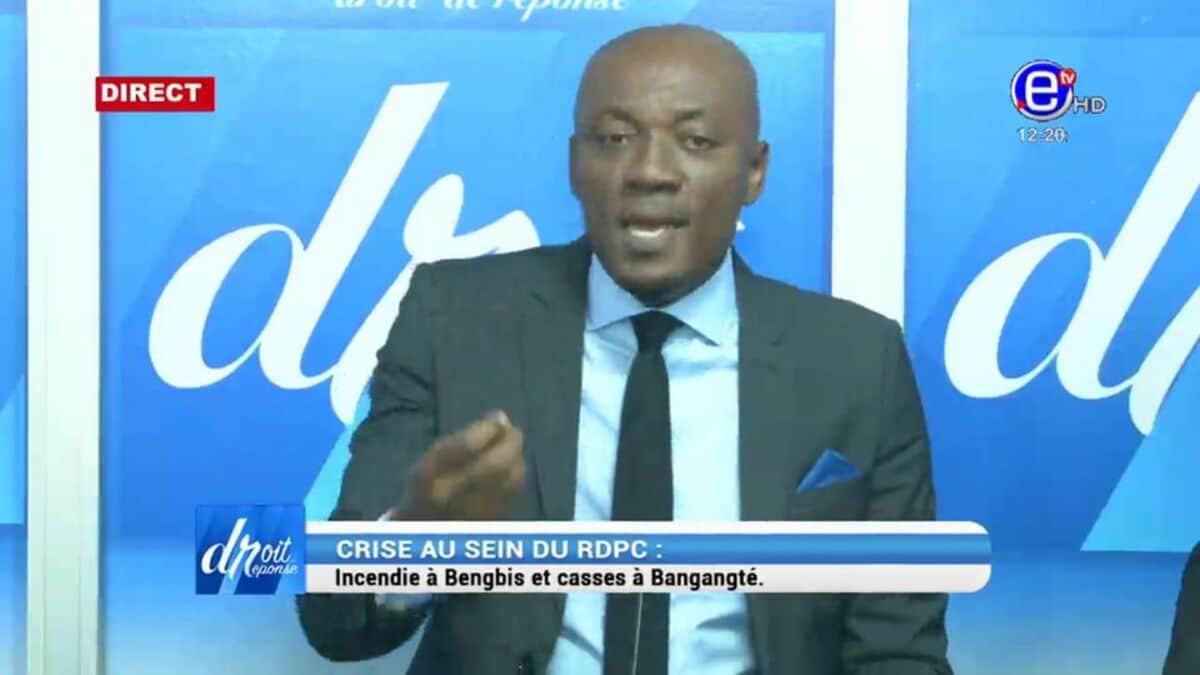
Me Sikati’s fiery response:
The Cameroonian Minister of Mines is named Fuh Calistus.
He was appointed to replace his predecessor, Gabriel Dodo Ndoke, whose death occurred under mysterious and still-unresolved circumstances.
During yesterday’s press conference, Fuh Calistus declared that ‘there has been no disappearance of gold belonging to the state.’
Yet the gold trafficking scandal in Cameroon continues to dominate headlines in both national and international media.
It’s important to note that the minister did not claim gold had not disappeared.
Rather, he implicitly suggested that gold belonging to the Cameroonian state had not vanished.
Which leads me to ask: who, then, owns all the gold whose disappearance has been exposed?
I remind everyone that according to Cameroon’s mining code, subsoil minerals and the gold within belong to the Cameroonian state.
Perhaps the minister believes—along with some misguided individuals—that despite clear mining code provisions, Cameroon’s gold belongs to certain private individuals.
In reality, these officials are not here for Cameroon. They are here for their own interests.