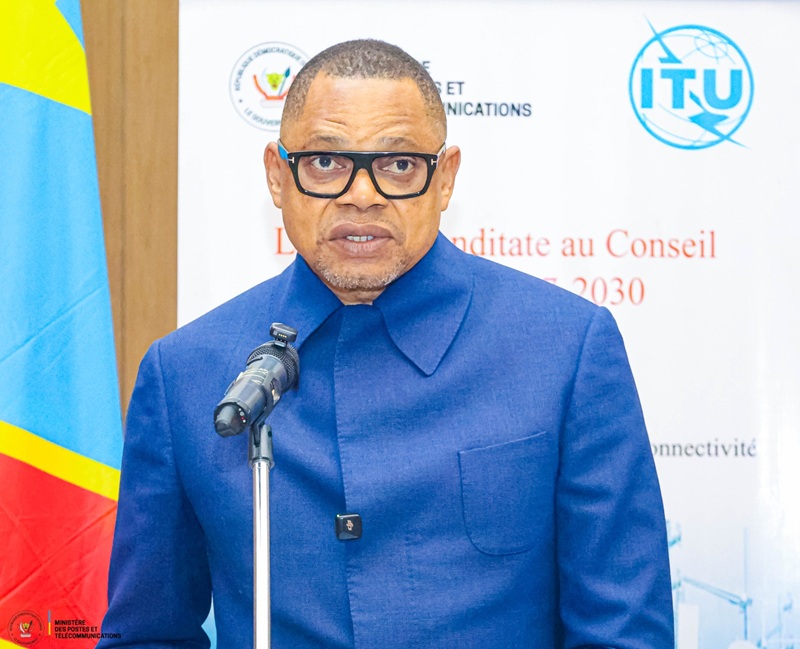
DR Congo’s Minister of Posts and Telecommunications, José Mpanda Kabangu, has launched a vigorous diplomatic campaign to secure a seat on the International Telecommunication Union (UIT) Council for the African Region D. The initiative, unveiled during a high-level gathering at Kinshasa’s Hilton Hotel on July 15, 2026, seeks to position the Democratic Republic of Congo (DRC) as a key player in global telecommunications governance ahead of the UIT Plenipotentiary Conference in Doha, Qatar, this November.
Why the UIT Council matters
The UIT Council serves as the decision-making body for the specialized UN agency, shaping global policies on telecommunications and digital technologies. With 13 African seats available, the DRC’s bid emphasizes its strategic role as the host of the African Telecommunications Union (UAT) secretariat. Me Mpanda stressed that the country’s participation is essential to amplify Africa’s voice in setting international standards for connectivity, digital inclusion, and technological sovereignty.
« Our candidacy reflects DR Congo’s commitment to advancing digital transformation in Africa. We aim to contribute to policies that foster equitable access to telecommunications while championing the continent’s interests in global forums. »
DR Congo’s digital ambitions
Christian Katende, Chair of the Post and Telecommunications Regulatory Authority (ARPTC), highlighted the DRC’s growing influence in Africa’s digital economy. With over 110 million people and 74 million mobile subscriptions, the country is poised to become a regional digital hub. Katende outlined four core commitments for its UIT bid:
- Strengthening Africa’s voice in global digital governance;
- Promoting investments in networks, satellite systems, and data centers;
- Balancing innovation with digital security and sovereignty;
- Enhancing capacity-building for African regulators and states through knowledge sharing.
« Supporting DR Congo’s candidacy means choosing an Africa that shapes digital transformation, not one that merely adapts to it. » Katende emphasized the DRC’s role in the global supply chain of critical minerals essential for semiconductors and AI infrastructure, reinforcing its claim to a seat at the decision-making table.
Diplomatic mobilization
Noëlla Ayeganagato, Deputy Minister of Foreign Affairs, underscored the government’s full support for the initiative. She called on diplomats to lobby their home governments, leveraging bilateral and multilateral partnerships to secure votes. Her plea reflected DR Congo’s broader strategy to align its digital diplomacy with sustainable development goals, positioning the UIT as a partner in Africa’s technological ascent.
« The UIT is a cornerstone for achieving digital development goals. We urge our partners to translate their commitments into action and ensure DR Congo’s voice resonates in global corridors of power. »
Formalization of the DRC’s candidacy is scheduled for November 2026 in Doha, where the outcome of the elections will determine the next Council members for the 2027–2030 term.