Mali’s civilian casualties under scrutiny after Africa Corps strikes

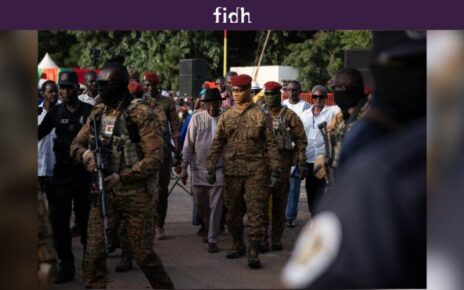
Human Rights Watch has documented what it describes as illegal airstrikes conducted by the Africa Corps, a Moscow-backed military unit, in central Mali earlier this summer. The strikes, carried out on June 15 using a Russian-made Sukhoi Su-24 fighter jet, reportedly targeted the village of Kyrnia in the Mopti region, resulting in the deaths of eight civilians—three of whom were children—and injuries to three others.
The attack devastated a civilian area, destroying the village chief’s residence and a livestock market, with no apparent impact on Islamist militant forces in the vicinity. Investigators from the rights group highlighted the flagrant disregard for international humanitarian law, which strictly prohibits strikes that endanger non-combatants or fail to distinguish between civilians and combatants.
Evidence and investigations
Human Rights Watch’s findings stem from a comprehensive investigation that included 19 telephone interviews conducted between late June and mid-July. Witnesses, local civil society members, Malian security personnel, and journalists provided firsthand accounts of the attack. Additional evidence comprised satellite imagery of the strike zones, a video released by the Africa Corps, and photographs circulated by an Islamist armed group.
Legal breaches and accountability
Ilaria Allegrozzi, a senior Sahel researcher at the organization, condemned the strikes as “blatant violations of the laws of war.” She emphasized that the Malian transitional government, led by General Assimi Goïta, cannot absolve itself of responsibility for actions committed by its allied forces. Allegrozzi urged the junta to initiate impartial inquiries into potential war crimes, including the Kyrnia airstrikes, stressing that no government may evade accountability for such breaches.
The Mali-Russia security partnership has deepened significantly in recent years, particularly after Bamako severed ties with French forces and United Nations peacekeepers, opting instead for Russian military support in its fight against armed extremist factions.