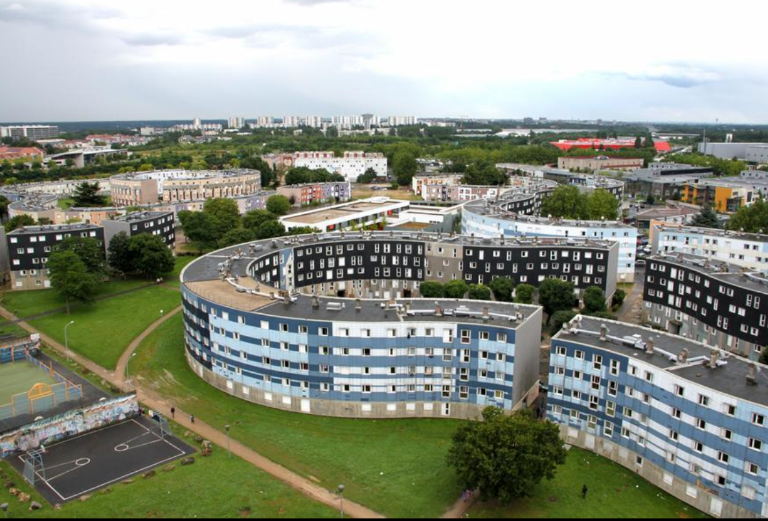
Grigny’s shocking case: a mother’s body hidden in a freezer
In July 2023, the tranquil streets of Grigny’s Grande Borne neighborhood were shattered by a crime that left residents grappling with disbelief. Armale Aïvohozin, a 44-year-old Beninese mother of three—known to locals as ‘Deo’—vanished without trace. Her disappearance, initially shrouded in confusion, took a horrifying turn when her body was discovered concealed within a freezer in her partner’s apartment, above his butcher shop.
The chilling discovery followed a frantic search initiated by her eldest son, who grew alarmed after failing to reach her for days. What began as a missing person report ended with a grim revelation: two gunshot wounds—one to the head, another to the chest—were confirmed by autopsy. The case, now unfolding in the Essonne assize court, has cast a stark spotlight on the dangers lurking behind closed doors.
From suspicious disappearances to a hidden corpse
The timeline of events reads like a tragic mystery. On the eve of her disappearance, Armale Aïvohozin was last seen with her partner in the Grande Borne area. When her son, aged 27, arrived to check on her the next day, he was met with evasive explanations. A man claiming to be her companion insisted she had left in a chauffeur-driven vehicle, offering no further details. But skepticism quickly took hold—especially when police inquiries led them straight to the freezer where her body lay.
The forensic evidence left no room for doubt. The court is now tasked with unraveling how a mother of three ended up in such a horrific state, and what led to the moments that preceded her death. Was it a tragic accident, as the accused claims? Or a premeditated act of violence hiding in plain sight?
The accused’s claim: an accident or a calculated lie?
At the heart of the trial is the defendant, who admits pulling the trigger but insists the shooting was unintentional. According to his version, the gun discharged accidentally during a confrontation. Yet, the prosecution is scrutinizing a pattern of behavior that paints a different picture—one of possessiveness, threats, and a fear of abandonment. Neighbors and acquaintances have reportedly described him as controlling, with a volatile temper that flared whenever his partner expressed independence.
Courtroom revelations over the coming days may expose whether jealousy, rage, or a calculated act lay behind the fatal shots. The jury will weigh not only the physical evidence but the psychological backdrop: the power dynamics, the threats to harm himself if she left, and the final moments that led to two lethal gunshots.
A co-defendant on trial for obstruction of justice
A secondary but critical figure is also facing judgment. A second man is on trial for concealing a corpse and altering the crime scene, alleged to have played a role in moving Armale Aïvohozin’s body into the freezer. His actions, if proven, would represent a deliberate attempt to obstruct the truth—a charge that carries its own weight in undermining the course of justice.
As the trial progresses, the court will examine the exact sequence of events: who was present, who participated, and whether silence became complicity. The answers could redefine the charges and the fates of those involved.
What the victim’s family hopes to uncover
For Armale’s family, the trial is more than a legal proceeding—it is a lifeline to closure. Three years after her death, they demand answers: What really happened in those final hours? How did a woman, loved and known by many, end up locked away inside a kitchen appliance? And most importantly, will justice prevail in a system that often fails women at risk?
The eldest son’s testimony has already underscored the trauma of losing a mother under such circumstances. His account, filled with pain and confusion, serves as a powerful reminder of the ripples such violence sends through a family and a community.
A grim reminder of domestic violence against immigrant women
This case transcends the individual tragedy. It reflects a broader, disturbing pattern: immigrant women, often isolated by language barriers or social stigma, can face heightened vulnerability within abusive relationships. Armale Aïvohozin’s story is not just a local tragedy—it is part of a global crisis of gender-based violence that spares no community.
The trial has reignited conversations about the need for stronger support systems, cultural sensitivity in victim protection, and the urgency of breaking the silence around domestic abuse. As the verdict approaches, the question lingers: How many more lives must be lost before systemic change becomes a reality?
Justice delayed, but not denied
The court is expected to deliver its verdict on November 4, 2026. While the accused remains presumed innocent until proven guilty, the evidence and testimonies presented will shape the final judgment. For the family, justice is long overdue. For society, this case serves as both a cautionary tale and a call to action.
The lessons must not be confined to the courtroom. They must prompt real-world changes—better resources for victims, more accessible reporting channels, and a community that refuses to look away.