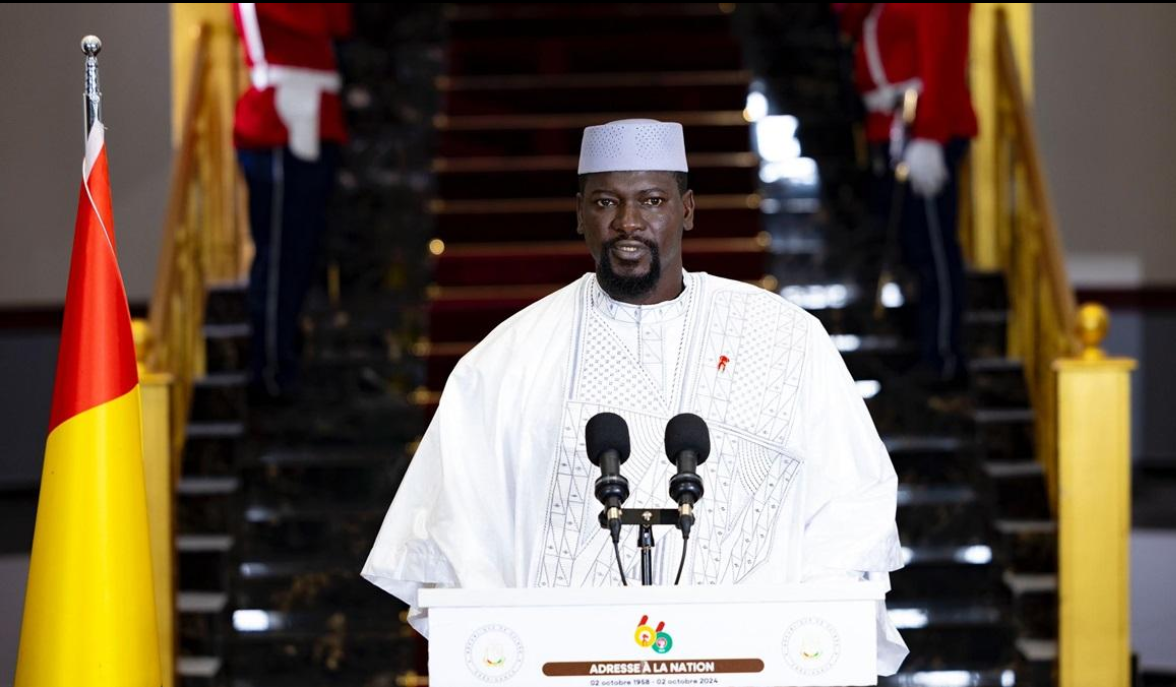
Guinea’s president, Mamadi Doumbouya, has taken decisive action against alleged illegal gold mining networks by removing 22 public officials and security force members from their posts. The unprecedented decree, announced on national television, sends a clear warning to those exploiting natural resources outside regulatory frameworks.
The move comes as the country marks another milestone: the inauguration of Nimba Gold Refinery, the first of its kind in Guinea. But with these developments, a critical question arises: can Guinea balance stricter enforcement against illegal mining with the economic promise of its formal mining sector?
Who are the officials removed and why?
Among those dismissed is Colonel Fayimba Mara, the prefect of Siguiri, a key gold-producing region in Upper Guinea. The decree targets a range of officials across Siguiri and surrounding areas, including prefects, security officers, and local administrators suspected of direct involvement in unauthorized mining activities.
The charges relate primarily to illegal gold panning—an activity that contributes to widespread environmental damage. Officials named in the decree include:
- Mohamed Lamine Keita, acting prefect of Kintinian
- Sory Camara, acting prefect of Siguirini
- Fodé Isaac Camara, sub-prefect of Niagassola
- Pépé Doualamou, sub-prefect of Bankon
- Naman Kourouma, sub-prefect of Kiniébakoura
- Abou Kanté, sub-prefect of Norassoba
- Richard Yaradouno, sub-prefect of Naboun
These removals signal a stronger stance against corruption and environmental harm tied to informal mining operations.
Environmental and social stakes at the heart of the decision
The decree highlights the severe ecological and human costs of illegal gold mining. The activities have led to:
- Destruction of arable land and soil degradation
- Pollution of waterways, affecting agriculture and fishing communities
- Use of hazardous chemicals like mercury, endangering public health
By removing these officials, the government aims to curb such damage and protect the livelihoods of local populations—many of whom depend on clean land and water for survival.
Multi-ministerial enforcement to restore order
The presidential decree places enforcement under the authority of several ministries:
- Ministry of Territorial Administration and Decentralization
- Ministry of National Defense
- Ministry of Security and Civil Protection
- Ministry of Justice and Human Rights
- Ministry of Employment and Social Protection
- Ministry of Public Service Modernization
This coordinated approach underscores the seriousness of the issue and the need for strong inter-institutional collaboration to monitor mining sites and ensure compliance with environmental and mining laws.
Nimba Gold Refinery: turning gold into national wealth
Two days after the sanctions announcement, President Doumbouya inaugurated Nimba Gold Refinery in Conakry’s Cité de l’Air district. The facility marks Guinea’s first step in processing gold locally, a strategic move to reduce dependence on raw material exports and capture higher value within the national economy.
The refinery aligns with the Simandou 2040 program, which aims to boost industrialization, create jobs, and ensure more equitable distribution of mining revenue across communities. With participation from government leaders and international partners, the inauguration reflects a broader vision: transforming Guinea’s mineral wealth into sustainable development.
What’s next: enforcement, transparency, and accountability
The dual announcements—removals and refinery launch—highlight a pivotal moment in Guinea’s mining policy. Yet, success will depend on more than declarations. Authorities face three critical challenges:
- Strengthening oversight: Monitoring thousands of mining sites to detect illegal activity
- Ensuring transparent trade: Regulating gold sales and preventing smuggling
- Protecting communities: Mitigating environmental harm and supporting alternative livelihoods
While the decree focuses on administrative accountability, legal consequences for those involved remain uncertain. Civil and criminal proceedings will determine whether justice extends beyond dismissal.
One thing is clear: Guinea is at a crossroads. The government’s actions suggest a new era of accountability, but lasting results will require sustained enforcement, investment in regulation, and genuine protection of both resources and people.