Gabon’s Kobe-Kobe port: a game-changer for economic transformation
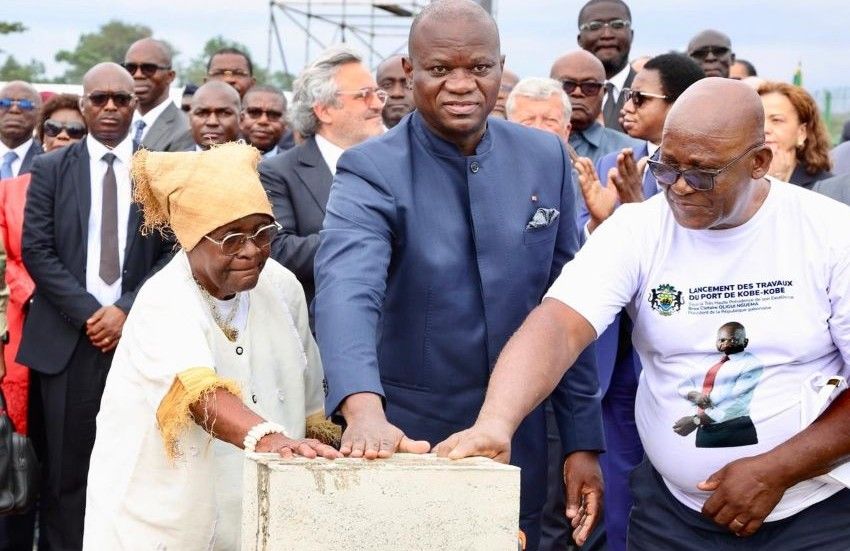
Libreville, June 9, 2026 – The official launch of the Kobe-Kobe deep-water port project on June 8 marks more than just the start of construction. It signals Gabon’s entry into a pivotal phase that could reshape the nation’s economic future.
Nestled in Nyonié, on the Atlantic coast of Estuaire Province, this initiative transcends typical infrastructure development. It represents a comprehensive strategy to position Gabon as a regional economic hub, with President Brice Clotaire Oligui Nguema at the helm of this transformative vision.
A multi-faceted economic catalyst
The Kobe-Kobe project is built on four interconnected pillars: the Belinga iron ore deposit, a 535-kilometer railway linking mining zones to the coast, a deep-water mineral port with four berths, and a 400-megawatt hydroelectric dam in Booué. This integrated approach breaks from Africa’s historical resource extraction model, where raw materials were shipped abroad for processing.
By processing minerals locally before export, Gabon aims to capture greater economic value and reduce dependency on commodity price fluctuations. The April 2026 partnership between the Gabonese government, Africa Global Logistics, and Algest Investment Bank underscores this commitment to building a complete value chain from extraction to global markets.
Regional logistics dominance
With a draft depth of 14 to 16 meters, Kobe-Kobe’s deep-water port will surpass regional competitors, enabling direct access for large-capacity vessels. This strategic advantage reduces shipping costs and positions Gabon as a vital logistics gateway for Central Africa.
The project aligns with President Oligui Nguema’s broader post-oil economic strategy, leveraging mineral resources, energy potential, and geographic positioning. International partners like China Railway, EDF-Sinohydro, Trafigura, Fortescue, and Africa Global Logistics validate the project’s global credibility.
Human impact: jobs and regional development
Beyond infrastructure, Kobe-Kobe promises significant socioeconomic benefits. Official projections estimate over 9,000 direct jobs and up to 100,000 indirect jobs by 2030, with potential for 160,000 jobs as industrial corridors expand. Communities in Nyonié, Komo-Océan, and along railway routes stand to gain from improved transport, industrial growth, and workforce upskilling.
The project’s success hinges on transforming infrastructure into sustainable prosperity. If achieved, Kobe-Kobe could symbolize a new Gabonese model—one rooted in industrialization, local value creation, and economic sovereignty.
For Africa, few initiatives embody this ambition as clearly: moving beyond exporting raw materials to building the infrastructure that shapes the continent’s future.