Gabon’s new diplomacy: sovereignty and African leadership in focus
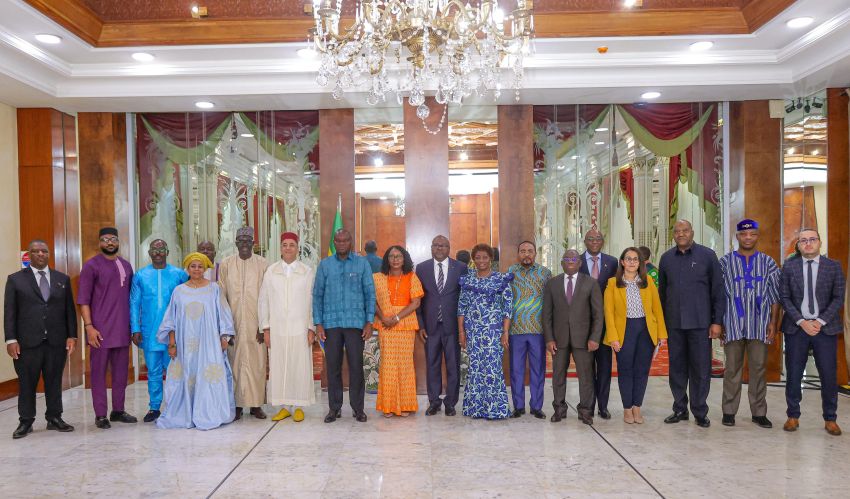
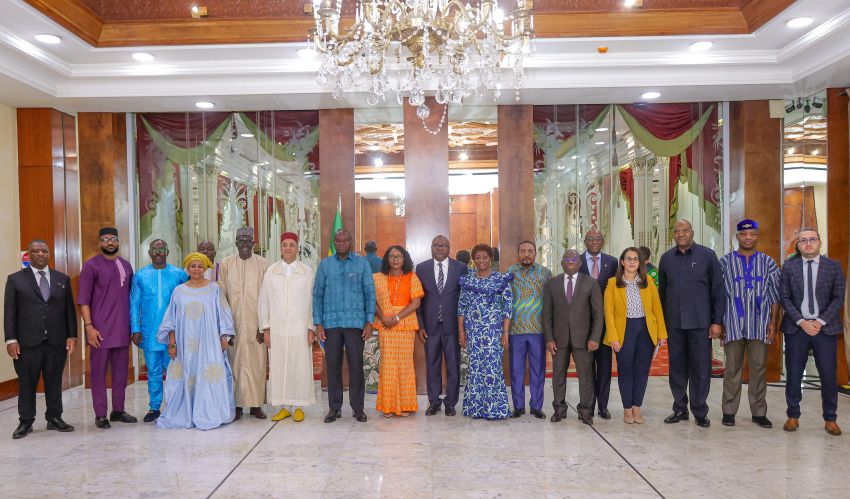
Libreville, Saturday, June 13, 2026 – In a continent reshaped by shifting geopolitical currents, Gabon is redefining its diplomatic footprint. President Brice Clotaire Oligui Nguema convened a landmark meeting with ambassadors from African nations accredited to Libreville, marking his first collective engagement since assuming office.
This was no mere protocol exercise. The gathering outlined a bold diplomatic vision—one that positions Gabon as a stabilizing force, a bridge for dialogue, and a champion of homegrown African integration. Against the backdrop of regional insecurity, global power rivalries, and evolving development models, Libreville is determined to assert its voice on the continental stage.
An Africa built by Africans
The president’s address underscored a growing continental consensus: Africa’s future cannot hinge solely on external solutions. This principle has gained traction from the Sahel to Southern Africa, where leaders increasingly demand greater control over economic, security, and institutional challenges.
Gabon’s leadership is now stepping into this conversation. Three strategic priorities emerged from Oligui Nguema’s remarks. First, accelerating regional integration to boost intra-African trade—currently among the lowest globally. Second, strengthening South-South cooperation to share best practices and unlock economic synergies. Third, empowering national institutions to address domestic challenges with greater autonomy.
This approach moves beyond lofty pan-African rhetoric, focusing instead on measurable outcomes and tangible results.
From stability to regional influence
Dialogue with African diplomats also revealed Gabon’s evolving international image. Many envoys praised the progress made in infrastructure, urban development, and public services over the past three years.
For Libreville, these improvements are more than domestic achievements—they represent a foundation for regional influence. The revival of joint commissions with African partners signals a shift from political diplomacy to project-driven partnerships across energy, transport, agriculture, digital innovation, and vocational training.
Gabon is also ramping up efforts to raise its global profile. The country has formally bid to host the ninth African Union-Regional Economic Communities biannual meeting in 2027. Additionally, its bid to host the 2030 Francophonie Summit reflects an ambition to position Libreville as a key diplomatic hub connecting Africa, the Francophone world, and beyond.
Balancing openness with governance
The discussions also addressed practical concerns raised by African diplomats regarding the treatment of their nationals in Gabon. President Oligui Nguema responded by reaffirming Gabon’s commitment to international conventions and improving administrative processes for foreign residents.
Yet, he emphasized that openness must align with national laws and governance standards. This stance seeks to balance regional hospitality with the need for orderly governance—an approach aimed at sustaining both attractiveness and accountability.
The president also extended a message to Sahel countries within the Alliance of Sahel States. In a region marked by political tensions and institutional divides, he advocated for dialogue, mutual understanding, and collaborative problem-solving as the most effective pathways to resolution.
This positioning reflects Gabon’s ambition to serve as a neutral mediator, capable of engaging with diverse African perspectives and fostering inclusive solutions.
As this historic meeting with African ambassadors concluded, a clear vision emerged: Libreville is no longer content to be seen merely as a stable capital in Central Africa. Gabon now seeks a more visible role in shaping continental balances, anchored in cooperation, peace, and regional integration.
The challenge ahead? Translating this diplomatic vision into concrete actions. In today’s Africa, leadership is measured not by words, but by the tangible impact of its policies.