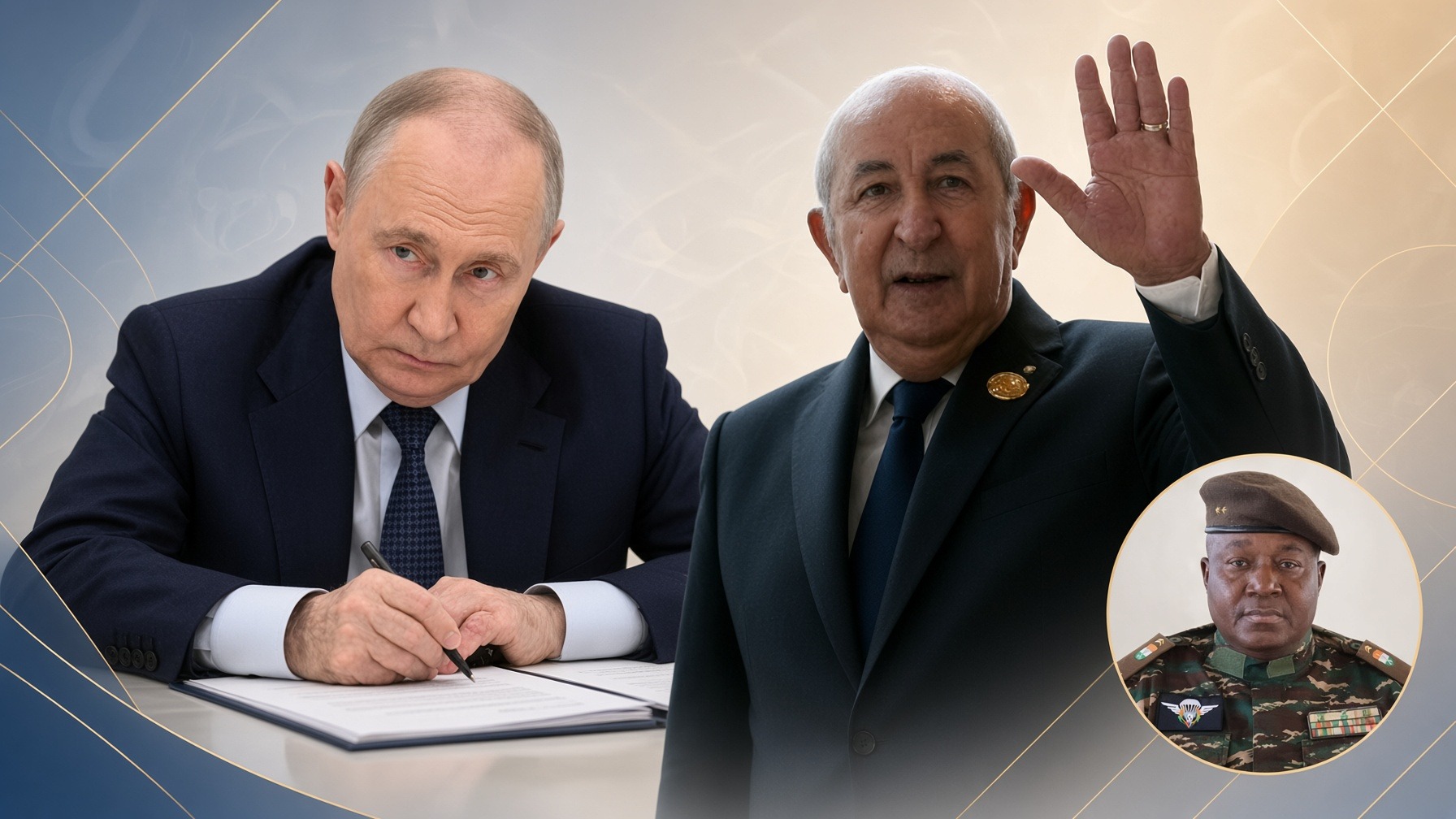
Across the shifting deserts of the Sahel, where power dynamics evolve with relentless speed, a seismic shift has just unfolded. Algeria’s Parliament has officially approved the deployment of the National People’s Army (ANP) into Niger, a move that reverberates far beyond the borders of the struggling nation. This decision isn’t just a military pivot—it’s a tectonic realignment of regional alliances, one that directly confronts Russia’s entrenched security influence within the Alliance of Sahel States (AES).
Why Algeria’s intervention dismantles Russia’s Sahel strategy
Moscow had been steadily consolidating its foothold in Niger, inking high-stakes arms agreements worth millions and embedding advisors through the Africa Corps. The deals included state-of-the-art air defense systems, unmanned aerial vehicles, and attack helicopters—all part of a broader vision to lock the Sahel into a Russian-dominated security framework. But Algeria’s bold military intervention has shattered that vision, exposing the inherent weaknesses of Moscow’s approach.
Algeria’s move doesn’t just challenge; it dismantles the very foundation of Russia’s Sahel engagement. Three critical pillars of Moscow’s strategy are now buckling under pressure:
- Breaking dependency on exclusive arms suppliers: Algeria brings more than troops—it brings access to advanced technical maintenance and engineering capabilities. For Niger, this means a viable alternative to excessive reliance on Russian hardware, which often comes at inflated costs and leaves buyers trapped in long-term dependency.
- Undermining barter-based security agreements: Russia has historically used its military presence to negotiate lucrative mining and oil concessions in exchange for protection. With Algerian forces now on the ground, these indirect monetization strategies face swift obsolescence.
- Localizing technical support to retain control: A significant portion of Niger’s military fleet—including Su-30 fighters, armored units, and artillery—is legacy Soviet or Russian equipment. Algeria’s superior technical infrastructure allows it to service this arsenal independently, cutting off lucrative maintenance contracts that have long benefited Russian state-linked firms.
Securing economic lifelines: Algeria’s high-stakes gamble in the Sahara
Beneath the military maneuvering lies a deeper, economic imperative. Algeria isn’t merely reacting—it’s protecting its long-term prosperity. The stability of the Sahel corridor is non-negotiable, and Algiers has positioned itself as the only credible guarantor of that stability.
Two transformative energy initiatives hang in the balance:
- The Kafra oil field: Operated by Algeria’s Sonatrach via its SIPEX subsidiary, this expansive site holds tens of millions of barrels. Its dual pipelines, stretching from Agadez to Hassi R’Mel, form a vital link in the economic chain connecting Algiers and Niamey. Instability here would disrupt decades of investment and revenue.
- The Trans-Saharan Gas Pipeline (TSGP): Stretching over 4,000 kilometers, this mega-project is engineered to transport more than 30 billion cubic meters of Nigerian gas to Europe, passing through Niger and Algeria. The pipeline’s viability hinges on absolute security—any disruption risks turning a strategic asset into a financial burden.
By deploying troops southward, Algeria isn’t just safeguarding its soldiers—it’s defending billions in strategic infrastructure. The move sends a clear message to Moscow: Algeria will not permit Russian-backed mercenaries to exert control over its energy corridors, ensuring the TSGP remains a cornerstone of regional economic resilience.
Kremlin’s moment of reckoning: retreat or reconfigure in the Sahel?
For years, Algeria served as Moscow’s most reliable arms purchaser and diplomatic partner in Africa. Yet today, Algiers is wielding its own military strength to counter Russia’s regional ambitions. The presence of Algerian troops in Niger forces the junta in Niamey to diversify its alliances, reconsidering its uncritical alignment with the Kremlin.
Russia’s mercenary-driven expansion in the Sahel now collides head-on with Algeria’s financial and military interests. What was once viewed as a near-certain Russian sphere of influence is crumbling. Algeria’s intervention signals the dawn of a new era—one where brute-force contracts no longer guarantee dominance, and where Algeria, not Moscow, holds the keys to regional security.
The arrival of Algerian forces presents the Nigerien junta with a rare opportunity: the chance to renegotiate its engagements with both Algiers and Moscow on more favorable terms. For Algeria, this cements its role as the indispensable guardian of Sahel stability. And for Russia? The dream of a Moscow-controlled Sahel lies in tatters—a silent, yet decisive, defeat in the heart of Africa.